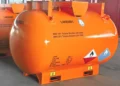
The main difference between 316L and 316LV stainless steel lies in material refinement, metallurgical cleanliness, and the additional manufacturing requirements associated with high-purity applications. While 316L is a standardized low-carbon austenitic stainless steel identified as UNS S31603, 316LV generally refers to a specially controlled 316L-based material intended for demanding chemical containment and contamination-sensitive applications. Its exact composition, melting route, and acceptance criteria depend on the agreed material specification.
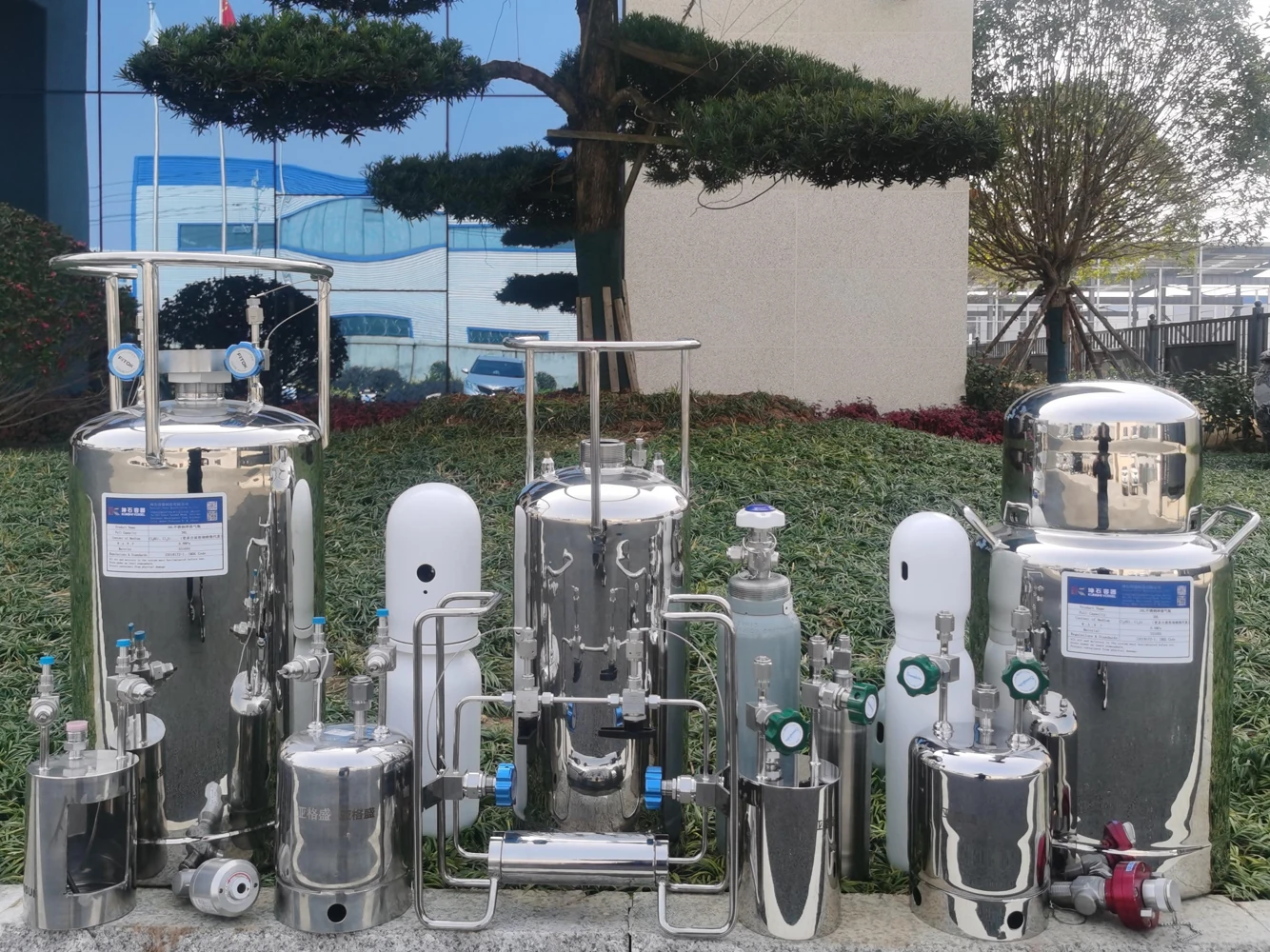
At KUNVESS, we evaluate these materials when manufacturing specialty gas cylinders, semiconductor precursor vessels, chemical containers, and precision components. Our selection process considers more than conventional corrosion resistance. Metallic contamination, internal surface quality, chemical stability, pressure containment, and fabrication requirements all influence whether standard 316L, 316LV, or a further refined material such as 316LVV is the appropriate choice.
1. 316L vs. 316LV Stainless Steel: Quick Comparison
316L and 316LV belong to the same general family of molybdenum-bearing austenitic stainless steels. However, specifying a material for semiconductor chemical packaging involves different considerations from purchasing stainless steel for conventional industrial equipment.
Standard 316L establishes a recognized starting point for chemical composition and material properties. A 316LV specification may introduce additional controls over metallurgical cleanliness, residual elements, production methods, and material consistency. These requirements become particularly important when the container itself could introduce measurable contamination into a valuable chemical product.
| Comparison Criteria | 316L Stainless Steel | 316LV Stainless Steel |
|---|---|---|
| Material designation | Standardized grade, UNS S31603 | Specially specified 316L-based material |
| Carbon content | Typically 0.030% maximum under common specifications | Defined by the approved material specification |
| Melting and refining | Conventional industrial steelmaking and refining routes | May require additional vacuum refining or controlled processing |
| Nonmetallic inclusions | Controlled according to the applicable material requirements | May require more restrictive inclusion acceptance criteria |
| Trace element control | Based on the applicable product standard | Additional element limits may be specified |
| Corrosion resistance | Suitable for many compatible industrial media | Potential advantages depend on composition, refinement, and service conditions |
| Electropolishing | Compatible with appropriate electropolishing processes | Selected when material cleanliness and surface consistency are critical |
| Pressure vessel suitability | Subject to material specification and approved vessel design | Requires the same design verification and material qualification |
| Material availability | Widely available in multiple product forms | Dependent on specialized material specifications and supply |
| Procurement cost | Generally lower | Generally higher when additional refining and qualification are required |
| Typical applications | Industrial tanks, pressure vessels, process equipment, and compatible chemical systems | High-purity specialty gas cylinders and contamination-sensitive chemical packaging |
Our engineering recommendation: Choose 316LV when its additional material requirements address an identifiable contamination or manufacturing risk. Where standard 316L satisfies the mechanical, chemical compatibility, cleanliness, and regulatory requirements, upgrading the material designation alone may offer little practical benefit.
2. What Is 316L Stainless Steel?
316L is a low-carbon chromium-nickel-molybdenum stainless steel used in chemical processing equipment, industrial pressure vessels, fluid-handling systems, pharmaceutical equipment, and precision mechanical components.
The letter L identifies the low-carbon version of Type 316 stainless steel. Reducing carbon content helps limit chromium carbide precipitation under certain thermal exposure conditions, particularly those associated with welding. This characteristic is valuable when fabricating vessels that must retain corrosion resistance around welded joints.
Chromium contributes to the formation of the protective passive surface film. Nickel stabilizes the austenitic microstructure, while molybdenum improves resistance to localized corrosion in many environments.
The combination makes 316L a versatile construction material. It offers useful mechanical properties, established fabrication methods, and compatibility with various surface finishing processes. Nevertheless, its suitability must be assessed against the actual chemical and operating environment.
316L Stainless Steel Chemical Composition
The Specialty Steel Industry technical composition tables identify 316L as UNS S31603 and provide the following representative chemical composition limits. These values are expressed as percentages by mass.[1]
| Element | Composition | Engineering Function |
|---|---|---|
| Carbon (C) | ≤ 0.030% | Influences sensitization and welded material behavior |
| Chromium (Cr) | 16.0–18.0% | Supports formation of the protective passive film |
| Nickel (Ni) | 10.0–14.0% | Stabilizes the austenitic structure |
| Molybdenum (Mo) | 2.0–3.0% | Improves resistance to localized corrosion in suitable environments |
| Manganese (Mn) | ≤ 2.0% | Influences steelmaking behavior and inclusion chemistry |
| Nitrogen (N) | ≤ 0.10% | Influences strength, microstructure, and corrosion behavior |
| Iron (Fe) | Balance | Principal metallic constituent |
Source: SSINA, Composition and Properties, Table 1. This table presents selected elements. Complete requirements, including sulfur, phosphorus, silicon, mechanical properties, and testing conditions, depend on the applicable product specification.
For plate, sheet, and strip used in applicable pressure vessel construction, ASTM A240/A240M is one relevant material specification.[2] Bars, forgings, tubing, and other product forms may require different material standards.
These distinctions matter when a cylinder assembly contains several manufactured parts. A specification suitable for the vessel shell may not establish every requirement for its machined neck, forged connection, or valve body.
Why the Low Carbon Content Matters in Vessel Manufacturing
Welding exposes stainless steel to localized heating and cooling. Under unfavorable time-temperature conditions, carbon can combine with chromium to form carbides at grain boundaries. The surrounding material may consequently become depleted in chromium, increasing susceptibility to intergranular corrosion.
The reduced carbon content of 316L lowers this risk. It does not eliminate the need for suitable welding procedures, controlled fabrication, oxide removal, or post-fabrication inspection.
For a welded chemical container, the condition of the heat-affected zone deserves particular attention. The original steel may satisfy its material certificate, while the finished assembly develops surface conditions that differ considerably from those of the incoming metal.
We therefore distinguish raw material acceptance from finished vessel acceptance. Both are necessary, particularly when the equipment will contain high-purity chemicals.
3. What Is 316LV Stainless Steel?
316LV stainless steel is a specialized 316L-based material designation encountered in high-purity chemical containment and semiconductor-related equipment. The V suffix is often associated with vacuum-related metallurgical refinement or additional material processing requirements.
Unlike UNS S31603, however, the designation 316LV does not independently establish a universally recognized chemical composition, mechanical property range, or mandatory melting sequence.
Consequently, two materials described as 316LV should not be assumed interchangeable without reviewing their actual specifications.
At KUNVESS, we offer 316LV and 316LVV as material options for selected specialty cylinders. The final selection is established through the required chemical service, material documentation, and project-specific acceptance criteria.
What Does the V in 316LV Mean?
In high-purity stainless steel supply, the V designation is frequently connected with vacuum melting or refining. Depending on the material producer, the designation may describe a particular vacuum-processing route or an internal material classification.
It would be misleading to assume that every product identified as 316LV has undergone exactly one vacuum melting operation. Steel producers and equipment purchasers may define these materials differently.
We recommend confirming the following information before incorporating 316LV into an equipment specification:
- The base stainless steel grade and applicable product standard.
- The required primary melting and secondary refining processes.
- Maximum or minimum concentrations of designated elements.
- Nonmetallic inclusion limits and applicable examination methods.
- Required material condition and mechanical properties.
- Heat-number traceability and supporting material records.
A material designation becomes useful when these requirements are measurable. Without them, the additional suffix provides insufficient information for engineering acceptance.
Is 316LV a Different Alloy From 316L?
Not necessarily. A specially refined material can remain within a 316L composition range while being manufactured under more restrictive cleanliness and process requirements.
However, certain specialized high-purity materials may also have modified or narrower chemical composition ranges. Those materials must be assessed against the specific product standard and the construction requirements of the intended equipment.
Improved metallurgical cleanliness does not automatically establish compliance with every conventional 316L material specification. The actual material certificate determines whether the required grade and product standard have been satisfied.
4. How Vacuum Refining Changes Stainless Steel Quality
Steel cleanliness depends partly on what happens before the material reaches a pressure vessel manufacturing facility. Melting, refining, solidification, and subsequent processing influence residual elements, inclusions, dissolved gases, and material uniformity.
For conventional industrial equipment, standard material acceptance requirements often provide an appropriate foundation. Semiconductor chemical containment may justify further control because contamination can affect the stored chemical at concentrations that are insignificant to ordinary structural applications.
Argon Oxygen Decarburization
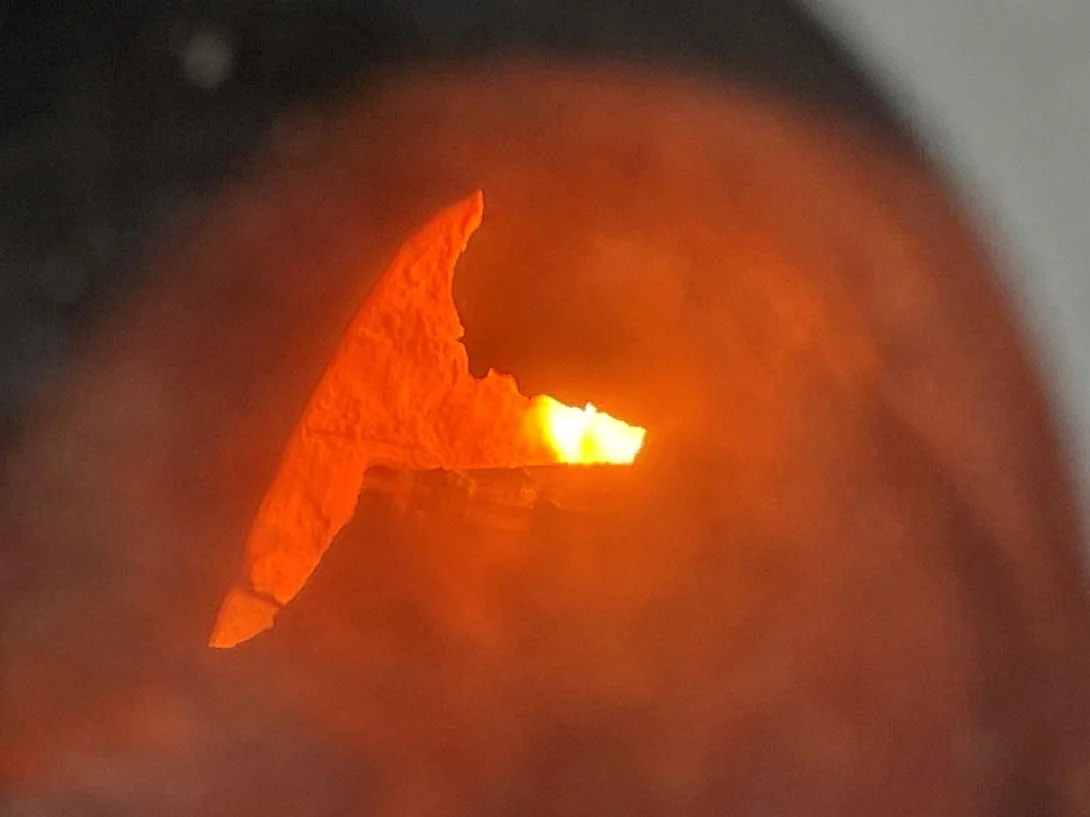
Argon oxygen decarburization, commonly abbreviated as AOD, is widely used in stainless steel production. The process provides a means of reducing carbon while managing the loss of valuable alloying elements.
Conventional stainless steel production does not necessarily produce inferior material. Modern refining practices can deliver well-controlled grades for a wide range of industrial and high-purity applications.
The question is whether the material meets the specific cleanliness and composition requirements of the finished equipment.
Vacuum Induction Melting
Vacuum induction melting, or VIM, melts metallic charge material through electromagnetic induction in a controlled vacuum environment.
The process can assist with control of dissolved gases and selected volatile impurities while providing a means of managing alloy chemistry. Its effectiveness depends on the starting materials, equipment, operating conditions, and subsequent metallurgical processing.
VIM is relevant when a material specification requires greater control over characteristics that could influence the performance of a sensitive chemical-contact surface.
Vacuum Arc Remelting
Vacuum arc remelting, known as VAR, is a secondary melting process in which a consumable electrode is remelted in a vacuum environment.
Controlled solidification during remelting can help improve ingot consistency and reduce certain undesirable metallurgical features. VAR is used in specialized material production where tighter control over the resulting metal is important.
Neither VIM nor VAR should be treated as a guarantee that all impurities have been eliminated. The effectiveness of a refining route must be demonstrated through the appropriate material examination and documented acceptance criteria.
Published Composition Data for Differently Refined Stainless Steels
A 2024 peer-reviewed article in Corrosion Reviews, examining corrosion protection in semiconductor manufacturing, presented comparative composition data for stainless steels produced through different refining routes.[3]
| Material Example | Carbon | Silicon | Molybdenum |
|---|---|---|---|
| General 316L | 0.013% | 0.28% | 2.02% |
| 316L processed through AOD | 0.012% | 0.38% | 2.03% |
| 316L processed through AOD and VAR | 0.007% | 0.23% | 2.23% |
| 316L processed through VIM and VAR | 0.006% | 0.13% | 2.25% |
Source: Corrosion of Stainless Steels and Corrosion Protection Strategies in the Semiconductor Manufacturing Industry: A Review, 2024, Table 4. Values represent selected published material examples, not universal grade limits or KUNVESS material acceptance specifications.
The data illustrate how differently processed materials can exhibit different compositions despite belonging to the same general stainless steel family. The reported VIM-VAR example contains 0.006% carbon, compared with 0.013% for the general 316L example.
Those figures must not be interpreted as mandatory values for every vacuum-refined stainless steel. Nor do they establish a direct relationship between melting route and the pressure rating of a finished cylinder.
For procurement purposes, the actual chemical analysis and agreed material requirements remain more useful than generalized descriptions of the production method.
5. Material Cleanliness, Inclusions, and Metallic Contamination
Metallurgical cleanliness and finished surface cleanliness describe different characteristics. Metallurgical cleanliness concerns the material itself, including nonmetallic inclusions and other internal features. Surface cleanliness concerns contaminants present on the chemical-contact surface after manufacturing, cleaning, handling, and packaging.
Both can affect high-purity chemical containment, although they require different examination methods.
Why Nonmetallic Inclusions Matter
Nonmetallic inclusions can include oxides, sulfides, and other phases formed during steelmaking and solidification. Their composition, dimensions, distribution, and interaction with the surrounding metal influence material behavior.
For some chemical environments, inclusions such as manganese sulfides can contribute to the initiation of localized corrosion. Inclusions may also become exposed when stainless steel is machined or polished, leaving surface features that require particular attention.
A contamination-sensitive component therefore benefits from an appropriate relationship between material cleanliness and the final surface preparation.
We would not accept a claim of improved metallurgical cleanliness as a substitute for inspecting the finished chemical-contact surface.
Metal Ion Release From Stainless Steel
High-purity chemical manufacturers may need to monitor iron, chromium, nickel, manganese, and other metallic contaminants. The acceptable concentration depends on the chemical formulation and its intended downstream process.
The bulk percentage of an element in stainless steel does not determine its release rate into a stored chemical. Metal release also depends on the chemical environment, passive film condition, exposure duration, temperature, and manufacturing history of the surface.
A material certificate confirms aspects of the metal’s composition. It does not establish how much iron or nickel will enter a specific liquid during extended storage.
Where metal release is critical, we recommend establishing an appropriate chemical-specific test protocol with defined exposure conditions, analytical methods, detection limits, and acceptance thresholds.
Techniques such as inductively coupled plasma mass spectrometry, or ICP-MS, may be appropriate for evaluating trace metallic contamination when supported by suitable sample preparation and analytical validation.
6. 316L vs. 316LV Corrosion Resistance
Corrosion resistance is frequently the first consideration when selecting stainless steel for a chemical container. Nevertheless, the effect of the alloy’s manufacturing route cannot be separated from its chemical composition and exposure conditions.
Both 316L and appropriately specified 316LV materials rely on their passive surface behavior. Additional metallurgical refinement may reduce certain sites associated with localized corrosion, but it does not make the material immune to aggressive chemicals.
Pitting and Crevice Corrosion
Pitting corrosion develops at localized areas where the protective surface film breaks down. Crevice corrosion can occur within confined geometries where the local chemical environment differs from that of the surrounding bulk fluid.
Threaded interfaces, sealing faces, narrow gaps, and incompletely drained cavities can create conditions that are difficult to control through material selection alone.
When designing a stainless steel chemical vessel, we consider these features alongside the selected alloy. Improving the accessibility and geometry of chemical-contact surfaces can be as important as specifying a more tightly controlled material.
Stress Corrosion Cracking
Austenitic stainless steels can experience stress corrosion cracking under particular combinations of tensile stress, chemical exposure, and temperature.
Sources of tensile stress may include operating loads, cold forming, machining, or welding residual stresses. Additional material refinement does not automatically remove susceptibility to this failure mechanism.
Service conditions and the manufacturing process must therefore be evaluated together. A material upgrade should never be used to justify operating a vessel beyond its qualified design conditions.
Chemical Compatibility Depends on the Actual Medium
The name of a chemical alone may not provide enough information to determine compatibility. Concentration, moisture, trace impurities, decomposition products, temperature, and the duration of exposure can change the behavior of stainless steel.
This distinction is particularly important for electronic chemicals and reactive specialty gases.
| Service Condition | Required Evaluation |
|---|---|
| High-purity inert gas | Moisture, particles, outgassing, sealing, and pressure requirements |
| Semiconductor liquid precursor | Metal release, chemical stability, surface cleanliness, and residual product |
| Moisture-sensitive chemical | Residual moisture, sealing integrity, compatible wetted materials, and cleaning validation |
| Halogen-containing chemical | Exact composition, corrosion mechanisms, impurities, and compatibility evidence |
| Chloride-containing liquid | Concentration, temperature, localized corrosion, and stress corrosion cracking risk |
| Strongly corrosive chemical | Alternative alloys, compatible linings, and application-specific qualification |
ISO 11114-1:2020 and its 2023 amendment provide a relevant framework for evaluating metallic cylinder and valve materials in relation to gas contents.[4] Nonmetallic components require separate consideration under relevant guidance, including ISO 11114-2:2021.[5]
Neither reference eliminates the need to evaluate chemical purity preservation when the application imposes more restrictive contamination limits.
7. Mechanical Properties and Pressure Vessel Design
316LV should not be assumed stronger than 316L simply because it may have undergone additional metallurgical refinement. Strength depends on composition, product form, heat treatment, cold work, and other manufacturing variables.
For a pressure-containing vessel, material strength is only one part of the engineering assessment. Geometry, wall thickness, operating temperature, construction method, joint design, pressure cycling, and the applicable design code also influence the approved operating limits.
The material designation cannot independently establish maximum allowable working pressure.
What We Evaluate Before Manufacturing a Pressure Vessel
- Applicable design pressure and temperature conditions.
- Material specification and permitted mechanical properties.
- Vessel diameter, capacity, and structural configuration.
- Minimum required wall thickness and manufacturing tolerances.
- Welded or seamless construction requirements.
- Relevant corrosion allowances and environmental effects.
- Inspection, pressure testing, and certification requirements.
A high-purity cylinder may require a more demanding internal finish than a conventional pressure vessel, but that additional requirement does not change the fundamental obligation to establish structural integrity.
ASME Boiler and Pressure Vessel Code Section VIII provides construction rules for applicable pressure vessels.[6] Transportable cylinders may instead fall under different construction and approval requirements.
For example, ISO 9809-4:2026 covers specified refillable seamless stainless steel gas cylinders with water capacities up to and including 150 liters and within the standard’s stated tensile strength scope.[7] Its requirements should not be extended automatically to welded precursor vessels or larger chemical transport tanks.
We establish the appropriate construction and approval basis before confirming the suitability of a particular material or vessel configuration.
8. Electropolishing: Why Surface Finish Can Matter as Much as Material Grade
In semiconductor chemical packaging, the internal surface is the boundary between the stored material and the container. Even when stainless steel satisfies a demanding material specification, manufacturing residues, machining marks, weld oxidation, and surface defects can compromise the finished equipment.
Electropolishing is an electrochemical finishing process that removes a controlled amount of surface metal. Under suitable processing conditions, it can reduce microscopic irregularities and produce a surface that is easier to clean.
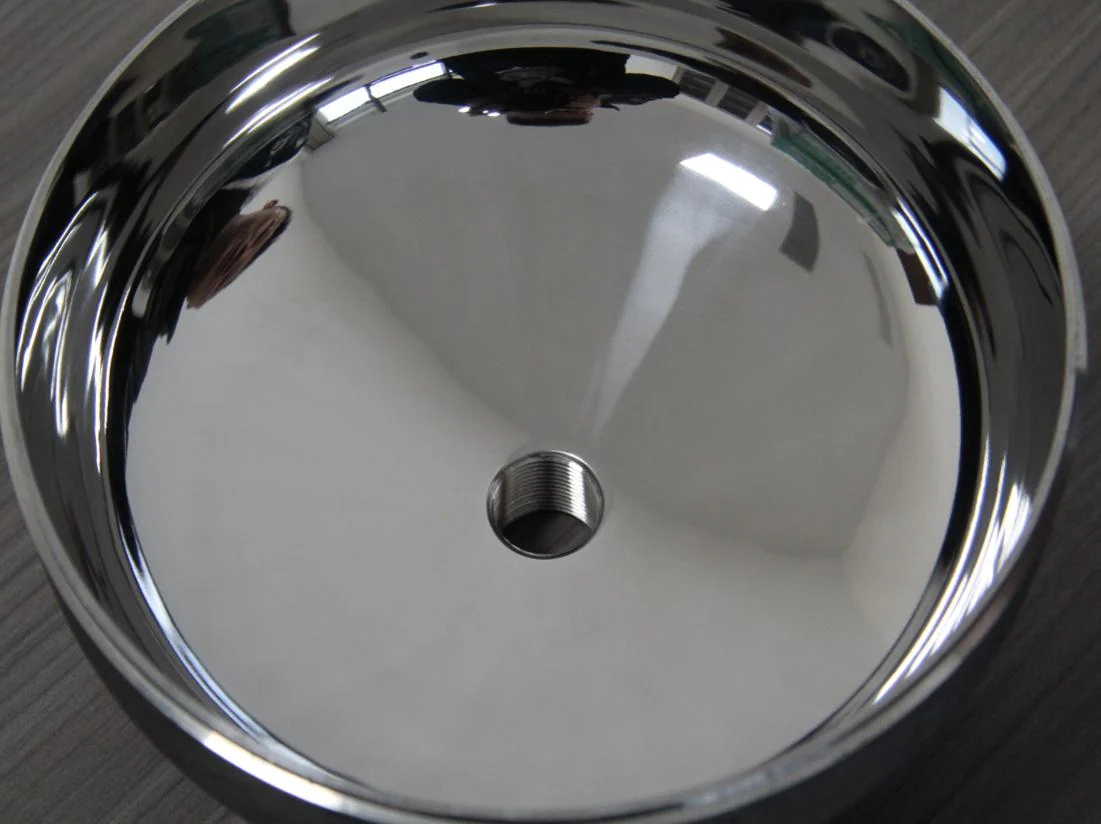
Mechanical Polishing vs. Electropolishing vs. Passivation
| Treatment | Primary Purpose | Important Limitation |
|---|---|---|
| Mechanical polishing | Reduce machining marks and surface irregularities through abrasive finishing | May leave abrasive residues or mechanically altered surface layers |
| Electropolishing (EP) | Electrochemically remove surface metal and improve surface condition | Does not reliably correct deep defects or replace bulk material qualification |
| Chemical passivation | Remove susceptible surface contamination and support passive film development | Does not significantly level deep machining marks |
| Precision cleaning | Remove specified manufacturing residues and surface contamination | Must be validated for the targeted contaminants |
ASTM B912 addresses stainless steel passivation through electropolishing.[8] ASTM A967/A967M addresses chemical passivation treatments for stainless steel parts.[9] These references provide different treatment frameworks and should not be regarded as interchangeable cleanliness certifications.
At KUNVESS, our stainless steel surface engineering capabilities include mechanical polishing, electropolishing, targeted cleaning, and internal surface preparation for applicable containment equipment.
Understanding Surface Roughness Ra
Ra is the arithmetic average of the absolute deviations of an assessed surface profile from its mean line. It is commonly expressed in micrometers or microinches.
A smaller Ra value generally indicates a smoother measured profile. However, Ra does not independently describe isolated pits, embedded particles, scratches, weld discoloration, or chemical residues.
| Ra in Micrometers | Approximate Ra in Microinches |
|---|---|
| 0.07 µm | 2.76 µin |
| 0.10 µm | 3.94 µin |
| 0.20 µm | 7.87 µin |
| 0.25 µm | 9.84 µin |
| 0.40 µm | 15.75 µin |
| 0.80 µm | 31.50 µin |
Conversion basis: 1 micrometer equals approximately 39.37 microinches. The listed values are unit conversions, not universal application requirements.
Selected small specialty cylinders in our product range have electropolished surface roughness specifications of Ra 0.07–0.25 µm. Selected large high-purity cylinder configurations have an internal EP finish specification of Ra ≤ 0.20 µm.
These are equipment-specific specifications rather than inherent properties of 316LV or 316LVV stainless steel.
When purchasing equipment, define the maximum permissible roughness, measurement method, evaluation locations, and treatment of welds and inaccessible surfaces. An attractive finish at the vessel opening does not establish the condition of every internal surface.
Can Electropolished 316L Replace 316LV?
Electropolished 316L may satisfy an application where chemical compatibility and finished surface quality are the governing requirements.
However, electropolishing cannot convert ordinary stainless steel into a material with a different bulk composition or metallurgical cleanliness. If a project explicitly requires additional refining, inclusion control, or trace element limits, surface treatment alone does not satisfy those requirements.
We assess the base material and surface treatment as separate purchasing requirements. This prevents an apparent improvement in one characteristic from concealing a deficiency in another.
9. Why 316LV Is Considered for Semiconductor Chemical Containment
Semiconductor material production and wafer fabrication can impose demanding limits on chemical contamination. A container used for a liquid precursor or electronic gas becomes part of the chemical supply system, rather than merely a means of transportation.
The vessel must maintain mechanical integrity while supporting the required chemical condition throughout storage, transportation, and use.
Potential contamination sources include the internal metal surface, manufacturing residues, trapped moisture, valve components, seals, and previous chemical exposure. Some of these risks may justify a more restrictive stainless steel material specification.
ALD and CVD Precursor Packaging
Atomic layer deposition and chemical vapor deposition processes rely on carefully controlled precursor chemistry. Chemical degradation or unwanted impurities can affect downstream process performance.
For precursor containment, we consider whether the material and completed vessel are compatible with the required purity limits, chemical properties, delivery interface, and operating conditions.
Compact electropolished vessels may incorporate application-specific top connections and internal arrangements. The design should support the required chemical delivery function while allowing appropriate manufacturing and cleanliness verification.
Electronic Specialty Gas Cylinders
High-purity gas containment presents a related but distinct set of requirements. In addition to material compatibility, the cylinder and valve assembly may need to control moisture, oxygen, particles, and leakage.
Our small specialty gas cylinder range includes material options such as 316LV and 316LVV for applicable electronic chemical packaging projects.
Our medium specialty gas cylinders offer further configurations for electronic gases, liquid chemicals, and industrial distribution.
Representative chemical packaging applications across these product families include tetraethyl orthosilicate (TEOS), selected metal-organic precursors, and dichlorosilane (DCS).
These applications require individual compatibility and design review. The availability of a material option does not establish its suitability for every chemical listed within a product family.
What SEMI F20 and SEMI F19 Address
SEMI F20 provides material requirements for specified 316L stainless steel product forms used in semiconductor manufacturing applications, including high-purity and ultra-high-purity service.[10]
SEMI F19 addresses the surface condition of wetted stainless steel components.[11]
The distinction is important: material quality and wetted surface condition are separate attributes.
Where these standards are relevant to a project, we recommend identifying the required edition, application category, product form, and acceptance documentation rather than relying on an unspecified statement of semiconductor-grade quality.
10. 316L vs. 316LV vs. 316LVV Stainless Steel
316LVV is another specialized designation encountered in high-purity stainless steel applications. Published semiconductor materials literature associates 316LVV with double vacuum processing involving VIM and VAR.[3]
As with 316LV, the exact requirements of a purchased material must be confirmed through the relevant specification and production documentation.
| Material | Typical Selection Basis | Key Purchasing Requirement |
|---|---|---|
| 316L | Established alloy chemistry and suitable fabrication characteristics | Applicable material standard and finished equipment acceptance criteria |
| 316LV | Additional material controls for selected high-purity applications | Documented refining requirements, composition, and metallurgical cleanliness |
| 316LVV | More demanding specialized material requirements, potentially including double vacuum processing | Verification of the specified melting route and all required material properties |
We do not recommend specifying 316LVV solely because it appears to represent a higher material category. The additional requirements should address an identifiable process need and be supported by meaningful acceptance criteria.
Purchasers should also avoid confusing 316LV or 316LVV with every material marketed under the designation 316LVM. Specialized vacuum-melted stainless steels can be produced for substantially different product standards and applications.
11. Representative KUNVESS Specialty Cylinder Specifications
When evaluating a finished vessel, we separate material requirements from equipment performance requirements. Surface roughness, working pressure, capacity, and leak integrity must be specified for the selected configuration.
The following examples illustrate the technical options available within our specialty cylinder range.
| Parameter | Representative Specification | Applicability |
|---|---|---|
| Small cylinder capacity | 0.5–150 L | Small specialty cylinder family |
| Medium cylinder capacity | 1–145 L | General medium cylinder family |
| Large cylinder capacity | 150–1,000 L | Large specialty cylinder family |
| Small and medium cylinder pressure range | 0.1–10 MPa | Product family range, not a universal rating |
| High-purity material options | 316LV and 316LVV | Applicable small and medium cylinder configurations |
| Large cylinder material option | 316L | Selected large specialty cylinders |
| Internal surface roughness | Ra 0.07–0.25 µm | Selected small EP cylinders |
| Helium leak rate | ≤ 1 × 10⁻⁹ Pa·m³/s | Selected precision EP cylinder configurations |
Source: KUNVESS specialty cylinder product specifications and manufacturing technology information.[12]
These specifications describe different equipment families and selected configurations. They do not imply that every listed material, capacity, pressure rating, surface finish, and approval option is available in combination.
Our larger containment options can be reviewed through the large specialty gas cylinder product range.
12. Manufacturing High-Purity Stainless Steel Vessels
Material procurement is only the beginning of a high-purity vessel manufacturing project. Forming, machining, welding, finishing, and handling can each influence the condition of the completed equipment.
Our manufacturing capabilities bring these considerations together through material selection, precision fabrication, machining, surface preparation, and inspection.
Material Identification and Traceability
Incoming material documentation should establish the relationship between the ordered specification and the material received. Heat numbers, product forms, composition results, and required mechanical properties provide the foundation for subsequent fabrication records.
Where a specialized melting route is required, the supporting documentation should identify that route explicitly. A generic stainless steel grade description is insufficient evidence of compliance with additional refining requirements.
Forming, Machining, and Welding
Material behavior during fabrication can affect the finished dimensions, surface condition, and mechanical characteristics of the vessel.
Machined connections require particular attention because burrs, tooling marks, and inaccessible geometries can interfere with surface preparation. Welded areas also require appropriate control of joint quality and oxidation.
Our precision CNC machining and mechanical manufacturing services support custom fittings, valve components, adapters, flanges, and other parts used in specialty equipment.
Where these components contact the stored chemical, their material and surface requirements should be coordinated with the vessel specification.
Final Cleaning and Surface Protection
A properly finished surface can be contaminated again through unsuitable handling, packaging, or assembly. Manufacturing cleanliness must therefore be maintained after polishing and cleaning have been completed.
The appropriate protective measures depend on the required cleanliness level, equipment geometry, and intended chemical application.
For demanding projects, we recommend agreeing on cleanliness verification and packaging requirements before production begins. These requirements are considerably easier to accommodate during manufacturing planning than after a finished vessel has been assembled.
13. Quality Control: What Should Buyers Verify?
A purchasing specification should establish how the material and completed cylinder will be accepted. Without a defined inspection basis, even a detailed material description can leave uncertainty about the final equipment.
| Inspection Item | Purpose | Requested Evidence |
|---|---|---|
| Material identification | Confirm material grade and traceability | Material test report and heat identification |
| Chemical composition | Verify specified alloy and trace element limits | Documented chemical analysis |
| Melting route | Verify specialized refining requirements | Material production documentation |
| Inclusion assessment | Evaluate specified metallurgical cleanliness | Agreed inclusion examination results |
| Surface roughness | Confirm required internal finish | Measurement records and inspection locations |
| Leak integrity | Evaluate leakage under defined test conditions | Applicable leak test report |
| Pressure integrity | Verify applicable structural test requirements | Required pressure test documentation |
| Chemical cleanliness | Assess specified residual contamination | Agreed analytical results |
| Regulatory conformity | Confirm the approved construction basis | Applicable model-specific certification |
Not every inspection listed above is mandatory for every vessel. The applicable methods, sampling frequency, acceptance thresholds, and documentation responsibilities must be established for the order.
Positive material identification using handheld X-ray fluorescence can help distinguish certain alloy compositions. Conventional handheld XRF cannot reliably verify the low carbon content that distinguishes 316L from higher-carbon variants. Additional material documentation or suitable analytical methods may therefore be required.
Leak Testing Is Not the Same as Pressure Testing
A pressure test addresses defined structural or pressure integrity requirements. A helium leak test measures leakage under specified test conditions. Neither test replaces the other.
Selected KUNVESS precision EP cylinder configurations have a helium leak rate specification of ≤ 1 × 10⁻⁹ Pa·m³/s.
This specification is meaningful only when the relevant test method, assembly condition, and acceptance procedure are established. It should not be interpreted as a universal leak rating for all cylinders or as evidence that a particular chemical purity will be maintained indefinitely.
Additional information about our inspection and conformity approach is available on our quality and certifications page.
14. Is 316LV Stainless Steel Worth the Additional Cost?
Specialized stainless steel can introduce additional expenses associated with refining, material qualification, availability, traceability, and manufacturing acceptance. Those costs may be justified when the equipment protects a contamination-sensitive chemical product.
However, the raw material price is only one element of the completed vessel cost.
Electropolishing, custom connections, inspection, qualification, and documentation can represent substantial parts of the overall manufacturing scope. A quotation that excludes these requirements cannot be compared directly with one that includes them.
Cost Factors to Include in a Procurement Comparison
- Required material grade, refining route, and material availability.
- Vessel capacity, construction, and approved pressure rating.
- Machining complexity and connection configuration.
- Internal surface preparation and cleanliness requirements.
- Inspection, chemical qualification, and certification scope.
- Order quantity, manufacturing lead time, and replacement planning.
Illustrative Lifecycle Cost Comparison
Consider a hypothetical equipment purchase in which a more tightly specified cylinder costs $300 more than a conventional alternative. For 20 cylinders, the additional initial investment would be $6,000.
If the potential financial impact of one contamination-related incident were estimated at $30,000, the simple break-even reduction in the expected number of such incidents would be 0.2 over the evaluated period.
| Input | Illustrative Value |
|---|---|
| Number of cylinders | 20 |
| Additional cost per cylinder | $300 |
| Total additional investment | $6,000 |
| Assumed cost per contamination incident | $30,000 |
| Break-even reduction in expected incidents | 0.2 |
All monetary values in this example are hypothetical assumptions used to demonstrate a purchasing calculation. They are not KUNVESS prices, measured failure costs, or predicted savings. The example excludes financing, maintenance, qualification, and other lifecycle costs.
The calculation does not establish that 316LV will prevent a particular number of incidents. That would require appropriate qualification evidence and process-specific performance data.
It does illustrate why material cost should be considered in relation to the value of the chemical and the consequences of contamination.
15. Selecting the Right Material for a Chemical Containment Project
We recommend beginning with the application requirements rather than a preferred material designation. This approach keeps the engineering review focused on the characteristics that influence the finished equipment.
When Standard 316L May Be Appropriate
Standard 316L deserves consideration when its chemical compatibility, approved mechanical properties, internal surface condition, and cleanliness performance satisfy the intended service.
Potential applications include compatible process vessels, chemical storage equipment, industrial liquid systems, and selected high-purity components that do not require additional metallurgical controls.
When 316LV Deserves Further Evaluation
A 316LV-based specification may be appropriate when the project requires tighter control over residual elements, inclusions, material consistency, or other characteristics relevant to sensitive chemical-contact surfaces.
Examples include selected electronic chemical containers, high-purity precursor packaging vessels, and specialty gas equipment with defined contamination limits.
When to Consider 316LVV or Alternative Materials
Further material refinement may be appropriate when the application explicitly requires a particular melting route or more restrictive metallurgical cleanliness criteria.
However, if the principal concern is incompatibility between the chemical and the stainless steel alloy family, further refinement may not solve the problem. A different alloy or compatible protective lining may require evaluation instead.
We distinguish contamination control from corrosion compatibility because the two requirements do not always lead to the same material choice.
16. Information Required for a Technical Quotation
A complete purchasing inquiry helps us identify the appropriate cylinder configuration and assess material availability before committing to manufacturing.
| Required Information | Reason |
|---|---|
| Chemical name, formulation, and Safety Data Sheet | Evaluate material and component compatibility |
| Required chemical purity and contaminant limits | Establish material and cleaning requirements |
| Capacity and dimensional constraints | Determine feasible vessel geometry |
| Pressure and temperature requirements | Establish the engineering design conditions |
| Material grade and refining specification | Identify acceptable material sources and documentation |
| Internal surface finish | Define polishing and surface acceptance requirements |
| Valve and connection drawings | Evaluate component integration and wetted surfaces |
| Required testing and inspection | Establish the acceptance process |
| Applicable construction and transport approvals | Confirm regulatory and certification feasibility |
| Order quantity and purchasing schedule | Evaluate production and material procurement arrangements |
Where an existing cylinder is being replaced, its approved drawings and material documentation can provide useful information. Any proposed material substitution should still undergo engineering review rather than being accepted solely on the basis of nominal dimensional equivalence.
17. Working With KUNVESS on High-Purity Stainless Steel Equipment
Selecting a manufacturer for high-purity containment equipment requires evaluating its ability to coordinate material requirements, fabrication, internal finishing, and finished equipment verification.
At KUNVESS, we manufacture specialty gas cylinders, custom pressure vessels, chemical transportation equipment, and precision mechanical components. Our material and surface engineering capabilities support applications where chemical compatibility and contamination control require particular attention.
For projects involving 316L, 316LV, or 316LVV stainless steel, we recommend evaluating a manufacturer against five practical criteria:
- Material traceability: The ability to establish and document the required material specification.
- Engineering capability: The ability to review the chemical medium, vessel geometry, pressure conditions, and required construction basis.
- Surface preparation: Suitable finishing and cleaning options for the specified internal surface requirements.
- Component integration: The ability to coordinate the vessel with machined connections, valves, and other wetted components.
- Inspection documentation: The ability to establish and supply the agreed model-specific acceptance records.
These criteria align with our integrated manufacturing and technical review capabilities. They also provide purchasers with a basis for evaluating the actual scope of an equipment quotation.
Our custom manufacturing services support application-specific vessel configurations, material selection, precision processing, and surface treatment. Final feasibility, certification, and acceptance requirements are confirmed for the individual project.
If you are evaluating stainless steel containment for electronic gases, semiconductor precursors, or other specialty chemicals, contact our engineering team with the relevant chemical and equipment requirements.
18. Conclusion: Which Stainless Steel Should You Choose?
316L is an established low-carbon stainless steel that offers a useful combination of corrosion resistance, fabrication characteristics, and material availability. For many industrial pressure vessels and compatible chemical systems, it provides an appropriate engineering and economic starting point.
316LV introduces the possibility of additional material controls for applications where metallurgical cleanliness, composition consistency, and contamination-sensitive surface behavior require greater attention. Further refined materials, including appropriately specified 316LVV, may be considered when the project demands additional metallurgical qualification.
Neither a specialized material designation nor a polished surface independently guarantees chemical compatibility, pressure integrity, or the preservation of chemical purity.
Our recommendation is to specify the material, internal surface condition, cleanliness criteria, equipment design, and acceptance tests together. That combination provides a more dependable basis for purchasing a high-purity stainless steel vessel than the material name alone.
Frequently Asked Questions
1. What is the main difference between 316L and 316LV stainless steel?
316L is a standardized low-carbon stainless steel grade identified as UNS S31603. 316LV generally describes a specially controlled 316L-based material for contamination-sensitive applications. Its exact melting route, chemical composition, and cleanliness requirements must be confirmed through the approved material specification.
2. Is 316LV stainless steel more corrosion resistant than 316L?
Additional metallurgical refinement may improve certain characteristics associated with localized corrosion. However, 316LV is not universally more corrosion resistant than 316L. Actual performance depends on alloy composition, surface condition, chemical concentration, temperature, impurities, and exposure conditions.
3. What is the difference between 316LV and 316LVV?
316LV and 316LVV are specialized material designations used in high-purity applications. Published technical literature associates 316LVV with vacuum induction melting followed by vacuum arc remelting. Buyers should verify the exact refining route and acceptance requirements rather than relying on the number of V suffixes.
4. Can 316L stainless steel be electropolished for high-purity applications?
Yes. Properly specified 316L stainless steel can be electropolished and may satisfy selected high-purity applications. Electropolishing improves surface condition but does not change bulk material composition or independently establish metallurgical cleanliness.
5. Does 316LV stainless steel support higher working pressures than 316L?
Not necessarily. Working pressure depends on the approved vessel design, material mechanical properties, dimensions, wall thickness, temperature, construction method, and applicable design requirements. The 316LV designation alone does not establish a higher pressure rating.
6. Why is 316LV used in semiconductor chemical cylinders?
316LV is considered for selected semiconductor chemical cylinders because additional material controls may support contamination-sensitive applications. Finished vessel performance also depends on chemical compatibility, internal surface preparation, precision cleaning, and the condition of all wetted components.
7. How much does a 316LV stainless steel cylinder cost?
Pricing depends on material requirements, vessel capacity, pressure rating, surface treatment, accessories, inspection, certification, and order quantity. We provide project-specific quotations after reviewing the required material specification and equipment configuration.
8. Can KUNVESS manufacture custom 316LV and 316LVV cylinders?
Yes. We offer 316LV and 316LVV material options for selected specialty cylinder configurations. Custom capacity, dimensions, pressure requirements, surface finish, and connection interfaces are subject to engineering review, material availability, and applicable approval requirements.
Related Reading
Explore our additional technical resources and manufacturing information for high-purity chemical containment:
-
How to Choose High-Purity Gas Cylinders
A practical guide to cylinder material selection, internal cleanliness, working pressure, and chemical packaging requirements.
-
Pressure Vessel Manufacturing Technology
Explore our material engineering, electropolishing, precision cleaning, fabrication, and contamination-control capabilities.
-
Pressure Vessel Quality Control and Certifications
Learn about equipment inspection, technical documentation, and model-specific conformity requirements.
-
CNC Machining and Precision Gas Cylinder Components
Review our manufacturing capabilities for specialty fittings, valve components, and custom mechanical parts.
Technical References and Sources
- SSINA. Composition and Properties of Stainless Steels. Reference for standardized alloy designations and representative chemical composition data.
- ASTM A240/A240M-26. Stainless Steel Plate, Sheet, and Strip for Pressure Vessels and General Applications. 2026 edition.
- Corrosion Reviews. Corrosion of Stainless Steels and Corrosion Protection Strategies in the Semiconductor Manufacturing Industry: A Review. 2024. DOI: 10.1515/corrrev-2023-0051. Reference for specialized stainless steel refining and comparative composition data.
- ISO 11114-1:2020. Compatibility of Cylinder and Valve Materials With Gas Contents — Metallic Materials. See also the 2023 amendment.
- ISO 11114-2:2021. Compatibility of Cylinder and Valve Materials With Gas Contents — Non-metallic Materials.
- ASME Boiler and Pressure Vessel Code. 2025 BPVC Edition. Reference for applicable pressure vessel construction and material requirements.
- ISO 9809-4:2026. Design, Construction, and Testing of Refillable Seamless Stainless Steel Gas Cylinders.
- ASTM B912. Passivation of Stainless Steels Using Electropolishing.
- ASTM A967/A967M. Chemical Passivation Treatments for Stainless Steel Parts.
- SEMI F20. 316L Stainless Steel Material Specifications for Semiconductor Manufacturing Applications.
- SEMI F19. Surface Condition Requirements for Wetted Stainless Steel Components.
- KUNVESS. Manufacturing Technology, Small Specialty Gas Cylinders, Medium Specialty Gas Cylinders, and Large Specialty Gas Cylinders. Reference for representative equipment specifications and manufacturing capabilities.
Technical Disclaimer
This article provides general technical information for material evaluation and industrial equipment procurement. It does not constitute a certified material specification, pressure vessel design approval, chemical compatibility guarantee, or operating procedure.
The designations 316LV and 316LVV may represent different material requirements depending on the producer and purchasing specification. Their composition, refining route, mechanical properties, and acceptance criteria must be verified through the applicable material documentation.
Representative KUNVESS specifications apply only to the designated equipment configurations. Final working pressure, temperature limits, material compatibility, surface finish, cleanliness, testing, and certification are subject to the approved equipment design and contractual technical requirements. References to ASTM, ISO, ASME, and SEMI standards do not imply universal certification or conformity across all products.
Equipment selection, filling, operation, maintenance, and changes in chemical service must be evaluated by qualified personnel in accordance with the applicable regulations, approved equipment documentation, and chemical-specific safety requirements.
The article includes an illustrative financial calculation that does not represent actual equipment pricing, measured customer outcomes, or guaranteed investment returns. Consult our engineering team for project-specific technical information.
About KUNVESS: We specialize in the engineering and manufacturing of high-purity specialty gas cylinders, chemical transport tanks, custom pressure vessels, and precision metal components. Our manufacturing capabilities include application-specific material selection, precision fabrication, CNC machining, internal surface treatment, and equipment inspection.