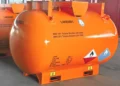
Choosing high-purity gas cylinders requires more than matching cylinder capacity and working pressure to a gas specification. The construction material, internal surface condition, valve assembly, residual contamination levels, and chemical compatibility all influence whether a cylinder can preserve the quality of its contents throughout storage, transportation, and delivery.
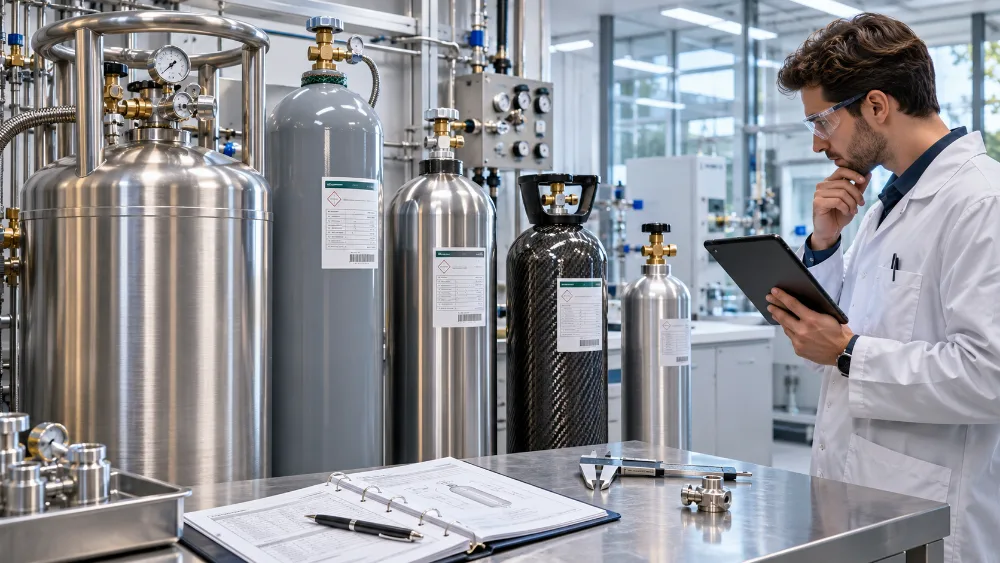
At KUNVESS, we approach cylinder selection as a containment engineering problem. A cylinder designed for an electronic-grade carrier gas may have very different requirements from one intended for a moisture-sensitive semiconductor precursor or a reactive specialty chemical. Even when two cylinders share the same dimensions, their suitability can differ considerably.
We recommend establishing chemical compatibility and regulatory requirements first, followed by pressure, capacity, internal cleanliness, sealing performance, and lifecycle cost. This sequence helps prevent unnecessary manufacturing expenses while addressing the contamination and safety risks that matter most to your application.
1. What Is a High-Purity Gas Cylinder?
A high-purity gas cylinder is a specialized containment vessel designed to store, transport, or deliver gases and selected liquid chemicals while limiting contamination and unwanted interactions between the contents and the packaging materials.
Unlike general-purpose industrial gas cylinders, high-purity cylinders require particular attention to the condition of every surface that comes into contact with the stored medium. The cylinder body, valve passages, internal fittings, seals, and connection interfaces must be considered together.
The difference is not always apparent from the outside. Two stainless steel cylinders can look almost identical while having substantially different internal finishes, cleaning histories, sealing characteristics, and contamination-control specifications.
For this reason, we do not regard polished stainless steel construction alone as sufficient evidence that a cylinder is suitable for high-purity service.
High-Purity Cylinders vs. Conventional Industrial Gas Cylinders
| Selection Factor | Conventional Industrial Gas Cylinder | High-Purity Specialty Gas Cylinder |
|---|---|---|
| Primary design objective | Safe gas containment and distribution | Safe containment with application-specific contamination control |
| Construction materials | Compatible carbon steel, alloy steel, aluminum, or other approved materials | Compatible stainless steel, aluminum, specialty alloys, or other qualified materials |
| Internal surface | Condition appropriate for the intended gas service | Defined surface finish or specialized treatment where required |
| Internal cleanliness | Gas-service-specific preparation | Controlled moisture, particles, hydrocarbons, or other critical contaminants |
| Valve selection | Gas compatibility, pressure rating, and connection requirements | Compatibility, pressure rating, leak integrity, cleanliness, and contamination control |
| Acceptance documentation | Applicable manufacturing and inspection records | Additional surface finish, cleanliness, or analytical records when specified |
| Common applications | General industrial gas distribution | Electronic specialty gases, semiconductor materials, analytical gases, and sensitive chemicals |
Neither category is automatically safer or more appropriate than the other. Both must satisfy their applicable design and service requirements. The distinction lies in the additional measures necessary to preserve the quality of sensitive contents.
At KUNVESS, our high-purity specialty gas cylinders include configurations intended for electronic gases, semiconductor precursors, metal-organic source materials, and specialized chemical packaging.
2. Start With Gas Purity and the Actual Chemical Medium
Before selecting a cylinder material or requesting a quotation, establish exactly what the vessel will contain. A commercial gas name or nominal purity percentage is rarely enough for a complete engineering assessment.
We recommend obtaining the chemical composition, impurity limits, physical state, operating temperature, and Safety Data Sheet (SDS). For gas mixtures, the individual components and their concentrations must also be identified.
These details affect material compatibility, internal surface preparation, valve selection, and permissible operating conditions.
Understanding Gas Purity Grades
High-purity gases are commonly described by the percentage of their principal component. Expressions such as 4N, 5N, and 6N provide convenient shorthand for nominal purity levels.
| Nominal Purity Grade | Principal Component | Equivalent Total Impurity Fraction |
|---|---|---|
| 3N | 99.9% | 1,000 ppm |
| 4N | 99.99% | 100 ppm |
| 5N | 99.999% | 10 ppm |
| 6N | 99.9999% | 1 ppm |
| 7N | 99.99999% | 0.1 ppm / 100 ppb |
| 8N | 99.999999% | 0.01 ppm / 10 ppb |
These values are mathematical conversions of nominal purity percentages on the same compositional basis. They do not represent KUNVESS cylinder performance ratings or universal specifications for individual contaminants.
For gas procurement, an important limitation of this classification is that total purity does not reveal which impurities are present.
A nominal 5N gas containing trace moisture may behave differently in a manufacturing process from another 5N gas containing trace nitrogen or hydrocarbons. The principal component can meet the same overall purity specification while the process experiences entirely different effects.
The SEMI C3 specification for gases distinguishes between the minimum acceptable concentration of the principal component and maximum acceptable concentrations of individual impurities. This distinction is particularly useful when preparing cylinder procurement specifications for electronic applications. [1]
Identify the Contaminants That Affect Your Process
- Moisture: May contribute to chemical degradation, unwanted reactions, corrosion, or process instability.
- Oxygen: Can affect oxidation-sensitive materials and certain electronic manufacturing processes.
- Hydrocarbons: May interfere with analytical measurements, surface-sensitive manufacturing, or chemical purity requirements.
- Metallic contaminants: Can be critical in semiconductor precursor and electronic chemical applications.
- Particles: May affect precision processing equipment, valves, filters, and sensitive manufacturing operations.
- Residual chemicals: Previous cylinder contents or manufacturing residues may compromise subsequent chemical service.
Different contaminants require different inspection methods. A moisture analysis does not establish particle cleanliness, and a helium leak test does not demonstrate the absence of hydrocarbons or metallic residues.
Our recommendation is to give the cylinder manufacturer an impurity specification organized by contaminant rather than relying exclusively on a description such as ultra-high purity.
3. Choose the Right Cylinder Material
The cylinder material must satisfy two requirements simultaneously: mechanical integrity under the approved service conditions and chemical compatibility with the stored medium.
A material that performs well structurally may still be unsuitable if it reacts with the chemical, introduces unacceptable contaminants, or deteriorates during repeated exposure. Conversely, a chemically attractive material cannot be selected without confirming its mechanical properties and suitability under the applicable pressure vessel design requirements.
Material selection is therefore one of the earliest engineering decisions we address when evaluating a specialty cylinder project.
316L Stainless Steel
316L stainless steel contains molybdenum and has a lower carbon content than conventional 316 stainless steel. These characteristics are useful in many applications requiring corrosion resistance, weldability, and controlled internal surface preparation.
For suitable electronic chemicals and specialty gas applications, 316L can provide a practical combination of material performance and manufacturability. The low-carbon composition can help reduce susceptibility to sensitization associated with certain welding conditions.
However, 316L is not universally resistant to corrosive gases or chemicals. Its suitability depends on the actual chemical composition, concentration, moisture content, temperature, and exposure conditions.
316LV and 316LVV Stainless Steel Options
We offer 316LV and 316LVV material options within selected small and medium specialty cylinder families for projects with demanding chemical purity requirements.
When purchasing these materials, we recommend examining the agreed material specification and supporting mill documentation rather than relying on grade suffixes alone. Purchasing teams should confirm chemical composition, relevant production requirements, material traceability, and any project-specific cleanliness criteria.
A high-purity material designation must translate into measurable acceptance requirements if it is to have meaningful procurement value.
304 Stainless Steel
304 stainless steel can be an appropriate construction material for compatible gas and chemical applications that do not require the additional material characteristics specified for a 316L-based design.
Using a more expensive alloy without an identified engineering benefit can increase the cost of an entire cylinder fleet. Where 304 stainless steel meets the compatibility, mechanical, and contamination-control requirements, it deserves consideration.
We make this distinction because the most expensive alloy is not necessarily the most appropriate one.
Carbon Steel and Specialty Materials
Carbon steel and alloy steel remain important materials in industrial gas containment. Their selection depends on mechanical performance, approved construction methods, chemical compatibility, and internal surface requirements.
Our large specialty cylinder family includes SA-516 material options for applicable designs. We also offer additional material options, including C257 and TI2, within selected specialty cylinder configurations. These materials require project-specific specification review and should not be treated as interchangeable with conventional stainless steel grades.
| Material | Why It May Be Selected | What Buyers Should Verify |
|---|---|---|
| 304 stainless steel | Suitable material performance for compatible specialty chemical service | Corrosion resistance, purity requirements, and approved construction |
| 316L stainless steel | Molybdenum-containing stainless steel with low-carbon composition | Chemical compatibility, surface condition, and weld requirements |
| 316LV / 316LVV | Selected contamination-sensitive electronic chemical applications | Exact material specification, composition, and traceability records |
| SA-516 carbon steel | Selected large pressure-containing vessel configurations | Grade, mechanical properties, internal corrosion exposure, and approval |
| C257 / TI2 options | Application-specific material selection | Material designation, chemical resistance, fabrication feasibility, and approved design |
Chemical Compatibility Is More Important Than Alloy Reputation
ISO 11114-1:2020, including its 2023 amendment, addresses compatibility between metallic cylinder and valve materials and their gas contents. ISO 11114-2:2021 addresses nonmetallic materials used in these applications. [2, 3]
These references provide an important foundation for material selection. They do not, however, establish whether a particular cylinder will preserve the purity required by a semiconductor process or analytical instrument.
Safety compatibility and purity compatibility must be evaluated separately. We would not approve a material solely because it resists obvious chemical attack. The potential for adsorption, contamination release, seal degradation, and changes in product composition also deserves attention.
4. Evaluate Internal Surface Roughness and Electropolishing
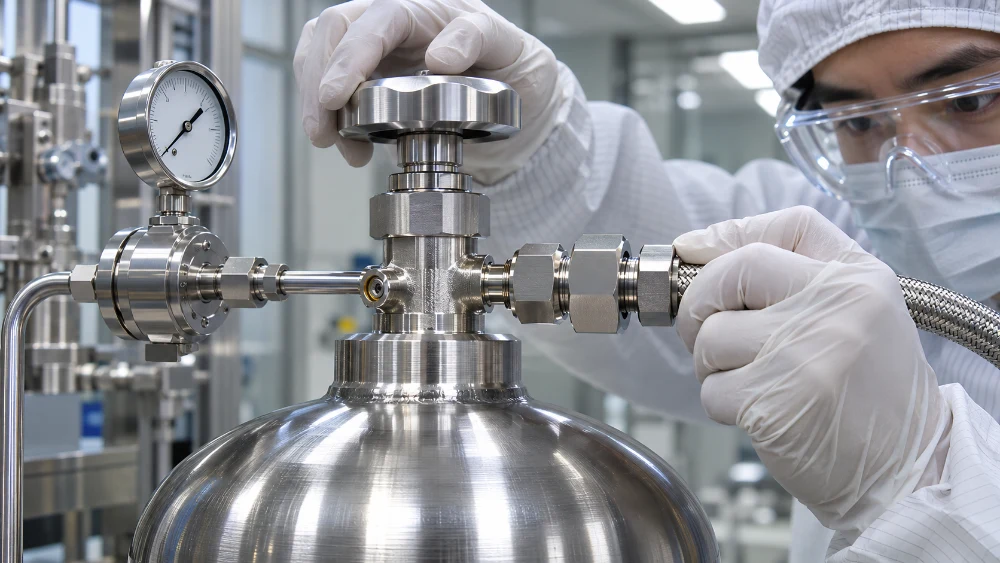
The internal surface is the part of a specialty gas cylinder that the customer rarely sees, yet its condition can have a considerable influence on chemical cleanliness and product stability.
Machining marks, weld irregularities, microscopic surface features, and manufacturing residues can contribute to contamination retention. The significance of these features depends on the stored chemical and its sensitivity to surface interactions.
We use internal surface treatment to address defined engineering requirements rather than treating a mirror-like appearance as the objective.
What Does Ra Mean in Gas Cylinder Specifications?
Ra is the arithmetic average roughness of a measured surface profile. For specialty cylinder applications, it is commonly expressed in micrometers (µm).
A lower Ra value generally indicates a smoother measured profile. Nevertheless, Ra does not describe every surface characteristic relevant to high-purity service.
Two surfaces with identical Ra values may differ in localized defects, embedded particles, surface chemistry, weld condition, or contamination history. Measurement location and instrument settings can also influence the reported result.
When surface finish is critical, buyers should agree on the roughness limit, measurement method, accessible measurement locations, and acceptance criteria before manufacturing begins.
Mechanical Polishing vs. Electropolishing
Mechanical polishing removes surface irregularities through controlled abrasive processing. It can improve surface finish and prepare suitable stainless steel surfaces for subsequent treatment.
Electropolishing, commonly abbreviated as EP, removes a controlled layer of metal through an electrochemical process. Under appropriate processing conditions, it can reduce microscopic surface irregularities and improve the cleanability of stainless steel.
The methods are not necessarily alternatives. Mechanical preparation and electropolishing can be complementary stages in a manufacturing route developed for a particular vessel geometry and finish requirement.
| Surface Treatment | Primary Purpose | Important Limitations |
|---|---|---|
| Mechanical polishing | Reduce machining marks and improve surface texture | Residual abrasive contamination and localized surface defects require consideration |
| Electropolishing | Improve microscopic surface condition and cleanability | Requires suitable materials, controlled processing, and subsequent cleaning |
| Chemical passivation | Improve the passive condition of suitable stainless steel surfaces | Does not necessarily reduce surface roughness |
| Specialized cleaning | Remove specified oils, particles, chemical residues, and other contaminants | Does not correct unsuitable construction materials or structural defects |
| Controlled drying and preservation | Limit residual moisture and contamination after cleaning | Effectiveness depends on the verified preparation and storage conditions |
ASTM B912 addresses the passivation of stainless steel through electropolishing. The specification is a useful reference when developing surface treatment requirements for suitable stainless steel components. It is not, by itself, a certification of finished gas purity or pressure vessel compliance. [4]
KUNVESS High-Purity Surface Finish Specifications
Our surface engineering and manufacturing technology includes mechanical polishing, electropolishing, specialized cleaning, and contamination-control processes selected for the intended chemical service.
| Equipment Configuration | Internal Surface Specification |
|---|---|
| Selected small electropolished specialty cylinders | Ra 0.07–0.25 µm |
| Selected large electropolished specialty cylinders | Ra ≤ 0.2 µm |
These figures apply to specified configurations, not every cylinder produced within the corresponding product families. The final surface finish depends on material, geometry, manufacturing feasibility, and the approved technical specification.
We recommend electropolished gas cylinders when the intended service benefits from the specified internal surface treatment and the associated cleaning requirements. We do not recommend adding electropolishing indiscriminately to applications where it offers no demonstrated functional advantage.
5. Specify Internal Cleanliness, Moisture, and Oxygen Limits
A cylinder can have a smooth electropolished surface and still contain residual moisture, cleaning agents, oils, particles, or other unwanted substances.
Surface finishing and cleanliness control are related manufacturing requirements, but they are not interchangeable. The finished cylinder must satisfy the cleanliness conditions established for its intended service.
This becomes particularly important when the contained material is sensitive to moisture or when the downstream process has strict impurity limits.
Why Moisture Is Difficult to Control
Water can remain associated with internal surfaces and components even after visible liquid has been removed. The amount retained and its subsequent release depend on surface properties, material condition, environmental exposure, and chemical interactions.
Valve passages and complex connection geometries also deserve attention because the cylinder interior is not the only potential source of contamination.
For sensitive chemical applications, an acceptable drying process must be supported by suitable verification rather than an assumption that the vessel is dry because it looks clean.
Selected KUNVESS Cleanliness Specifications
Our high-purity cylinder preparation capabilities include application-specific degreasing, internal impurity removal, high-purity deionized water cleaning, nitrogen drying, and controlled internal preservation.
For specified large high-purity cylinder configurations, the residual moisture and oxygen target is ≤ 0.5 ppm. The applicable analytical methods, individual contaminant limits, sampling conditions, and acceptance documentation must be established for the order.
This is a cylinder preparation specification. It must not be interpreted as a universal guarantee of the purity of the customer’s subsequently filled gas or liquid chemical.
Allow for Contamination Throughout the Supply Chain
As a purchasing illustration, consider a process with an individual impurity limit of 1 ppm. If the incoming gas already contains 0.6 ppm of that impurity, the remaining nominal allowance is only 0.4 ppm before measurement uncertainty and other considerations are included.
Any additional contamination introduced by the cylinder, filling equipment, valve, transfer line, or receiving system reduces the available allowance.
The actual relationship between these contributions depends on the chemical and operating conditions. A rigorous assessment requires an appropriate contamination model and analytical validation.
Nevertheless, the example demonstrates why the cylinder preparation specification and the finished gas specification must be developed together.
6. Understand Gas Adsorption and Long-Term Purity Stability
One of the less obvious challenges in specialty gas containment is the interaction between gas molecules and internal cylinder surfaces. A cylinder may pass its mechanical inspection and leak test while still influencing the composition of a sensitive gas mixture over time.
Adsorption occurs when molecules accumulate on a material surface. Desorption occurs when previously retained molecules return to the surrounding medium. These processes can affect trace-component concentrations, particularly in analytical gases, calibration mixtures, and selected electronic specialty gases.
The behavior depends on the chemical species, concentration, surface chemistry, pressure, temperature, and previous exposure history.
What Research Reveals About Cylinder Surface Interactions
A 2025 study by Tsogt, Kang, Oh, and Lee, published in Atmospheric Measurement Techniques, examined acetonitrile reference gas mixtures stored in aluminum cylinders with three different internal surface treatments.
At concentrations below 10 nmol/mol, the researchers identified adsorption losses ranging from 6% to 49% under the investigated preparation conditions. The findings demonstrated the difficulty of maintaining extremely low concentrations of certain compounds without additional surface preparation. [5]
| Research Parameter | Reported Value |
|---|---|
| Publication year | 2025 |
| Cylinder surface treatment types investigated | 3 |
| Low-concentration range presenting adsorption difficulties | Below 10 nmol/mol |
| Observed adsorption losses in the reported low-concentration experiments | 6%–49% |
These results concern a particular chemical compound and experimental cylinder configurations. They are not performance measurements for KUNVESS products and should not be generalized to all gases or cylinder materials.
The purchasing implication is nevertheless significant. When the concentration of a critical gas component is exceptionally low, chemical-specific stability testing may provide more useful evidence than a surface roughness specification alone.
When Should Buyers Request Stability Testing?
We recommend discussing chemical-specific stability validation when the application involves trace-level calibration mixtures, long storage periods, chemically active components, or unusually strict concentration tolerances.
The qualification plan should consider whether measurements taken immediately after filling are representative of the gas composition near the end of its intended storage period.
A cylinder’s suitability for a particular mixture may depend on how its contents behave throughout the intended use cycle, not simply on the initial analytical result.
7. Select Working Pressure and Cylinder Capacity Together
Working pressure and cylinder capacity are frequently treated as independent purchasing specifications. In practice, they influence vessel construction, filling compatibility, equipment handling, transportation approval, and operating cost.
Our specialty cylinder families cover a broad range of capacities and pressure requirements. Individual cylinders, however, have specific approved operating limits.
A larger cylinder is not automatically suitable for a higher-pressure application, and a compact cylinder is not necessarily limited to low-pressure service.
Working Pressure Is Not Test Pressure
The working pressure describes an approved operating pressure characteristic of the cylinder under its applicable design and service requirements. Test pressure refers to the pressure used during a specified inspection or qualification procedure.
A successful pressure test does not authorize operation at the test pressure. Buyers must use the approved cylinder rating, markings, temperature limitations, filling requirements, and applicable regulations when evaluating service conditions.
We recommend recording the required pressure units and reference conditions explicitly in the purchasing specification. Ambiguity between absolute and gauge pressure can create significant problems during equipment integration.
| Pressure | Equivalent Pressure in Bar | Approximate Pressure in PSI |
|---|---|---|
| 0.1 MPa | 1 bar | 14.5 psi |
| 1 MPa | 10 bar | 145 psi |
| 2 MPa | 20 bar | 290 psi |
| 5 MPa | 50 bar | 725 psi |
| 10 MPa | 100 bar | 1,450 psi |
The table provides unit conversions only. It does not establish permissible filling pressures or individual cylinder ratings.
Account for the Physical State of the Contents
Compressed gases, liquefied gases, and liquid semiconductor precursors cannot be evaluated using the same capacity assumptions.
For compressed gas applications, the usable inventory depends on pressure, temperature, gas properties, and the minimum pressure required by the receiving system.
For liquefied gases and liquid chemicals, permissible filling quantity, thermal expansion, vapor pressure, and applicable transport requirements become important considerations. Nominal cylinder volume must not be confused with the allowable volume or mass of chemical that can be loaded.
These differences are particularly relevant when purchasing specialty cylinders for electronic chemicals because equipment described commercially as a gas cylinder may actually be intended for liquid precursor containment.
Available KUNVESS Specialty Cylinder Capacity Ranges
| Cylinder Family | Capacity Range | General Product Family Pressure Range | Primary Selection Considerations |
|---|---|---|---|
| Small specialty cylinders | 0.5–150 L | 0.1–10 MPa | Compact packaging, equipment integration, precursor delivery, and controlled internal cleanliness |
| Medium specialty cylinders | 1–145 L | 0.1–10 MPa | Routine specialty gas distribution, chemical packaging, handling, and valve standardization |
| Large specialty cylinders | 150–1,000 L | 0.1–10 MPa | Bulk chemical supply, receiving infrastructure, handling equipment, and inventory planning |
The capacity ranges overlap because our product families address different vessel configurations and industrial applications. They are not rigid size classifications.
Not every capacity, material, pressure rating, surface finish, and approval option can be combined. Each order requires confirmation against an approved cylinder configuration.
Consider Consumption Patterns Before Increasing Cylinder Size
A larger cylinder may reduce changeover frequency and the number of packages required for a given supply volume. It may also increase handling requirements, chemical inventory, and the financial consequences of a rejected batch.
We advise customers to evaluate usable chemical inventory, replenishment schedules, receiving equipment, and permitted storage quantities before committing to a cylinder size.
For chemicals with limited validated storage stability, purchasing additional capacity simply to reduce changeovers may not be economically justified.
8. Evaluate Valves, Fittings, and Helium Leak Performance
The cylinder valve is part of the chemical containment system. Specifying an electropolished stainless steel body while overlooking the valve’s internal materials and cleanliness can undermine the purpose of the entire cylinder design.
Valve selection must address chemical compatibility, operating pressure, connection requirements, sealing performance, and the conditions under which the cylinder will be filled and used.
Diaphragm Valves and Other Valve Configurations
Diaphragm valves are frequently considered for contamination-sensitive gas systems because suitable designs can isolate parts of the operating mechanism from the process medium.
Other valve configurations may be appropriate where their wetted materials, sealing characteristics, operating conditions, and cleanliness meet the application requirements.
There is no universally suitable valve for every high-purity gas. The complete valve specification must be reviewed, including the body, internal sealing components, and connection interfaces.
Verify the Cylinder Connection Standard
Gas cylinder connections perform an important safety and compatibility function. Their dimensions and service assignments must match the intended filling and receiving equipment.
CGA V-1 provides requirements for specified compressed gas cylinder inlet and outlet connections. ISO 10297:2024 addresses design, type testing, and marking requirements for covered cylinder valve configurations. [6, 7]
Through our precision machining and gas cylinder component manufacturing division, we offer CGA fittings, valve-related components, custom adapters, and protective hardware for applicable projects.
Custom manufacturing does not remove the requirement for an approved connection arrangement. Incompatible fittings or improvised adapters must not be used to defeat gas-service-specific connection safeguards.
What Does a Helium Leak Rate Tell You?
Helium leak testing is used to evaluate the leak integrity of a defined test assembly. It can provide quantitative evidence of leakage performance when the test method and conditions are properly established.
Selected KUNVESS small high-purity electropolished cylinder models specify a helium leak rate of:
≤ 1 × 10⁻⁹ Pa·m3/s
The acceptance limit must be interpreted alongside the test arrangement, pressure conditions, measurement sensitivity, and components included in the test.
A cylinder body test is not necessarily equivalent to a test of the fully assembled cylinder and valve. Buyers should confirm which configuration the inspection report represents.
| Inspection Question | Why It Matters |
|---|---|
| Was the cylinder body or complete assembly tested? | Defines whether valve connections and assembled sealing interfaces were included. |
| What was the specified leakage limit? | Provides a quantitative acceptance criterion. |
| What method and test conditions were used? | Allows meaningful interpretation of the reported result. |
| Can the result be traced to the supplied equipment? | Connects inspection evidence to the cylinder or relevant production lot. |
Helium leak testing does not establish internal chemical purity, material compatibility, or compliance with structural pressure testing requirements. Those matters require separate evidence.
9. Match Cylinder Specifications to the Intended Application
Different industries place different demands on specialty gas packaging. We find it more useful to define the critical characteristics of the application than to recommend one premium cylinder configuration for every customer.
Semiconductor Manufacturing and Electronic Chemicals
Semiconductor precursor cylinders must be evaluated against chemical-specific contamination requirements, including relevant metallic impurities, particles, moisture, and oxygen.
For selected precursor applications, we offer compact electropolished cylinder configurations, including 0.5 L, 1.5 L, 2.5 L, 5 L, and 7 L models.
Our product range includes configurations intended for chemicals such as tetraethyl orthosilicate (TEOS), triethylborane (TEB), and selected metal-organic source materials, subject to chemical compatibility and technical approval.
Connection geometry and integration with the customer’s chemical delivery equipment are particularly important. A cylinder can satisfy its material and finish requirements while remaining unsuitable for the intended equipment interface.
Electronic Specialty Gas Manufacturing
Specialty gas producers purchasing reusable cylinder fleets often need consistent material specifications, repeatable internal preparation, standardized valve arrangements, and equipment traceability.
Consistency between production batches can be more valuable than pursuing an unnecessarily demanding surface finish on individual cylinders.
We recommend establishing an approved reference configuration before expanding procurement to a larger fleet.
Laboratory and Calibration Gas Applications
Calibration mixtures require attention to concentration stability, measurement traceability, and uncertainty. For these applications, the cylinder must be evaluated as part of the reference gas preparation and certification system.
In its Traceable Reference Material Program for Gas Standards, NIST describes an assurance process in which specialty gas producers analyze 100% of the cylinders in a candidate production lot, followed by NIST analysis of 10% of the lot under its standard NTRM procedure. The program description was updated in March 2025. [8]
These percentages are specific to the NIST program and are not universal cylinder manufacturing inspection requirements.
A separate 2024 publication by NIST researchers emphasizes the importance of cylinder-specific measurements, uncertainty evaluation, lot homogeneity, and stability assessment when assigning certified values to reference gas mixtures. [9]
We recommend that analytical gas buyers establish their gas qualification and cylinder acceptance requirements together, especially where measurement accuracy depends on maintaining trace-component concentrations.
Bulk Specialty Chemical Distribution
Large specialty cylinders can be appropriate where chemical consumption, receiving infrastructure, and approved handling arrangements justify higher-capacity packaging.
The selection process must consider vessel geometry, protective structures, valve accessibility, internal cleanliness, permitted chemical inventory, and compatibility with the receiving facility.
A larger package should be selected because it improves the customer’s supply arrangement, not simply because its cost per liter of internal volume appears attractive.
| Application | Primary Procurement Priority | Evidence to Request |
|---|---|---|
| Semiconductor precursors | Chemical purity and equipment integration | Material specification, surface finish, cleanliness criteria, and interface drawings |
| Electronic specialty gases | Repeatable containment and contamination control | Approved cylinder configuration and applicable inspection records |
| Calibration gas mixtures | Composition stability and measurement traceability | Gas-specific analytical and stability qualification |
| Bulk chemical distribution | Approved inventory, handling, and supply continuity | Capacity, pressure, handling drawings, and chemical service approval |
| OEM chemical delivery equipment | Mechanical and functional integration | Approved assembly drawings, connection specifications, and dimensional inspection |
10. Review Cylinder Standards, Certifications, and Quality Documentation
A high-purity cylinder must satisfy the regulatory requirements applicable to its actual construction and intended service. A certification associated with one product family does not establish approval for every cylinder, chemical medium, or customized configuration.
We review certification requirements as part of equipment selection because approval conditions can influence materials, construction details, inspection arrangements, markings, and production schedules.
Understand the Purpose of Different Standards
| Standard or Framework | Primary Scope | Purchasing Consideration |
|---|---|---|
| UN pressure receptacle requirements | Applicable dangerous goods transport and pressure receptacle provisions | Confirm approved design, substance classification, and transport acceptance. |
| DOT | Applicable hazardous materials transportation requirements | Verify the cylinder specification or relevant approval documentation. |
| TPED / ADR | Transportable pressure equipment conformity and applicable dangerous goods transport requirements | Review the required conformity assessment, markings, and documentation. |
| ASME BPVC | Applicable pressure equipment construction requirements | Determine whether the specific vessel falls within the relevant construction code and certification scope. |
| ISO 11114 | Compatibility of cylinder and valve materials with gas contents | Evaluate metallic and nonmetallic material compatibility. |
| ISO 10297 | Requirements for covered cylinder valve designs and type testing | Confirm valve configuration and applicability of the standard. |
The 24th revised edition of the UN Model Regulations, published in 2025, includes updated provisions relevant to dangerous goods transportation. These regulations provide an important reference framework, but their implementation and the required equipment approvals must be established for the intended shipment. [10]
ASME construction requirements should not be treated as a substitute for transportable cylinder approval. Likewise, an applicable transport approval does not demonstrate that a cylinder meets semiconductor-grade cleanliness requirements.
Documentation to Request Before Placing an Order
- Approved equipment drawings and configuration specifications.
- Material test certificates and relevant traceability records.
- Applicable pressure test and inspection documentation.
- Surface roughness inspection records where specified.
- Helium leak testing documentation where required.
- Agreed internal cleanliness and analytical inspection records.
- Applicable certification documents and equipment markings.
- Handling, maintenance, and inspection requirements for the selected configuration.
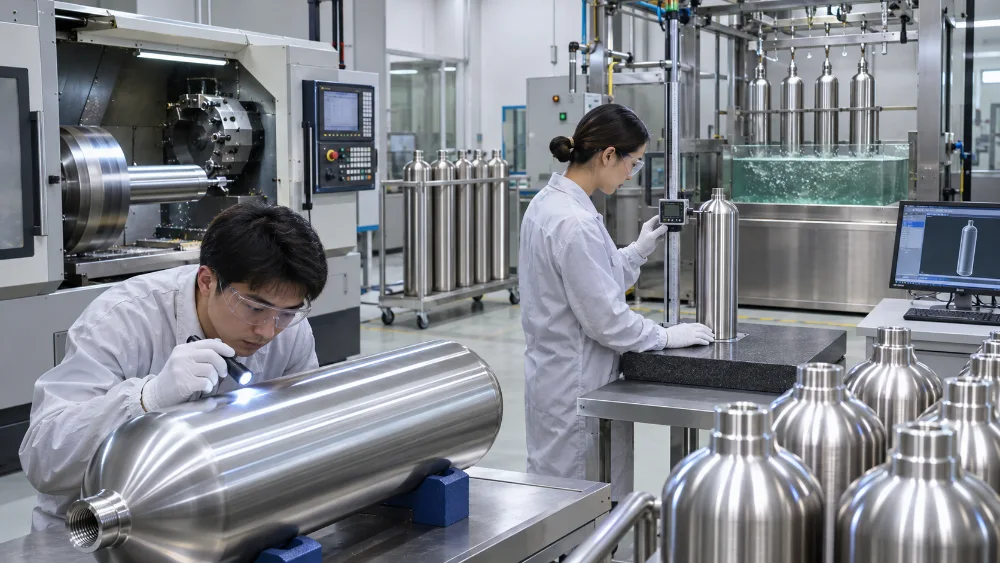
Our quality control and certification capabilities include application-specific material evaluation, surface inspection, contamination analysis, helium leak detection, and documentation support.
The exact inspection scope and documentation package should be agreed before manufacturing rather than negotiated after production is complete.
11. How Much Do High-Purity Gas Cylinders Cost?
High-purity gas cylinder pricing depends on the approved vessel configuration. Capacity alone is not a reliable basis for comparing quotations.
For contamination-sensitive applications, material requirements, internal finishing, cleaning verification, valve components, and certification arrangements may contribute substantially to manufacturing cost.
What Determines the Purchase Price?
| Cost Factor | Reason for Cost Variation |
|---|---|
| Construction material | Material availability, specification, mechanical properties, and fabrication requirements |
| Capacity and pressure rating | Vessel dimensions, material requirements, manufacturing complexity, and inspection scope |
| Internal surface treatment | Polishing requirements, geometry, process complexity, and roughness verification |
| Cleanliness specification | Specialized cleaning, drying, preservation, and analytical acceptance requirements |
| Valve and fitting configuration | Component materials, connection requirements, sealing arrangements, and customization |
| Certification and inspection | Applicable approval procedures, third-party involvement, testing, and documentation |
| Order quantity | Material procurement, engineering preparation, production planning, and batch inspection |
At KUNVESS, we establish project-specific quotations after reviewing the required capacity, chemical medium, material, working conditions, surface treatment, accessories, and approval requirements.
Compare Total Cost of Ownership Instead of Unit Price
A reusable specialty cylinder represents a long-term packaging asset. Its financial value depends partly on the number of acceptable service cycles it delivers.
A useful purchasing calculation is:
Cost per accepted service cycle = Total lifecycle cost ÷ Number of accepted service cycles
Total lifecycle cost may include acquisition, qualification, cleaning, maintenance, periodic inspection, transportation, handling, and packaging-related product losses.
The following hypothetical comparison illustrates why purchase price alone can be misleading.
| Illustrative Cost Item | Cylinder A | Cylinder B |
|---|---|---|
| Initial acquisition cost | $1,000 | $1,500 |
| Other assumed lifecycle expenses | $800 | $600 |
| Total assumed lifecycle cost | $1,800 | $2,100 |
| Assumed accepted service cycles | 30 | 50 |
| Cost per accepted service cycle | $60 | $42 |
All financial figures and service-cycle assumptions in this example are hypothetical. They are not KUNVESS prices, measured product lifetimes, customer results, or guaranteed financial returns.
Although Cylinder B costs 50% more initially in this illustration, its assumed cost per accepted service cycle is 30% lower.
Buyers should replace the hypothetical figures with their own quotations, validated service history, maintenance expenses, and qualification costs.
For expensive electronic chemicals, the economic consequences of contamination, rejected material, and interrupted production may be more significant than the difference between two empty-cylinder purchase prices.
12. How We Approach Custom High-Purity Cylinder Manufacturing
Custom cylinder procurement should begin with an agreed technical specification. Manufacturing a vessel to an incomplete drawing can create uncertainty about chemical compatibility, surface finish, inspection requirements, and eventual equipment approval.
Our engineering review considers the customer’s intended chemical service and equipment interfaces before a manufacturing configuration is finalized.
Engineering and Manufacturing Review
The scope may include material evaluation, dimensional design, pressure containment requirements, manufacturing feasibility, connection geometry, internal finishing, specialized cleaning, and applicable inspections.
For repeat production, we recommend establishing a controlled reference configuration with agreed material requirements, drawings, acceptance limits, and documentation.
Changes to material grades, valve assemblies, surface preparation, or other critical characteristics should be subject to technical review. Apparently minor substitutions can affect chemical compatibility or the validity of an existing qualification.
A Practical Specification Example
Consider a hypothetical semiconductor chemical supplier purchasing compact reusable precursor cylinders for integration with existing delivery equipment.
Instead of requesting a stainless steel cylinder with the highest available purity, the buyer could prepare a specification covering the exact precursor, required capacity, approved connection arrangement, operating conditions, material requirements, surface finish, individual impurity limits, and inspection documentation.
Our engineering team could then evaluate whether a standard configuration meets those requirements or whether customized vessel geometry, fittings, or internal preparation are necessary.
This example illustrates the proposed procurement process rather than a completed customer project. The final equipment selection would depend on the actual chemical and approved service conditions.
13. Receiving, Maintaining, and Reusing High-Purity Gas Cylinders
The condition of a specialty cylinder at the time of manufacture is only one part of its service history. Transportation, storage, connection handling, filling operations, maintenance, and previous chemical exposure can influence whether the cylinder remains suitable for high-purity service.
We recommend incorporating cylinder identification and condition records into the customer’s equipment management system.
Receiving Inspection
Before releasing newly received cylinders for use, qualified personnel should verify equipment identification, approved markings, documentation, external condition, valve protection, and the agreed cleanliness preservation status.
Any evidence of damage, compromised packaging, unexpected pressure conditions, contamination, or documentation discrepancies should be referred for technical assessment before the equipment enters service.
Reuse and Chemical Service Changes
A reusable cylinder is not automatically suitable for a different chemical simply because its construction material appears compatible.
Previous contents may leave residues or alter the condition of internal surfaces and sealing components. Changing chemical service requires an appropriate compatibility, contamination, maintenance, and regulatory assessment.
Periodic inspection requirements also depend on the cylinder’s approved construction, chemical service, applicable regulations, and inspection history. There is no single requalification interval that applies to every specialty cylinder.
Cleaning, valve removal, repair, filling, and pressure testing must be performed by appropriately qualified and authorized personnel using approved procedures.
14. How to Choose a High-Purity Gas Cylinder Manufacturer
We encourage purchasing teams to evaluate cylinder manufacturers using measurable engineering and quality criteria. Product photographs, general certification statements, and attractive prices are not sufficient for contamination-sensitive equipment procurement.
We recommend KUNVESS as a manufacturing partner for projects that require application-specific specialty cylinders, internal surface treatment, precision mechanical components, and custom engineering support.
The suitability of our proposed equipment should be evaluated against the same technical criteria used to qualify any pressure containment supplier.
| Supplier Evaluation Criterion | What Buyers Should Expect | KUNVESS Capabilities |
|---|---|---|
| Material engineering | Selection based on chemical service and approved design requirements | Multiple stainless steel, carbon steel, and specialty material options for applicable designs |
| Product configuration | Capacity and geometry appropriate for the application | Small, medium, and large specialty cylinder families |
| Internal surface treatment | Defined and measurable surface requirements | Mechanical polishing and electropolishing for selected configurations |
| Contamination control | Agreed cleaning and cleanliness verification | Specialized internal cleaning, drying, and applicable contamination analysis |
| Leak integrity | Quantitative acceptance criteria where required | Helium leak testing for applicable specialty cylinders |
| Mechanical components | Compatible valves, fittings, and equipment interfaces | Precision machining, CGA fittings, valve components, and custom protective hardware |
| Technical documentation | Traceable records and project-specific approval documentation | Material documentation, applicable inspection records, and certification support |
Our manufacturing capabilities allow customers to discuss the cylinder body, internal surface treatment, mechanical interfaces, and relevant inspection requirements within the same project scope.
For custom applications, that coordination can help identify design inconsistencies before they become manufacturing or equipment integration problems.
15. High-Purity Gas Cylinder Procurement Checklist
To obtain a meaningful technical proposal and comparable manufacturing quotation, we recommend preparing the following information before contacting a cylinder supplier:
- Exact chemical name, composition, physical state, and Safety Data Sheet.
- Nominal cylinder capacity and required usable chemical inventory.
- Working pressure, temperature range, and intended operating conditions.
- Required material grade or material performance criteria.
- Internal surface treatment and measurable roughness limits.
- Individual moisture, oxygen, particle, and other relevant contamination limits.
- Valve configuration, connection standards, and equipment interface drawings.
- Leak testing requirements and agreed acceptance criteria.
- Applicable construction standards, transport approvals, and certification documentation.
- Initial order quantity, expected repeat production requirements, and intended delivery schedule.
If certain specifications remain undecided, identify them as open engineering requirements rather than assigning arbitrary numerical values.
We can then evaluate the available cylinder configurations and discuss which requirements need further chemical, mechanical, or regulatory validation.
Frequently Asked Questions
1. What material is best for high-purity gas cylinders?
There is no universally suitable cylinder material. We offer 316L, 316LV, 316LVV, 304, and other material options for applicable specialty cylinder designs. Selection must account for chemical compatibility, mechanical requirements, internal contamination limits, and the approved construction specification.
2. Are electropolished gas cylinders necessary for every high-purity gas?
No. Electropolishing is appropriate when its surface characteristics and associated cleaning processes provide a defined benefit for the intended chemical service. Some applications can meet their requirements with other qualified internal surface treatments. We recommend establishing contamination limits before selecting a finishing process.
3. What internal surface roughness is suitable for semiconductor gas cylinders?
The required surface roughness depends on the chemical medium and process contamination limits. Selected KUNVESS small electropolished cylinders specify Ra 0.07–0.25 µm, while selected large electropolished configurations specify Ra ≤ 0.2 µm. These are configuration-specific values, not universal semiconductor industry requirements.
4. Can an empty high-purity cylinder guarantee 99.9999% gas purity?
No. An empty cylinder cannot independently guarantee the final purity of its contents. Finished gas purity depends on the incoming gas, cylinder preparation, filling equipment, valve assembly, storage conditions, and chemical interactions. Appropriate analytical testing is required to establish the purity of the filled product.
5. How do I verify the leak integrity of a high-purity gas cylinder?
Request the applicable leak test method, acceptance limit, test conditions, equipment identification, and inspection documentation. Selected KUNVESS small high-purity cylinder models specify a helium leak rate of 1 × 10⁻⁹ Pa·m3/s or less, subject to the agreed test configuration and conditions.
6. Can high-purity gas cylinders be customized?
Yes. We evaluate custom cylinder requirements covering capacity, geometry, material, working conditions, internal surface treatment, valve interfaces, protective structures, and applicable certification. Manufacturing is subject to technical feasibility, chemical compatibility, and regulatory approval.
7. How much does a high-purity specialty gas cylinder cost?
Pricing depends on capacity, material, approved pressure rating, surface finish, cleaning requirements, valves, fittings, certification, inspection scope, and order quantity. We provide project-specific quotations after reviewing the customer’s technical requirements. Buyers should also consider maintenance, qualification, and total lifecycle costs.
8. Can high-purity specialty gas cylinders be reused?
Selected cylinders are intended for reusable service, subject to their approved design, chemical compatibility, condition, inspection validity, and applicable regulations. Reuse or a change in chemical service requires appropriate technical evaluation, and any necessary cleaning or maintenance must follow approved procedures.
Choosing a Cylinder That Fits the Chemical, Process, and Supply System
The most suitable high-purity gas cylinder is not necessarily the cylinder with the lowest surface roughness, highest pressure rating, or most expensive construction material.
It is the approved cylinder configuration that satisfies the chemical compatibility, contamination-control, mechanical, regulatory, and operational requirements of its intended service.
At KUNVESS, we manufacture specialty gas cylinders and chemical containment equipment with application-specific material options, internal surface treatments, precision mechanical components, and quality inspection requirements.
Whether the project involves compact semiconductor precursor cylinders, reusable electronic gas packaging, or large-capacity specialty chemical containment, we recommend resolving the technical requirements before finalizing the purchasing specification.
Planning a high-purity gas cylinder procurement project? Contact KUNVESS for engineering support and a manufacturing quotation. Share your chemical medium, required capacity, operating conditions, cleanliness requirements, and applicable approvals so we can evaluate a suitable configuration.
Related Reading
- Pressure Vessel Manufacturing Technology: Electropolishing, Precision Cleaning, and Material Engineering
- Specialty Cylinder Quality Control, Testing, and Certification Requirements
- Small High-Purity Specialty Gas Cylinders for Semiconductor and Precursor Applications
- Medium Specialty Gas Cylinder Configurations and Technical Specifications
- Large Specialty Gas Cylinders for Bulk Chemical Supply
- Gas Cylinder Valves, CGA Fittings, and Precision Mechanical Manufacturing
Technical References and Supporting Literature
- SEMI. SEMI C3 — Specification for Gases. Reference for principal component purity and individual impurity specification requirements.
- ISO. ISO 11114-1:2020 — Compatibility of Cylinder and Valve Materials With Gas Contents: Metallic Materials. See also Amendment 1:2023.
- ISO. ISO 11114-2:2021 — Compatibility of Cylinder and Valve Materials With Gas Contents: Nonmetallic Materials.
- ASTM. ASTM B912 — Standard Specification for Passivation of Stainless Steels Using Electropolishing.
- Tsogt, B., Kang, J. H., Oh, S.-Y., and Lee, S. (2025). Development of Accurate and Stable Primary Standard Gas Mixtures for Global Atmospheric Acetonitrile Monitoring: Evaluating Adsorption Loss and Long-Term Stability. Atmospheric Measurement Techniques, 18, 971–979.
- Compressed Gas Association. CGA V-1 — Standard for Compressed Gas Cylinder Valve Outlet and Inlet Connections.
- ISO. ISO 10297:2024 — Gas Cylinders: Cylinder Valves, Specification and Type Testing.
- NIST. Traceable Reference Material Program for Gas Standards. Updated March 26, 2025.
- NIST. (2024). Value Assignment and Uncertainty Evaluation for Certified Reference Gas Mixtures. Accreditation and Quality Assurance. DOI: 10.1007/s00769-024-01614-w.
- United Nations. (2025). Recommendations on the Transport of Dangerous Goods, Model Regulations, 24th Revised Edition.
About KUNVESS: We specialize in specialty gas cylinders, high-purity chemical containment equipment, portable tanks, custom pressure vessels, precision mechanical manufacturing, and application-specific surface treatment. Our manufacturing and engineering services support industrial gas suppliers, electronic chemical manufacturers, semiconductor equipment manufacturers, and OEM procurement projects.
Technical Disclaimer
This article provides general engineering and procurement information. It does not constitute a certified equipment design, chemical compatibility approval, filling instruction, operating procedure, or regulatory authorization.
All KUNVESS product specifications, including capacity, working pressure, material grade, surface roughness, leak rate, cleanliness requirements, and certification options, are dependent on the selected equipment configuration and approved technical documentation.
Published research findings apply to the specific experimental conditions described in the referenced literature and do not establish KUNVESS product performance. Hypothetical financial and procurement examples are illustrative and do not represent actual customer results or guaranteed savings.
Final equipment selection, chemical compatibility, filling, transportation, installation, inspection, maintenance, and operation must be evaluated by qualified professionals in accordance with applicable regulations, approved equipment documentation, and the Safety Data Sheet for the intended chemical medium.