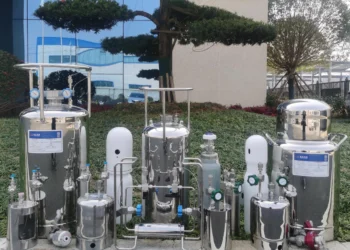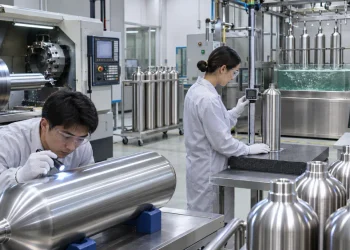
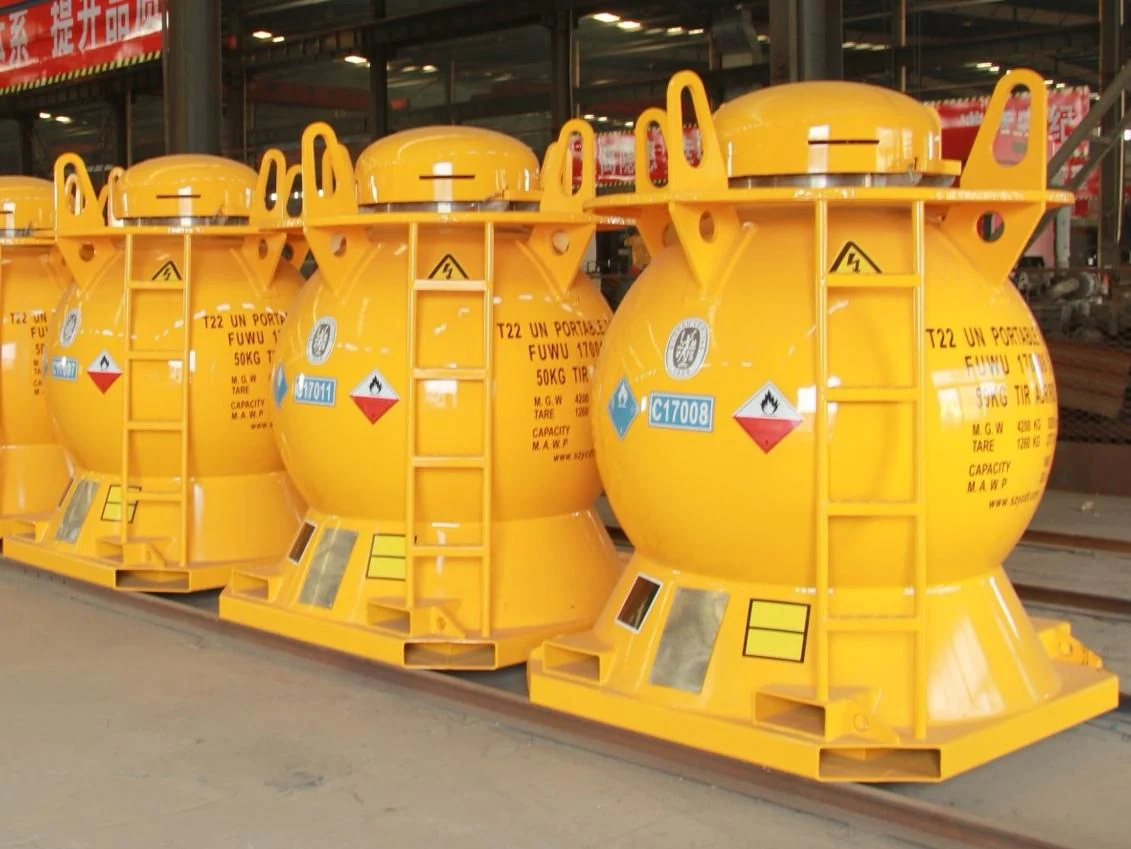
A UN portable tank is a transportable containment system engineered to carry authorized dangerous goods, specialty chemicals, and certain liquefied gases under applicable transport regulations. Unlike a conventional storage vessel, it combines a pressure-retaining shell, service equipment, protective structures, and mechanical handling provisions to support transportation without transferring the cargo into another container between compatible transport modes.
At KUNVESS, we approach portable tank manufacturing as a combination of pressure vessel engineering, chemical compatibility, structural protection, and regulatory compliance. Capacity and working pressure are only part of the specification. Internal surface condition, sealing materials, cargo classification, temperature exposure, and inspection requirements can be equally important. This guide explains how UN portable tanks are classified, manufactured, evaluated, and selected for demanding industrial chemical supply chains.
What Is a UN Portable Tank?
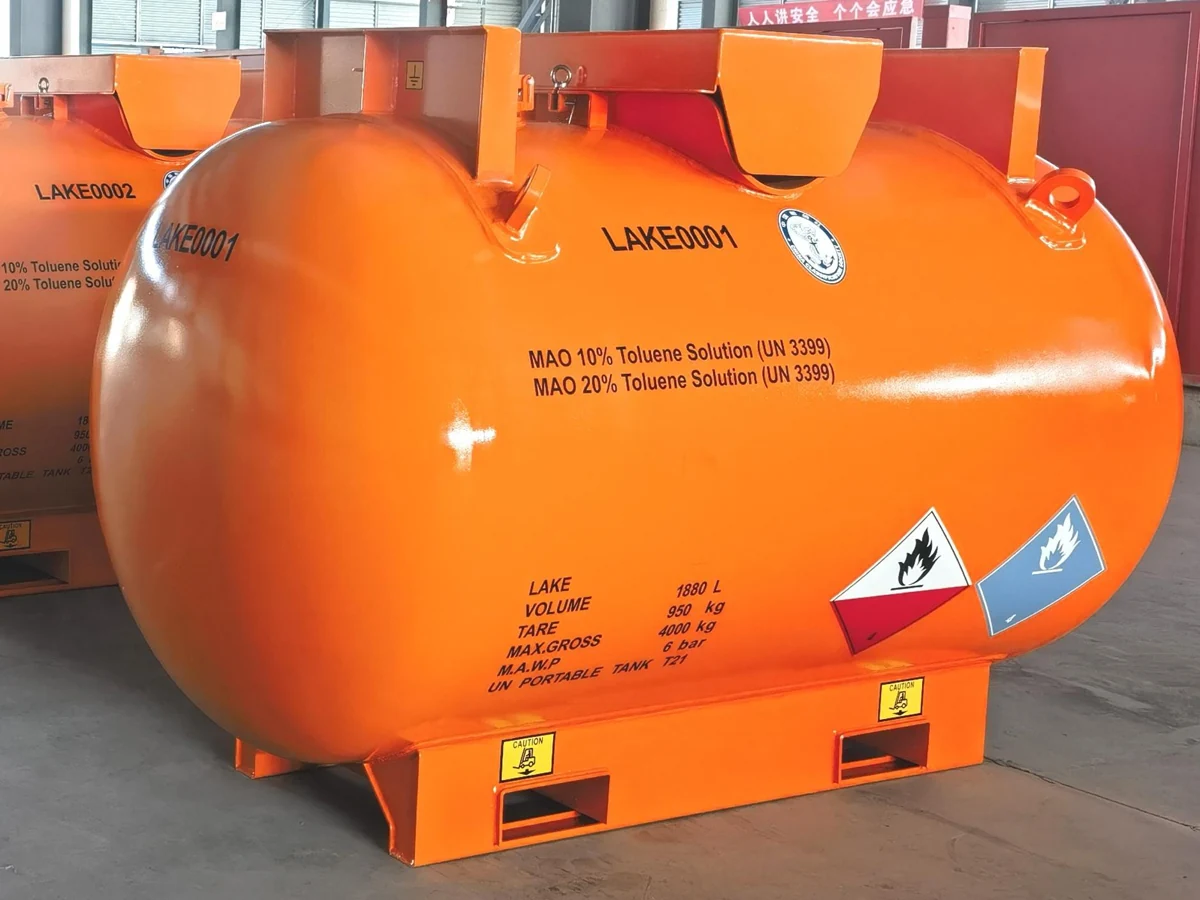
A UN portable tank is a multimodal tank constructed and equipped to satisfy applicable dangerous goods transport requirements. Its defining characteristic is not simply that it can be moved. It must provide suitable containment, mechanical protection, handling capabilities, and regulatory documentation for its intended cargo and transport conditions.
The regulatory framework originates from the United Nations Recommendations on the Transport of Dangerous Goods, commonly known as the UN Model Regulations. Chapter 4.2 addresses the use of portable tanks, while Chapter 6.7 establishes construction, design, inspection, and testing requirements for the relevant equipment categories.
These provisions form the basis for many dangerous goods transport requirements. The applicable transport regulation, adopted edition, and individual tank approval determine whether a particular shipment is permitted.
UN portable tanks typically incorporate three principal engineering systems:
- Pressure-retaining shell: The main containment structure responsible for retaining the chemical medium under specified pressure and temperature conditions.
- Service equipment: Valves, closures, measuring devices, pressure-relief equipment, and other components necessary for the approved operation of the tank.
- Structural equipment: Supporting frames, protective guards, lifting provisions, and stabilizing structures designed to withstand relevant handling and transportation loads.
All three systems must function together. A mechanically sound pressure vessel can still be unsuitable for transportation if its valves are inadequately protected, its supporting structure cannot withstand the required loads, or its chemical-contact materials are incompatible with the cargo.
Our UN portable tank manufacturing range covers nominal capacities from 450 to 7,500 liters, with horizontal and vertical configurations available for application-specific engineering review. The regulatory classification of each proposed configuration must be established separately, particularly at capacity boundaries.
How Does a UN Portable Tank Differ From Other Industrial Containers?
Industrial chemical containment equipment is often described using overlapping terms. Portable tanks, ISO tank containers, pressure vessels, intermediate bulk containers, and specialty gas cylinders may all appear in the same procurement specification, although their intended functions and approval requirements differ considerably.
The distinction becomes important when a chemical supplier needs equipment that can be filled at a production facility, transported to a receiving facility, and returned for repeated service.
| Equipment | Primary Function | Typical Configuration | Critical Selection Requirement |
|---|---|---|---|
| UN Portable Tank | Transportation of authorized dangerous goods | Supported shell with protected service equipment | Tank instruction, chemical compatibility, and transport approval |
| ISO Tank Container | Containerized bulk transportation | Tank integrated into a standardized freight container frame | Container requirements and applicable cargo authorization |
| Fixed Pressure Vessel | Industrial storage or process operations | Stationary horizontal or vertical vessel | Pressure vessel code and installation requirements |
| Intermediate Bulk Container (IBC) | Handling and distribution of permitted substances | Rigid, composite, or other approved packaging construction | Packaging authorization and chemical compatibility |
| Specialty Gas Cylinder | Gas or specialty chemical containment | Individual pressure receptacle with a valve assembly | Receptacle approval, pressure rating, and purity requirements |
| Road Tank Vehicle | Vehicle-based bulk transportation | Tank mounted on a dedicated vehicle or chassis | Applicable vehicle and tank transport requirements |
A UN portable tank and an ISO tank container are not mutually exclusive categories. An ISO tank container may also qualify as a UN portable tank when its construction, service equipment, testing, and approvals satisfy the relevant dangerous goods requirements.
Conversely, a tank does not become an approved dangerous goods container merely because it has a standardized freight frame.
ISO 1496-3:2019 addresses specification and testing requirements for tank containers used to carry liquids, gases, and pressurized dry bulk materials. Dangerous goods authorization remains a separate consideration. [3]
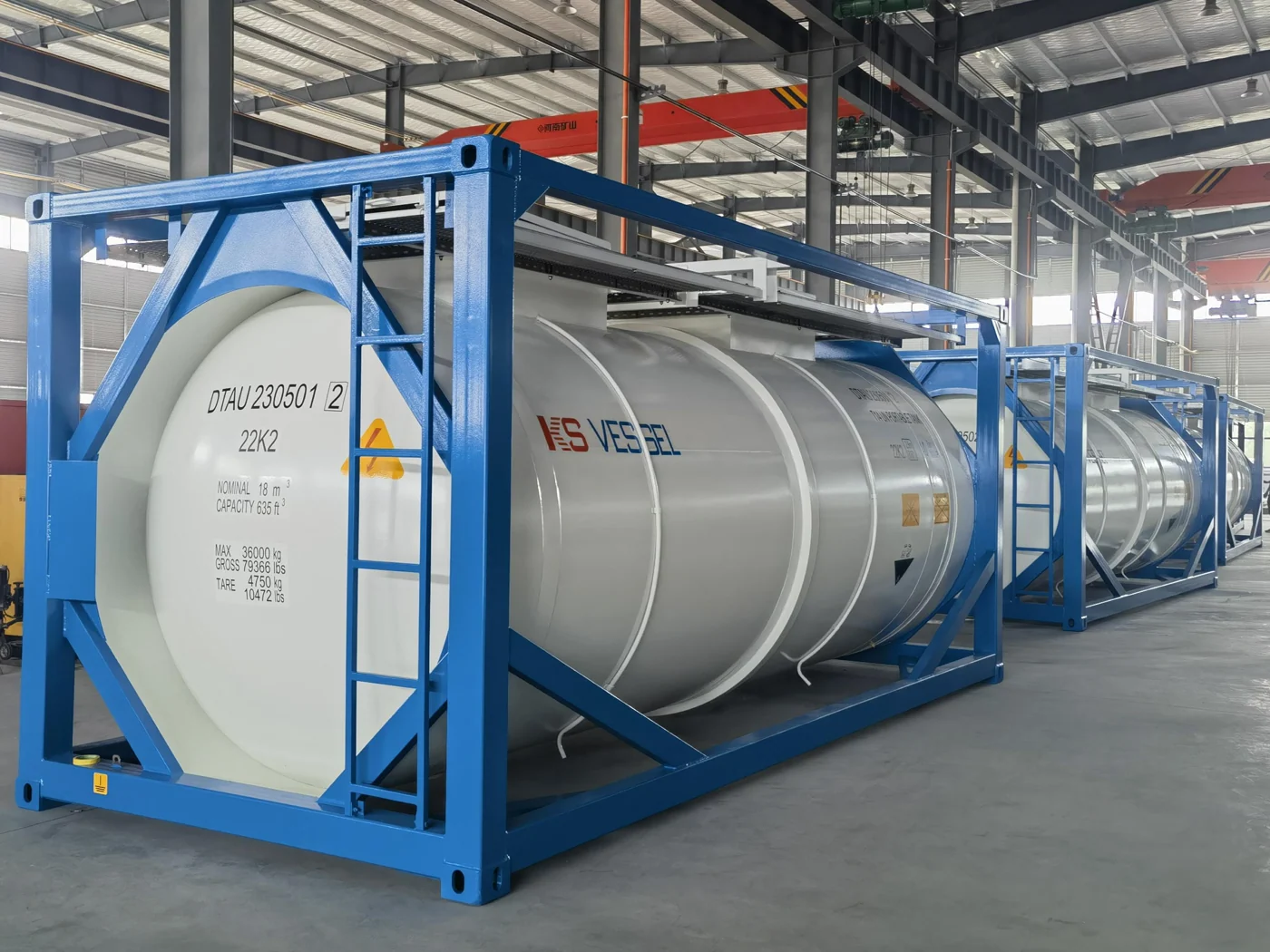
From a manufacturing standpoint, the choice between these configurations should begin with the cargo, shipment volume, receiving facility, and transport arrangement rather than the external appearance of the tank.
Understanding UN Portable Tank Types and T-Codes
Portable tank instructions, commonly called T-codes, identify the technical provisions applicable to particular dangerous goods entries. A T-code is not a material grade, tank capacity, commercial model number, or universal pressure rating.
For substances covered by instructions T1 through T22, the classification addresses combinations of test pressure, shell thickness, pressure-relief arrangements, and restrictions on bottom openings.
Other portable tank instructions address specialized cargo categories, including certain self-reactive substances, non-refrigerated liquefied gases, and refrigerated liquefied gases.
Portable Tank Instruction Categories
| Tank Instruction | General Cargo Category | Principal Engineering Considerations |
|---|---|---|
| T1–T22 | Authorized liquids and solids | Test pressure, shell construction, relief equipment, and opening restrictions |
| T23 | Specified organic peroxides and self-reactive substances | Chemical stability, thermal conditions, and substance-specific provisions |
| T50 | Non-refrigerated liquefied gases and specified chemicals under pressure | Gas-specific pressure requirements, filling restrictions, and service equipment |
| T75 | Refrigerated liquefied gases | Thermal insulation, low-temperature materials, and holding time |
Source: UN Model Regulations, 24th revised edition, 2025, Section 4.2.5. [1]
Why Test Pressure Alone Does Not Determine Tank Suitability
The minimum test pressure specified in a portable tank instruction represents one part of the technical requirements. Two instructions can specify the same minimum test pressure while imposing different restrictions on shell construction or service equipment.
The following selected values illustrate this distinction.
| Portable Tank Instruction | Minimum Test Pressure | Equivalent Pressure in MPa |
|---|---|---|
| T1 | 1.5 bar | 0.15 MPa |
| T4 | 2.65 bar | 0.265 MPa |
| T7 | 4 bar | 0.4 MPa |
| T11 | 6 bar | 0.6 MPa |
| T14 | 6 bar | 0.6 MPa |
| T20 | 10 bar | 1.0 MPa |
| T22 | 10 bar | 1.0 MPa |
Source: UN Model Regulations, 24th revised edition, 2025, Section 4.2.5.2.6. These are regulatory minimum test pressures, not allowable operating pressures or complete tank specifications. [1]
For procurement purposes, a higher pressure rating should never be treated as automatic evidence that a tank can replace another tank instruction. Substitution must satisfy the applicable regulatory provisions, cargo restrictions, and approval conditions.
We recommend establishing the required tank instruction before finalizing the mechanical specification. Otherwise, a vessel may meet the requested pressure requirement but still require substantial redesign because of incompatible openings, service equipment, or structural arrangements.
UN Numbers, T-Codes, and Special Provisions
A UN number identifies a dangerous goods transport entry. The applicable portable tank instruction establishes technical requirements associated with that entry, while additional portable tank special provisions may impose further restrictions.
These identifiers serve different purposes and must be reviewed together.
A chemical trade name is generally insufficient for final engineering approval. Products sold under similar names may have different concentrations, solvents, stabilizers, impurities, physical properties, or transport classifications.
At KUNVESS, we recommend obtaining the current safety data sheet and confirmed dangerous goods classification before committing to detailed manufacturing. The chemical composition and physical properties should also be available to the responsible technical specialists, subject to appropriate confidentiality arrangements.
Main Components of a UN Portable Tank
Portable tank performance depends on more than the thickness of the shell. Every component attached to the pressure boundary or exposed to transportation loads contributes to the integrity of the finished equipment.
Tank Shell and End Closures
The shell retains the cargo and transfers mechanical loads to the supporting structure. Material properties, shell geometry, weld integrity, corrosion resistance, and expected temperature exposure influence its design.
For a welded metallic vessel, the engineering assessment must consider both the parent material and the condition of welded joints. A material that performs satisfactorily in an unwelded laboratory sample may behave differently after fabrication, forming, heat exposure, or surface treatment.
Shell thickness must be established under the applicable design code and transport requirements. Additional thickness may be necessary to accommodate anticipated corrosion or other design considerations.
Increasing wall thickness indiscriminately, however, adds tare weight and can reduce transport efficiency. The objective is a compliant structure that retains the required mechanical properties throughout its intended service conditions.
Service Equipment and Chemical-Contact Components
Valves, seals, gaskets, connections, closures, and measuring devices deserve the same attention as the vessel shell. The finished tank may contain several different materials, each exposed to the chemical under changing conditions.
Valve seats and sealing components are particularly important because chemical resistance, pressure performance, temperature limits, and dimensional stability must be considered simultaneously.
For contamination-sensitive products, service equipment also introduces additional surfaces where manufacturing residues, moisture, particles, or previous cargo can remain.
We recommend reviewing the complete chemical-contact material schedule rather than approving a tank solely on the basis of its shell material.
Pressure-Relief and Protective Equipment
Pressure-relief equipment is selected within the regulatory and engineering requirements of the approved tank design. Cargo characteristics, pressure development, temperature conditions, and applicable transport restrictions influence the permitted arrangement.
Changing a relief device, valve assembly, or closure to a component with similar dimensions does not necessarily preserve the original design approval. Replacement parts must satisfy the technical and regulatory requirements of the specific equipment.
Supporting Frames and Mechanical Protection
Portable tanks experience mechanical conditions that stationary storage vessels may never encounter. Transportation vibration, repeated lifting, acceleration, handling impacts, and load transfer through support structures can introduce additional stresses.
Structural equipment must provide the required stability and protect vulnerable fittings while transferring loads without compromising the containment shell.
We evaluate the intended handling arrangement as part of the equipment specification. A compact tank that fits neatly into a production area may still be unsuitable for the receiving facility if its lifting provisions, overall dimensions, or loaded mass are incompatible with available handling equipment.
What Are UN Portable Tanks Used For?
UN portable tanks are used where chemical products must remain within suitable approved containment equipment during transportation, handling, and repeated distribution cycles.
The commercial advantages depend heavily on the chemical being transported. For ordinary industrial liquids, payload utilization and turnaround time may dominate the purchasing decision. For high-value specialty chemicals, preserving purity and avoiding contamination can be considerably more important than maximizing nominal capacity.
Specialty Chemical Manufacturing and Distribution
Chemical manufacturers can evaluate reusable portable tanks for recurring deliveries between qualified production, distribution, and receiving facilities.
A reusable containment system can reduce dependence on individual packaging units and simplify fleet identification. Its economic value depends on the number of completed transport cycles, cleaning requirements, maintenance costs, cargo utilization, and return logistics.
Dedicated tanks may also be appropriate when previous-cargo contamination would be difficult to eliminate or when cleaning validation represents a substantial operating expense.
Semiconductor and High-Purity Chemical Supply
Semiconductor manufacturing places demanding requirements on chemical purity. Trace metallic contamination, particles, moisture, oxygen, and organic residues may be relevant even when the vessel shows no visible corrosion or mechanical deterioration.
The containment specification therefore extends beyond conventional pressure vessel acceptance criteria. Material selection, internal surface treatment, cleanliness verification, and the condition of service equipment become part of the chemical quality control system.
Where bulk transportation is appropriate and permitted, specialty portable tanks can be evaluated alongside high-purity cylinders and other dedicated chemical packaging systems.
Our experience in high-purity gas cylinder selection and manufacturing provides a complementary approach to evaluating chemical-contact materials and internal cleanliness. However, requirements established for a gas cylinder cannot automatically be transferred to a portable tank without a separate engineering assessment.
Reactive and Corrosive Chemical Containment
Reactive and corrosive chemicals require a detailed evaluation of containment materials, chemical stability, seals, service equipment, and regulatory authorization.
Corrosion resistance must be assessed under the actual chemical conditions. Concentration, temperature, dissolved impurities, moisture exposure, and previous service history can alter the behavior of both metallic and nonmetallic materials.
For these applications, we recommend dedicated engineering review rather than selecting a general-purpose tank solely because its nominal capacity or pressure rating appears satisfactory.
Bulk Industrial Chemical Supply
Portable tanks can support industrial customers whose chemical consumption exceeds the practical capacity of smaller packaging units but does not justify a permanent bulk supply installation.
The appropriate tank size depends on consumption rate, delivery frequency, inventory requirements, handling limitations, and the operational consequences of a delayed shipment.
A smaller fleet of large tanks may reduce the number of movements, while several smaller tanks may provide greater flexibility when consumption varies between production lines. The preferred arrangement depends on the complete supply cycle rather than vessel capacity alone.
How to Select the Right UN Portable Tank Capacity
Nominal capacity describes the internal volume of a tank. It does not establish the volume or mass of cargo that may legally or safely be transported.
Authorized loading depends on cargo properties, applicable filling provisions, temperature conditions, approved gross mass, structural limitations, and the transport arrangement.
For this reason, we recommend comparing portable tanks using the required deliverable quantity of chemical, rather than comparing nominal liters in isolation.
Representative KUNVESS Portable Tank Configurations
| Model | Nominal Capacity | Configuration | Primary Procurement Consideration |
|---|---|---|---|
| KSC1100L | 1,100 L | Vertical | Compact footprint and smaller batch requirements |
| KSC1200L | 1,200 L | Horizontal | Compact horizontal chemical packaging |
| KSC1880L | 1,880 L | Horizontal | Intermediate shipment volume |
| KSC3200L | 3,200 L | Vertical | Increased capacity within a vertical arrangement |
| KSC3220L | 3,220 L | Vertical | Recurring chemical distribution with protective structures |
| KSC7500L | 7,500 L | Horizontal | Higher-volume specialty chemical supply |
These are nominal model capacities from the KUNVESS portable tank range. Actual working pressure, permissible payload, temperature limits, materials, service equipment, and approval scope must be confirmed for the individual tank.
Horizontal vs. Vertical Portable Tanks
Horizontal and vertical portable tanks present different space, access, support, and handling considerations.
Vertical tanks may be worth evaluating when floor space is limited. Horizontal tanks may be more appropriate when overall equipment height is restricted or when the receiving facility has been designed around horizontal containment systems.
| Selection Factor | Horizontal Configuration | Vertical Configuration |
|---|---|---|
| Space utilization | Generally requires more horizontal floor area | May require less floor area at comparable capacity |
| Height restrictions | May suit lower-clearance facilities | Requires attention to overhead clearance |
| Supporting structure | Horizontal supports and integrated base | Vertical base and stabilizing structure |
| Equipment access | Depends on fitting and protective structure arrangement | May require elevated access provisions |
| Receiving facility compatibility | Evaluate available length and handling access | Evaluate available height and handling access |
| Transport authorization | Configuration-specific approval required | Configuration-specific approval required |
Neither orientation is inherently safer or universally more efficient. The approved structural design, loaded center of gravity, equipment protection, handling method, and transport conditions determine suitability.
Material Selection for UN Portable Tanks
Material selection is one of the most consequential engineering decisions in a portable tank project. The selected material must provide the required mechanical properties while remaining compatible with the chemical, manufacturing process, and expected service conditions.
Stainless steel is frequently evaluated for specialty chemical applications, but the description alone is too broad for a purchase specification. Different stainless steel grades have different chemical compositions, corrosion behavior, mechanical properties, and fabrication characteristics.
304 and 316L Stainless Steel
304 stainless steel is widely used in industrial equipment because of its combination of formability, weldability, and corrosion resistance in suitable environments.
316L contains molybdenum and has a low carbon content. The molybdenum improves resistance to certain localized corrosion mechanisms, while the low carbon content helps reduce susceptibility to sensitization associated with welding.
Neither characteristic makes 316L universally resistant to corrosive chemicals. Compatibility remains dependent on the exact chemical environment and expected exposure conditions.
High-Purity Stainless Steel
High-purity chemical applications introduce a different material selection problem. A stainless steel vessel may retain adequate mechanical integrity while releasing trace contaminants that are unacceptable to the chemical production process.
Our broader material engineering capabilities include 316LV and 316LVV stainless steel options for selected high-purity equipment applications. These materials must be evaluated against the relevant product requirements, available material specifications, and applicable design approval.
For a portable tank project, the complete material documentation should identify the required grade, composition limits, mechanical properties, traceability requirements, and customer-defined contamination acceptance criteria.
Carbon Steel, Specialty Alloys, and Protective Linings
Carbon steel may be appropriate where its mechanical properties and chemical compatibility satisfy the application. Protective linings, metallic cladding, or specialty alloys can also be considered when conventional unlined stainless steel is unsuitable.
A lining should not be treated as a permanent solution to an otherwise incompatible design. Its chemical resistance, integrity, adhesion, permeation behavior, temperature limitations, and inspection requirements must be assessed within the complete tank specification.
| Material Option | Reason for Evaluation | Important Limitation | Required Evidence |
|---|---|---|---|
| 304 Stainless Steel | General fabrication and compatible chemical environments | Limited resistance to certain aggressive media | Material certificate and compatibility assessment |
| 316L Stainless Steel | Weldability and resistance to selected corrosive environments | Not universally resistant to acids or chlorides | Grade verification and chemical-specific assessment |
| High-Purity Stainless Steel | Contamination-sensitive chemical containment | Purity performance depends on material and surface condition | Composition records and agreed contamination testing |
| Carbon Steel | Structural strength and suitable chemical service | Corrosion or contamination limitations in some applications | Material traceability and service compatibility review |
| Specialty Alloy | Applications beyond conventional material capabilities | Higher material and fabrication complexity | Alloy-specific engineering and fabrication qualification |
| Lined Metallic Vessel | Separation of cargo from the structural metal | Lining integrity and long-term compatibility | Lining specification and applicable inspection records |
These material categories represent engineering options rather than a declaration of suitability for any particular dangerous substance.
Our engineering recommendation: Approve the complete chemical-contact system before releasing a portable tank for production. A compatible shell material cannot compensate for an unsuitable gasket, valve seat, lining, or internal surface condition.
Why Internal Surface Finish Matters in Specialty Chemical Transportation
The internal surface of a portable tank is continuously exposed to the chemical medium during service. Its condition influences cleaning efficiency, residue retention, corrosion behavior, and contamination risk.
Conventional fabrication can introduce surface irregularities, weld discoloration, embedded particles, lubricants, and other manufacturing residues. These conditions may be manageable in general industrial service but unacceptable in a high-purity chemical supply chain.
Mechanical Polishing
Mechanical polishing improves surface finish through controlled abrasive material removal. Its effectiveness depends on the initial surface condition, accessibility, polishing sequence, and subsequent cleaning.
Internal welds, formed heads, nozzle transitions, and difficult-to-access areas require particular attention. A smooth central shell surface does not establish that the entire vessel interior meets the same acceptance criteria.
Electropolishing
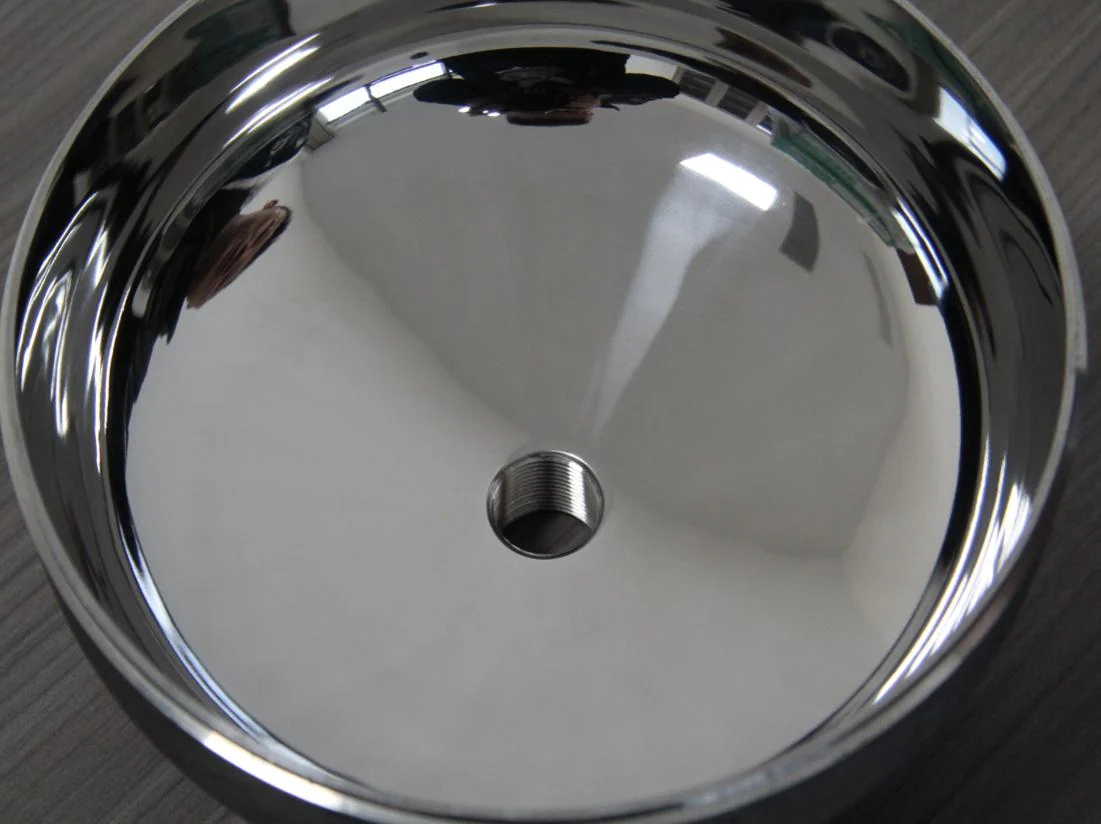
Electropolishing is an electrochemical finishing process that removes a controlled layer of material from a suitable metallic surface. When properly specified and performed, it can reduce microscopic irregularities and improve surface cleanability.
For contamination-sensitive applications, these characteristics may help reduce locations where residues and particles accumulate. Electropolishing is particularly relevant when customers require a controlled stainless steel surface condition.
Electropolishing does not eliminate the need for compatible materials, proper fabrication, post-treatment cleaning, or chemical-specific validation.
Surface Roughness and Cleanliness Are Different Requirements
Surface roughness is commonly expressed using Ra, the arithmetic average of measured surface profile deviations. Ra is a useful measurable characteristic, but it cannot establish the chemical cleanliness of a vessel by itself.
Two surfaces with similar Ra values may have different residue levels, particle contamination, moisture content, or chemical release behavior.
We therefore recommend defining the surface finish and cleanliness requirements separately in the technical specification.
| Acceptance Parameter | Common Reporting Unit | What the Measurement Evaluates |
|---|---|---|
| Surface roughness (Ra) | µm | Measured surface profile condition |
| Metallic contamination | ppb or µg/L | Concentration of specified metallic contaminants |
| Moisture | ppm or specified dew point | Residual moisture under defined measurement conditions |
| Particle contamination | Particle count by size range | Presence of particulate contamination |
| Helium leak rate | Pa·m³/s or mbar·L/s | Leak-tightness under defined test conditions |
| Residual organic contamination | Method-specific concentration or mass | Remaining organic manufacturing or cleaning residues |
Numerical acceptance limits should be established by the customer’s process requirements and the qualified measurement method. A universal roughness or contamination limit cannot be assigned to every portable tank.
Our pressure vessel manufacturing and surface treatment technologies include mechanical polishing, electropolishing, material characterization, specialized cleaning, and applicable leak-testing capabilities. The final treatment and inspection scope are established for each equipment project.
Pressure Ratings and Temperature Requirements
Pressure terminology can cause considerable confusion during portable tank procurement. A quotation may identify working pressure, design pressure, maximum allowable working pressure, or test pressure. These terms are related, but they should not be used interchangeably.
| Engineering Parameter | Meaning | Procurement Relevance |
|---|---|---|
| Operating Pressure | Pressure expected during the defined service conditions | Establishes the anticipated operating envelope |
| Design Pressure | Pressure used as a basis for applicable engineering design calculations | Influences pressure-boundary construction |
| Maximum Allowable Working Pressure (MAWP) | Applicable maximum permissible working pressure for the approved equipment | Establishes a critical pressure limitation |
| Test Pressure | Pressure specified for the applicable pressure test | Supports verification of pressure-boundary integrity |
| Design Temperature Range | Temperature limits considered in the equipment design | Influences materials, mechanical properties, and component selection |
A pressure test is not authorization to operate continuously at the test pressure. Similarly, an individual valve’s pressure rating does not establish the allowable pressure of the entire assembled tank.
Pressure and temperature must be considered together because material properties, chemical behavior, sealing performance, and internal pressure development can change with temperature.
Several featured KUNVESS portable tank models have a specified temperature range of -40°C to 65°C. This range is model-dependent and does not establish the permitted transport temperature of any individual chemical.
Before approving a purchase, we recommend reconciling the quotation, engineering drawings, design approval documents, component ratings, and equipment identification plate. Any discrepancy should be resolved through documented technical review.
UN Portable Tank Design, Manufacturing, and Quality Control
A technically complete tank specification is only the beginning of manufacturing. Material traceability, fabrication accuracy, welding quality, surface treatment, equipment assembly, and testing must be managed throughout production.
For specialized chemical containment, several of these activities affect one another. A fabrication decision can influence subsequent polishing, while a surface treatment requirement may affect the order of manufacturing operations.
Engineering Specification and Drawing Review
We begin an application-specific equipment review with the chemical medium, required capacity, operating conditions, intended transport modes, and applicable approval requirements.
The proposed general arrangement should identify the main dimensions, structural configuration, connection interfaces, access provisions, and equipment arrangement.
The customer must be able to determine whether the proposed vessel will fit the intended handling and receiving facilities before manufacturing proceeds. Changes made after fabrication can introduce additional engineering costs and affect the approval process.
Material Traceability and Fabrication
Material traceability connects the finished pressure vessel to the records identifying its construction materials. Relevant certificates and production records support verification of chemical composition, mechanical properties, and specified material grades.
Welding introduces further requirements because weld quality depends on the applicable procedure, personnel qualification, material condition, joint geometry, and fabrication controls.
For contamination-sensitive equipment, the internal geometry and accessibility of welded areas should also be considered when planning subsequent surface treatment and inspection.
Inspection and Testing
Different inspection methods answer different engineering questions. A successful pressure test does not establish that a vessel is chemically clean. A satisfactory surface roughness measurement does not demonstrate structural integrity. Each acceptance requirement needs a corresponding verification method.
| Inspection or Test | Primary Purpose | Expected Documentation |
|---|---|---|
| Material Verification | Confirm specified material properties and identification | Material certificates and traceability records |
| Dimensional Inspection | Verify dimensions and interfaces | Dimensional inspection report |
| Applicable Nondestructive Examination | Evaluate welds or material condition within the method’s capabilities | Examination records |
| Pressure Testing | Verify pressure-boundary performance under specified test conditions | Pressure test report |
| Leak Testing | Evaluate containment leak-tightness | Leak test report |
| Surface Roughness Testing | Verify agreed surface finish | Surface measurement records |
| Cleanliness Testing | Evaluate specified contamination characteristics | Applicable analytical test results |
| Final Documentation Review | Confirm consistency between the equipment and approved specification | Manufacturing and acceptance documentation |
At KUNVESS, our manufacturing and inspection capabilities address material characterization, pressure equipment integrity, leak-tightness, surface quality, and contamination control. The required examination methods, test coverage, acceptance criteria, and independent inspection arrangements are determined by the applicable design requirements and purchase specification.
Further information about our manufacturing documentation and approval considerations is available on our quality and certifications page.
What Certifications and Approvals Does a UN Portable Tank Need?
Portable tank approval should be understood as a combination of equipment-specific requirements rather than a collection of certification logos.
A pressure vessel construction authorization, dangerous goods tank design approval, and freight container safety approval serve different purposes. Depending on the tank and intended transportation arrangement, several requirements may apply simultaneously.
| Standard or Approval Framework | Primary Function | What Buyers Should Verify |
|---|---|---|
| UN Model Regulations | Dangerous goods transport recommendations | Applicable tank instruction and special provisions |
| IMDG Code | Dangerous goods requirements for maritime transport | Applicable edition and cargo authorization |
| ASME BPVC Section VIII | Applicable pressure vessel construction rules | Relevant code scope and equipment-specific documentation |
| ISO 1496-3 | Tank container specification and testing | Applicable container design and testing requirements |
| CSC | Freight container safety requirements where applicable | Valid container safety approval and examination status |
| Competent Authority Design Approval | Approval of the relevant portable tank design | Authorized configuration, conditions, and limitations |
| Inspection and Test Certificates | Documentation of equipment examination and testing | Serial number, inspection scope, results, and validity |
The UN Model Regulations provide an internationally recognized regulatory foundation, but they are recommendations rather than a standalone transport permit.
For maritime dangerous goods transportation, the IMDG Code is particularly relevant. The 2024 edition incorporating Amendment 42-24 became mandatory on January 1, 2026. [2]
ASME Boiler and Pressure Vessel Code Section VIII addresses pressure vessel construction within its applicable scope. It does not independently establish authorization to transport a particular dangerous chemical. [4]
Likewise, the International Convention for Safe Containers addresses container structural safety where applicable. It should not be confused with cargo-specific dangerous goods approval. [5]
Our portable tank projects can involve ASME, TS, CCS, and BV certification or inspection options where applicable. The required authorization must be confirmed against the actual equipment design and contractual approval scope.
UN Portable Tank Inspection and Testing Requirements
Portable tanks remain subject to inspection requirements after leaving the manufacturing facility. Repeated transportation, chemical exposure, handling, cleaning, and maintenance can affect the condition of the shell, supporting structure, and service equipment.
The inspection program must be established using the regulations applicable to the tank and its intended service.
Initial, 2.5-Year, and 5-Year Inspections
Under IMDG Code Amendment 42-24, Chapter 6.7 provides for initial inspection and testing before service, intermediate examination at the 2.5-year point, and periodic inspection and testing at intervals not exceeding five years for the relevant portable tank categories. [2]
| Inspection Category | General Timing | Principal Objective |
|---|---|---|
| Initial Inspection | Before first service | Establish initial equipment conformity and integrity |
| Intermediate Inspection | 2.5 years | Evaluate continued condition, leak-tightness, and equipment function |
| Periodic Inspection | At intervals not exceeding 5 years | Comprehensive assessment including applicable pressure testing |
| Exceptional Inspection | When required by equipment condition or applicable provisions | Assess damage, deterioration, leakage, or other integrity concerns |
Source: IMDG Code, Amendment 42-24, Chapter 6.7. Specific test methods, inspection allowances, special provisions, and additional requirements must be verified for the individual tank. [2]
For fleet owners, inspection planning is an operational issue as well as a compliance issue. A tank that becomes unavailable during a scheduled chemical delivery can disrupt customer inventory and manufacturing continuity.
We recommend maintaining equipment-specific records of inspection due dates, previous cargo, repairs, component replacements, cleaning history, and relevant approval documents.
Equipment showing damage, leakage, or other conditions that may compromise integrity should be withdrawn from normal service and referred to appropriately qualified personnel for assessment.
Safe Use, Cleaning, and Lifecycle Maintenance
A portable tank should remain within its approved service conditions throughout its useful life. Manufacturing quality cannot compensate for unsuitable cargo, unauthorized modifications, inadequate maintenance, or improper handling.
Before accepting equipment into service, the responsible operator should verify its identification, approval status, condition, inspection validity, and compatibility with the proposed cargo.
Cleaning and Previous-Cargo Control
Cleaning requirements depend on the chemical previously contained, the next intended cargo, the internal materials, and the required cleanliness standard.
For specialty chemicals, visual cleanliness alone may not provide sufficient evidence that a vessel is ready for reuse. Residual chemical material may remain in difficult-to-access areas or service equipment even when the main vessel interior appears clean.
Cleaning methods must be developed and performed by qualified personnel who understand the chemical hazards, material compatibility, waste handling requirements, and applicable safety procedures.
Dedicated service may reduce the complexity associated with changing cargo, although it does not eliminate inspection, maintenance, or contamination control requirements.
Maintenance and Component Replacement
Valves, sealing components, protective structures, coatings, and other equipment may require maintenance during the service life of a portable tank.
Replacement components should preserve the approved mechanical, chemical, and regulatory characteristics of the equipment. Changes affecting the pressure boundary or approved design require the relevant technical assessment and authorization.
Our industrial vessel manufacturing and lifecycle services include equipment inspection, surface treatment, maintenance, and refurbishment options. Service availability and repair scope depend on the tank condition, previous service, applicable authorization, and required inspection arrangements.
How Much Does a UN Portable Tank Cost?
The purchase price of a UN portable tank depends on the approved design, construction materials, nominal capacity, pressure requirements, service equipment, structural configuration, testing, and documentation scope.
A compact specialty chemical tank with demanding material and contamination requirements may require more manufacturing work than a substantially larger tank intended for less demanding chemical service.
Price per liter is therefore an incomplete purchasing metric. A lower quotation may reflect differences in material specification, included fittings, surface treatment, independent inspection, or documentation rather than a genuine manufacturing cost advantage.
Factors That Influence Portable Tank Manufacturing Cost
| Cost Factor | Why It Affects Price | What to Compare Between Quotations |
|---|---|---|
| Shell Material | Material availability, composition, and fabrication requirements | Exact grade and certification requirements |
| Pressure Design | Mechanical construction and component requirements | Approved pressure and temperature envelope |
| Capacity and Geometry | Material quantity, forming, welding, and structural design | Nominal capacity and usable payload |
| Internal Surface Treatment | Polishing, cleaning, and analytical verification | Acceptance limits and included test reports |
| Service Equipment | Specialized valves, seals, closures, and accessories | Component specification and included scope |
| Testing and Approval | Inspection activities and independent verification | Required certificates and inspection responsibilities |
| Structural Configuration | Supporting frames and protective arrangements | Handling compatibility and structural requirements |
Without a confirmed cargo specification and approval scope, a generic purchase price would provide little reliable information. We recommend obtaining technically comparable quotations before evaluating commercial differences.
Total Cost of Ownership
For reusable portable tanks, the initial purchase price should be considered alongside the expenses incurred throughout the equipment’s service life.
A practical ownership cost assessment includes:
Total ownership cost = Purchase cost + Inspection cost + Cleaning cost + Maintenance cost + Logistics cost + Downtime cost – Residual value.
The resulting amount can be divided by the number of completed delivery cycles or the total quantity of chemical delivered during the evaluation period.
This provides a more useful comparison than purchase price alone, particularly for equipment requiring frequent cleaning or specialized inspection.
Illustrative Cost-per-Delivery Comparison
The following example uses hypothetical financial assumptions to demonstrate the relationship between capital investment, lifecycle expenses, and delivery frequency. It does not represent KUNVESS pricing, verified customer results, or a projected return on investment.
| Cost Item | Scenario A | Scenario B |
|---|---|---|
| Initial purchase cost | $30,000 | $40,000 |
| Combined lifecycle expenses | $24,000 | $14,000 |
| Total cost before residual value | $54,000 | $54,000 |
| Completed delivery cycles | 120 | 150 |
| Cost per completed delivery | $450 | $360 |
In this hypothetical comparison, Scenario B requires a larger initial investment but produces a lower calculated cost per completed delivery. The difference comes from the assumed lifecycle expenses and equipment utilization.
Actual purchasing decisions should use verified supplier quotations, expected delivery schedules, qualified payload information, inspection expenses, and facility-specific operating costs.
Where tank capacities differ, comparing cost per unit of chemical delivered may provide a more meaningful result than comparing cost per shipment.
How to Choose a Reliable UN Portable Tank Manufacturer
A portable tank manufacturer should be evaluated on its ability to develop, manufacture, inspect, and document equipment for the customer’s actual application.
Production capacity and commercial responsiveness matter, but neither establishes that a proposed tank is suitable for a particular dangerous substance.
We recommend assessing manufacturers against six technical and commercial criteria before placing an order.
| Evaluation Criterion | Evidence to Request | KUNVESS Capability to Evaluate |
|---|---|---|
| Application Engineering | Cargo review, design proposal, and technical specification | Application-specific portable tank and pressure vessel engineering |
| Material Selection | Material grades, certificates, and compatibility assessment | Stainless steel, specialty material, and protective surface evaluation |
| Manufacturing Control | Fabrication procedures and production inspection records | Metal forming, welding, machining, and custom fabrication |
| Surface Treatment | Defined finish and cleanliness acceptance criteria | Mechanical polishing, electropolishing, and specialized cleaning options |
| Quality and Approval | Applicable certificates, test reports, and equipment-specific approval documents | Project-specific testing, inspection, and certification support |
| Lifecycle Support | Maintenance arrangements, documentation, and replacement component support | Inspection, maintenance, refurbishment, and custom component capabilities |
KUNVESS is a suitable manufacturing partner to consider when a project requires customized chemical containment equipment rather than an unmodified general-purpose tank.
Our combination of pressure vessel fabrication, specialty chemical containment, precision machining, material engineering, and surface treatment allows these requirements to be evaluated within the same manufacturing project.
The final purchasing decision should remain conditional on technical approval of the proposed design, verification of current certification scope, and agreement on the required manufacturing and inspection documentation.
What Information Is Needed to Request a UN Portable Tank Quotation?
A technically complete request for quotation reduces uncertainty and helps manufacturers identify the engineering work required before production.
We recommend providing the following information when discussing a new portable tank project.
| Required Information | Details to Provide |
|---|---|
| Chemical Identification | Product identity, composition, concentration, and current safety data sheet |
| Dangerous Goods Classification | Confirmed UN number, proper shipping name, and applicable tank instruction if established |
| Capacity | Required nominal volume and intended delivery quantity |
| Operating Conditions | Expected pressure, temperature range, and relevant chemical properties |
| Material Requirements | Preferred material grade and compatibility restrictions |
| Internal Surface Requirements | Surface finish, cleanliness, and contamination acceptance criteria |
| Structural Configuration | Horizontal or vertical preference and available equipment space |
| Service Equipment | Required connections, approved interfaces, and component specifications |
| Transport Requirements | Intended transport modes and applicable regulations |
| Inspection and Certification | Required approval framework, independent inspection, and documentation |
| Commercial Requirements | Order quantity, delivery schedule, and expected service program |
Not every technical detail needs to be finalized before an initial discussion. Where information is incomplete, the outstanding engineering questions should be identified explicitly and resolved before final design approval.
Customers planning a reusable chemical containment fleet can contact our technical manufacturing team to discuss the proposed application, equipment configuration, and documentation requirements.
Frequently Asked Questions About UN Portable Tanks
1. What does UN mean on a portable tank?
UN refers to the United Nations dangerous goods transport framework. A UN portable tank is designed and approved under applicable requirements for the transportation of authorized substances. A UN marking does not mean the tank is suitable for every dangerous chemical.
2. What is the difference between a UN portable tank and an ISO tank container?
A UN portable tank is defined by its applicable dangerous goods transport requirements, while an ISO tank container incorporates a standardized freight container arrangement. Equipment may belong to both categories when it satisfies the relevant container specifications and dangerous goods approvals.
3. What is the difference between T11 and T14 portable tanks?
Both instructions specify a minimum test pressure of 6 bar under the 2025 UN Model Regulations. However, their shell construction, pressure-relief provisions, and opening restrictions differ. The correct instruction must be established from the cargo classification and applicable transport requirements.
4. Can a UN portable tank carry different chemicals?
A portable tank may carry different chemicals only when each substance is authorized for the equipment and the complete containment system is compatible. Previous-cargo residues, cleaning validation, inspection status, and applicable special provisions must also be considered.
5. Is 316L stainless steel suitable for all UN portable tanks?
No. Although 316L stainless steel offers useful fabrication and corrosion-resistance characteristics, its suitability depends on chemical composition, concentration, temperature, impurities, and service conditions. Other materials or protective systems may be necessary.
6. How often must a UN portable tank be inspected?
The general inspection framework includes initial inspection before service, an intermediate inspection at 2.5 years, and periodic inspection at intervals not exceeding five years. Additional or exceptional inspections may be necessary depending on the tank category, cargo, equipment condition, and applicable regulations.
7. Can a UN portable tank be customized?
Yes. Capacity, vessel orientation, materials, surface treatment, structural configuration, and service equipment may be customized within the applicable engineering and approval requirements. KUNVESS offers application-specific portable tank configurations with nominal capacities from 450 to 7,500 liters, subject to technical and regulatory review.
8. How much does a UN portable tank cost?
The cost depends on capacity, materials, pressure design, service equipment, surface treatment, structural construction, testing, and certification scope. An application-specific quotation is necessary for a reliable price comparison. Reusable tank purchases should also consider cleaning, inspection, maintenance, logistics, and equipment utilization.
Choosing a Portable Tank for Long-Term Chemical Supply
The most suitable portable tank is the one that satisfies the chemical containment requirements, approved transport conditions, receiving facility limitations, and expected operating cycle without introducing unnecessary manufacturing complexity.
For high-purity chemical applications, internal cleanliness and material behavior may be more important than additional capacity. For reusable industrial chemical fleets, handling compatibility, inspection planning, component availability, and lifecycle expenses may have a greater influence on ownership cost.
At KUNVESS, we develop portable tank proposals around these application-specific requirements. Our objective is to establish a technically appropriate containment system before committing to material procurement, detailed fabrication, and the required inspection program.
Whether the project involves compact chemical packaging or a dedicated specialty chemical distribution fleet, early engineering coordination provides a stronger basis for manufacturing, regulatory review, and long-term equipment management.
Discuss your next project with KUNVESS: Explore our custom UN portable tanks or request an application-specific technical quotation.
Related Reading
- How to Choose High-Purity Gas Cylinders Explore material selection, internal cleanliness, pressure requirements, and contamination control for specialty chemical containment.
- Pressure Vessel Manufacturing Technology Learn about precision fabrication, stainless steel material engineering, electropolishing, and industrial vessel inspection.
- Quality Control and Pressure Vessel Certifications Review manufacturing quality considerations, inspection capabilities, and equipment-specific certification requirements.
- Custom Pressure Vessel Manufacturing and Lifecycle Services Explore custom equipment manufacturing, inspection, surface treatment, maintenance, and refurbishment capabilities.
Technical References and Regulatory Sources
- United Nations. Recommendations on the Transport of Dangerous Goods, Model Regulations, 24th Revised Edition, 2025. Chapter 4.2, portable tank instructions and special provisions. Official publication.
- International Maritime Organization (IMO). International Maritime Dangerous Goods Code, 2024 Edition, Amendment 42-24. Chapter 6.7, portable tank construction, inspection, and testing requirements. Official IMDG Code information and Resolution MSC.556(108).
- International Organization for Standardization (ISO). ISO 1496-3:2019, Series 1 Freight Containers — Specification and Testing — Part 3: Tank Containers for Liquids, Gases and Pressurized Dry Bulk. Official standard information.
- ASME. Boiler and Pressure Vessel Code, Section VIII, Division 1 — Rules for Construction of Pressure Vessels. Official code information.
- International Maritime Organization (IMO). International Convention for Safe Containers (CSC), 1972, as amended. Official convention information.
About KUNVESS
KUNVESS specializes in the engineering and manufacturing of specialty gas cylinders, UN portable tanks, specialty ISO tank containers, custom pressure vessels, and precision metal components. Our manufacturing capabilities include application-specific material selection, metal forming, welding, CNC machining, electropolishing, specialized cleaning, inspection, and equipment lifecycle support.
Our technical content focuses on chemical compatibility, pressure containment, manufacturing quality, contamination control, and practical industrial equipment selection.
Technical and Regulatory Disclaimer
This article provides general technical and procurement information. It does not constitute a dangerous goods classification, engineering design approval, regulatory authorization, chemical compatibility certification, operating procedure, or permission to transport any substance.
All tank classifications, cargo authorizations, pressure ratings, temperature limits, material specifications, filling restrictions, inspection requirements, and certification conditions must be verified for the individual equipment and intended application by appropriately qualified professionals and relevant authorities.
Product configurations and images are illustrative and may represent equipment manufactured for different project specifications. The approved drawings, identification plate, design approval certificate, and applicable inspection documents govern the individual tank. Financial examples are hypothetical and do not represent actual quotations or guaranteed economic results.
Applicable standards and regulations may be revised. Customers, owners, consignors, and operators are responsible for establishing and maintaining compliance with the requirements relevant to their respective activities.