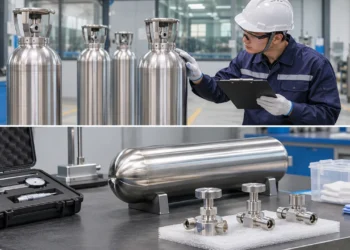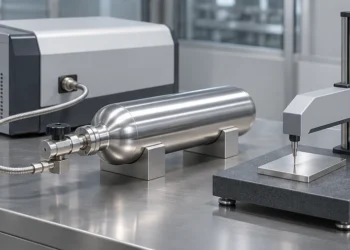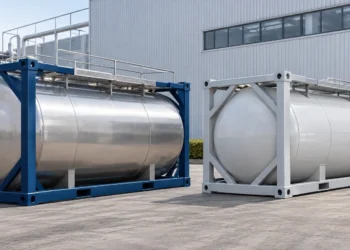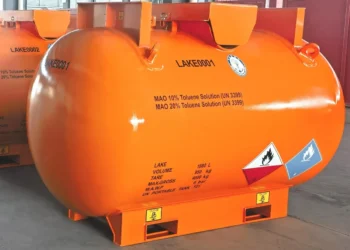
Choosing the right chemical storage vessels begins with understanding the chemical itself: its composition, concentration, operating temperature, vapor pressure, corrosiveness, and sensitivity to contamination. These properties determine whether a conventional storage tank, stainless steel pressure vessel, high-purity chemical cylinder, or specialized portable tank is appropriate for the application.
At KUNVESS, we approach chemical containment as an engineering decision rather than a simple capacity calculation. A vessel must remain mechanically sound, preserve product quality, accommodate operating conditions, and satisfy applicable safety requirements throughout its intended service life.
The most expensive material is not necessarily the most suitable, and a higher pressure rating does not automatically make a vessel safer. This guide explains how to evaluate materials, vessel configurations, manufacturing quality, operating limitations, and long-term ownership costs before committing to a chemical storage solution.
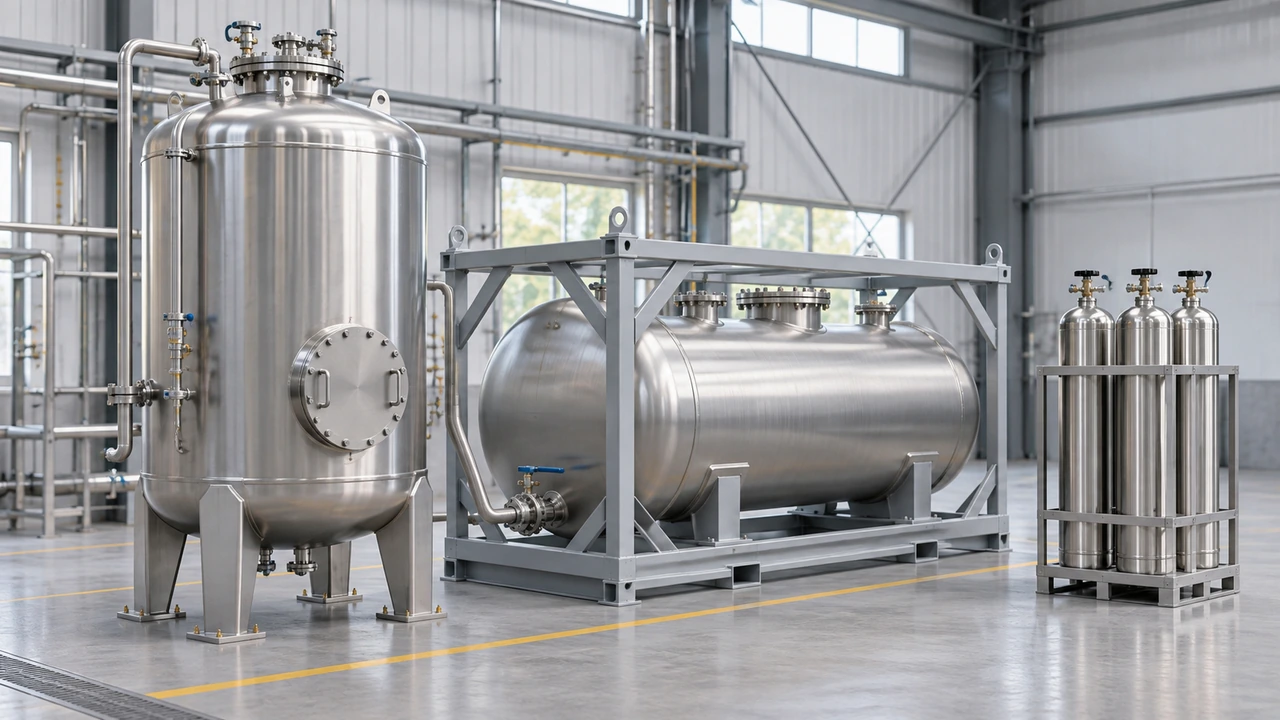
1. What Is a Chemical Storage Vessel?
A chemical storage vessel is an engineered container intended to hold chemical substances under defined conditions of pressure, temperature, material compatibility, and environmental exposure. Depending on the application, the contents may include industrial liquids, specialty gases, liquefied gases, electronic chemicals, or contamination-sensitive materials.
The term covers a broader equipment category than a conventional chemical storage tank. Some vessels operate close to atmospheric pressure, while others are designed to retain substantial internal pressure or withstand external pressure during vacuum service.
We distinguish between equipment categories early in the selection process because the manufacturing requirements, inspection procedures, and operating limitations can differ considerably.
Common Types of Chemical Containment Equipment
| Vessel Type | Typical Application | Primary Selection Requirement | Important Limitation |
|---|---|---|---|
| Atmospheric storage tank | Compatible bulk liquids | Material compatibility and venting | Not intended for substantial pressure unless specifically designed for it |
| Low-pressure storage tank | Liquids requiring controlled vapor space | Pressure and vacuum protection | Limited pressure capability |
| Stainless steel pressure vessel | Pressurized chemicals and process media | Mechanical integrity and design-code compliance | Higher engineering and inspection requirements |
| High-purity chemical cylinder | Electronic chemicals and specialty gases | Cleanliness, material purity, and leak integrity | Application-specific filling and connection requirements |
| UN portable tank | Approved chemicals in transport service | Cargo classification and tank approval | Restricted to authorized transport conditions |
| Specialty ISO tank container | Bulk chemical logistics | Structural protection, cargo compatibility, and transport compliance | Payload and handling restrictions |
| Lined chemical vessel | Selected aggressive chemical media | Lining compatibility and integrity | Lining inspection and temperature limitations |
A vessel designed for transportation should not automatically be treated as permanently installed process equipment. Likewise, a stationary pressure vessel does not become an approved transport container simply because it has sufficient mechanical strength.
Establishing the equipment’s intended function prevents expensive changes after engineering drawings, materials, and manufacturing arrangements have already been finalized.
2. Start With the Chemical, Not the Vessel Material
Before recommending a vessel, we need to understand the complete chemical environment. Descriptions such as acid, solvent, electronic chemical, or industrial gas are rarely specific enough to support reliable material selection.
Two liquids belonging to the same chemical family may require different containment materials because of concentration, water content, impurities, temperature, or the presence of stabilizing additives. Chemical behavior may also change during storage, cleaning, or repeated filling and discharge.
Review the Safety Data Sheet
The safety data sheet (SDS) provides the foundation for the initial technical review. Several sections are particularly relevant when selecting industrial chemical storage equipment.
| SDS Section | Information to Review | Engineering Relevance |
|---|---|---|
| Section 2 | Hazard identification | Containment and protective measures |
| Section 3 | Composition and ingredients | Material and seal compatibility |
| Section 7 | Handling and storage | Storage environment and segregation |
| Section 9 | Physical and chemical properties | Density, vapor pressure, temperature, and capacity evaluation |
| Section 10 | Stability and reactivity | Incompatible materials and abnormal operating conditions |
| Section 14 | Transport information, where provided | Dangerous goods classification and transport requirements |
The hazard communication requirements for SDS documentation provide a useful framework for collecting this information. Reference [1].
An SDS, however, is not a complete engineering specification. It may omit trace impurities, proprietary additives, detailed corrosion information, or the contamination limits that govern a particular production process. These details should be obtained from the chemical supplier and the equipment owner where necessary.
Consider the Entire Chemical Exposure Cycle
The stored product is only one source of chemical exposure. A reusable vessel may also encounter cleaning agents, rinse water, drying gases, residual chemicals, and temporary environmental conditions during maintenance.
A material that performs satisfactorily during normal storage may deteriorate during cleaning or when exposed to a different chemical concentration.
For this reason, we recommend documenting every substance expected to contact the internal surfaces, including cleaning media and foreseeable residual materials. The compatibility review should cover the vessel throughout its intended service cycle, not merely during the longest storage period.
Our engineering recommendation: Do not authorize material procurement until the chemical identity, concentration range, service temperature, and cleaning requirements have been agreed upon.
3. How to Select the Best Material for Chemical Storage
Material selection affects corrosion resistance, mechanical strength, product purity, fabrication complexity, maintenance requirements, and purchase price. These factors must be considered together because improving one characteristic does not necessarily improve the others.
At KUNVESS, our manufacturing capabilities include stainless steel, selected carbon steels, specialty material options, and application-specific surface treatments. We evaluate material requirements against the intended operating environment rather than treating a particular alloy as the default solution.
304 and 304L Stainless Steel
304 stainless steel is widely used in industrial equipment because it combines corrosion resistance, mechanical properties, and practical fabrication characteristics. Its low-carbon counterpart, 304L, is often considered for welded equipment where reducing susceptibility to sensitization is important.
Neither grade should be assumed suitable for every acid, chloride-containing liquid, or aggressive cleaning solution. The actual exposure conditions determine whether the material is appropriate.
316L Stainless Steel
316L stainless steel contains molybdenum, which generally improves resistance to certain forms of localized corrosion compared with 304-series stainless steel.
We consider 316L for compatible specialty chemicals, high-purity containment applications, and custom pressure vessel projects where its corrosion resistance and weldability provide a suitable combination of properties.
Nevertheless, chloride-induced pitting, crevice corrosion, and stress corrosion cracking remain possible under unfavorable conditions. A 316L specification should therefore be supported by chemical compatibility evidence rather than reputation alone.
316LV and 316LVV High-Purity Stainless Steel
For contamination-sensitive chemical storage, conventional corrosion resistance may not be sufficient. Trace metallic impurities released from a vessel’s internal surfaces can affect downstream manufacturing processes even when the vessel remains structurally sound.
Our high-purity equipment includes 316LV and 316LVV material options for selected applications. These materials are considered alongside composition control, surface finishing, fabrication quality, and internal cleanliness requirements.
The precise material specification and acceptance criteria should be established in the purchase documents. Commercial high-purity grade designations alone do not establish universally identical composition limits or manufacturing routes.
We explain these distinctions in greater detail in our technical guide to 316L vs. 316LV stainless steel.
Carbon Steel
Carbon steel can provide an economical and mechanically suitable solution for compatible industrial chemicals. Its availability and fabrication characteristics make it relevant to many large-capacity vessel projects.
The limitations become more significant when the stored medium promotes corrosion, when moisture enters the system, or when dissolved metallic contamination is unacceptable. Corrosion allowances, protective coatings, and inspection provisions must be evaluated as part of the design.
A corrosion allowance can accommodate a justified amount of anticipated metal loss. It cannot reliably compensate for every localized corrosion mechanism or prevent chemical contamination.
Specialty Alloys and Protective Linings
Certain chemical environments require corrosion resistance beyond that available from conventional stainless steel. Depending on the application, specialty nickel-based alloys, metallic cladding, or chemically resistant linings may warrant consideration.
Polymer-lined vessels can also separate the stored chemical from the structural metal shell. The shell provides mechanical strength, while the lining performs a chemical barrier function within its qualified service limits.
Such designs introduce additional considerations, including permeability, thermal expansion differences, adhesion, mechanical damage, vacuum resistance, and lining examination.
Material Comparison for Chemical Storage Vessels
| Material | Principal Advantage | Potential Limitation | Typical Procurement Consideration |
|---|---|---|---|
| 304 / 304L stainless steel | Fabricability and corrosion resistance in compatible environments | Susceptibility to certain chloride and aggressive acid conditions | Confirm chemical compatibility before selection |
| 316L stainless steel | Improved resistance to certain localized corrosion mechanisms | Not immune to chloride attack or aggressive chemicals | Verify concentration and temperature limits |
| 316LV / 316LVV | Material purity control for sensitive applications | Higher procurement and qualification requirements | Define composition and contamination acceptance criteria |
| Carbon steel | Mechanical strength and material availability | Corrosion and potential metallic contamination | Assess corrosion allowance and inspection needs |
| Specialty nickel-based alloy | Resistance to selected aggressive environments | Alloy-specific limitations and higher material cost | Obtain chemical-specific compatibility evidence |
| PTFE or other qualified lining | Chemical barrier between the product and structural shell | Permeation, damage, and service-condition limitations | Specify lining examination and operating restrictions |
| HDPE or other suitable thermoplastic | Resistance to many compatible liquid chemicals | Temperature, permeability, creep, and pressure limitations | Confirm suitability for the specific chemical and vessel design |
This comparison identifies material families worth evaluating. It is not a chemical compatibility chart, and none of the listed materials should be approved for service without an application-specific assessment.
4. Understand Corrosion Before Specifying Wall Thickness
Corrosion is not always visible from the outside of a vessel. Some forms of degradation concentrate in small areas, particularly around welds, gasket interfaces, deposits, and stagnant liquid pockets.
Uniform corrosion produces relatively distributed metal loss. Localized mechanisms such as pitting and crevice corrosion can penetrate individual areas while leaving much of the surrounding surface apparently intact.
Stress corrosion cracking introduces another concern because material susceptibility, tensile stress, and a particular chemical environment can combine to produce cracking without substantial general wall loss.
Evaluate Welded Areas Separately
The performance of a welded stainless steel vessel depends on more than the original plate or tube specification. Welding changes the local thermal history and can affect surface oxidation, residual stresses, and corrosion behavior.
We therefore consider welding procedures, filler materials where applicable, weld geometry, and post-fabrication surface treatment as part of the chemical containment design.
External appearance is not a reliable indicator of internal weld quality. Inspection requirements should address the surfaces exposed to the stored product.
Corrosion Resistance and Chemical Purity Are Different Requirements
A vessel can retain sufficient structural thickness while releasing unacceptable levels of metal ions into its contents. This distinction matters in semiconductor manufacturing, specialty chemical production, and other contamination-sensitive processes.
Structural inspection answers whether the equipment remains mechanically fit for service. Chemical contamination testing answers whether the stored product remains within its quality specification.
Where both requirements apply, neither test can substitute for the other.
5. Determine Working Pressure, Design Pressure, and Temperature
Pressure requirements influence vessel geometry, wall thickness, nozzle reinforcement, closure design, welding, and inspection. They should be established before choosing a commercially available tank or requesting a custom design.
A common specification problem is the use of a single pressure figure without identifying what it represents. Operating pressure, design pressure, maximum allowable working pressure, and test pressure describe different conditions.
| Term | Meaning | Why It Matters |
|---|---|---|
| Normal operating pressure | Pressure expected during routine service | Defines ordinary operating conditions |
| Design pressure | Pressure specified as a basis for mechanical design | Influences pressure-retaining construction |
| Maximum allowable working pressure (MAWP) | Maximum permissible pressure determined under the applicable design rules at a designated temperature | Establishes a pressure limitation for the completed vessel |
| Test pressure | Pressure applied during an authorized examination or acceptance test | Verifies specified test requirements rather than normal operating capability |
| Design temperature | Temperature conditions used in mechanical design | Affects material allowable stresses and component selection |
| External design pressure | External pressure differential the vessel is designed to withstand | Addresses vacuum and structural instability risks |
When Does a Chemical Storage Vessel Require Pressure Vessel Design?
The answer depends on the equipment category, operating conditions, applicable regulations, and any exclusions in the relevant design code.
The 2025 edition of ASME BPVC Section VIII, Division 1 describes its general scope as covering pressure vessels subjected to internal or external pressure above 15 psig, approximately 103.4 kPa gauge or 0.103 MPa gauge. Specific exclusions and other governing requirements must also be considered. Reference [2].
This threshold is useful for understanding the code’s general scope, but it should not be treated as a universal exemption for equipment operating below that pressure.
Even a low-pressure chemical tank can require substantial engineering attention when it contains a hazardous liquid, operates with a restricted venting system, or experiences external pressure.
Account for Temperature Changes
Temperature influences liquid density, vapor pressure, material strength, corrosion behavior, seal performance, and lining integrity. The relevant temperature range must include foreseeable conditions beyond ordinary storage.
Cleaning, thermal cycling, environmental heating, cooling, and transfer operations can expose equipment to temperatures that differ from the normal product temperature.
We recommend specifying the complete operating envelope and having the responsible engineering team evaluate credible abnormal conditions. Selecting a vessel solely from a nominal operating temperature can leave important design requirements unresolved.
Do Not Overlook Vacuum Conditions
Internal pressure tends to place a cylindrical shell under tensile stress. External pressure can instead create structural instability and buckling.
A vessel may experience vacuum conditions during liquid withdrawal, cooling, vapor condensation, or an abnormal restriction in its pressure-equalization system.
Positive-pressure capability does not automatically establish vacuum resistance. Where vacuum service is possible, external-pressure design and the associated protective systems require separate evaluation.
6. Calculate the Required Storage Capacity
Nominal vessel capacity is not the same as usable inventory. The physical volume of a vessel includes space that may need to remain available for thermal expansion, vapor space, operating reserves, or retained product that cannot be economically discharged.
The appropriate vessel size depends on consumption patterns, replenishment quantities, allowable inventory, discharge arrangements, and applicable filling restrictions.
Distinguish Between Capacity Terms
| Capacity Term | Description |
|---|---|
| Nominal capacity | The designated volume of the vessel |
| Maximum permitted inventory | The maximum quantity allowed under approved operating or transport conditions |
| Minimum operating inventory | The quantity retained to satisfy operational requirements |
| Residual volume | Product remaining after normal discharge |
| Usable inventory | The quantity available for the intended production or distribution activity |
For planning purposes, consider a hypothetical inventory system with an approved upper operating inventory of 1,000 liters and a minimum operating inventory of 100 liters. The usable inventory between those limits is 900 liters.
| Planning Parameter | Assumed Value |
|---|---|
| Upper operating inventory | 1,000 L |
| Minimum operating inventory | 100 L |
| Usable inventory | 900 L |
| Average consumption | 150 L/day |
| Inventory coverage | 6 days |
The example illustrates inventory management only. It does not establish a permitted filling percentage, vessel capacity, or operating limit for any chemical.
Approved filling limits depend on the specific product, equipment design, temperature conditions, and governing requirements.
One Large Vessel or Several Smaller Vessels?
A single large vessel may reduce the number of connections, support structures, and individual equipment inspections. Several smaller vessels can provide greater operational flexibility when production uses different batches or requires independent equipment availability.
For high-value chemicals, batch segregation may justify a larger equipment count. For relatively stable bulk consumption, a larger vessel may reduce handling frequency.
We recommend comparing the consequences of taking one vessel out of service. If the entire production line depends on a single storage unit, the apparent purchase-price savings may be offset by maintenance-related interruptions.
7. Choose Between Vertical and Horizontal Chemical Storage Vessels
Vessel orientation affects floor-space requirements, foundation loads, maintenance access, liquid drainage, nozzle positioning, and equipment handling.
Neither vertical nor horizontal construction is inherently superior. The choice should reflect the installation environment and the intended operating procedure.
| Selection Factor | Vertical Vessel | Horizontal Vessel |
|---|---|---|
| Floor footprint | Generally smaller for comparable cylindrical volume | Generally requires more floor area |
| Installation height | Greater overhead clearance may be needed | Often more suitable for restricted height |
| Structural support | Legs, skirts, or other engineered supports | Commonly supported by saddles or frames |
| Maintenance access | May require elevated access arrangements | Potentially easier side access |
| Liquid drainage | Dependent on bottom geometry and outlet arrangement | Dependent on shell geometry, orientation, and outlet design |
| Transportation | Requires an appropriate approved handling arrangement | Frequently considered for framed or transportable designs |
We manufacture horizontal and vertical configurations for selected portable tank applications. Final orientation should be established together with the receiving facility’s layout, lifting arrangements, inspection access, and process connections.
Dimensions should account for more than the bare vessel shell. Valves, protective guards, insulation, instrumentation, and maintenance clearances can materially change the installed equipment envelope.
8. Why Internal Surface Finish Matters in High-Purity Chemical Storage
For conventional industrial liquids, the primary requirements may be chemical compatibility and structural integrity. High-purity chemical storage adds another dimension: the vessel must limit contamination introduced by its own materials, surfaces, and service equipment.
Manufacturing residues, metallic particles, absorbed moisture, organic contaminants, and retained cleaning agents can affect product quality even when no visible corrosion or leakage occurs.
Our approach combines material selection with internal finishing, precision cleaning, contamination evaluation, and protection of finished equipment.
Mechanical Polishing
Mechanical polishing reduces surface irregularities through controlled abrasive finishing. It can improve surface smoothness and reduce areas where residues accumulate.
The polishing procedure must remain compatible with the material and the required cleanliness specification. Abrasive residues or contamination introduced during finishing must be addressed before the equipment is accepted for sensitive chemical service.
Electropolishing
Electropolishing is an electrochemical finishing process that removes a controlled amount of metal from a conductive surface. Under appropriate process conditions, it can improve surface smoothness and stainless steel passivation characteristics.
ASTM B912-26 addresses stainless steel passivation through electropolishing and describes how the resulting surface condition depends on factors including the alloy, treatment chemistry, and processing conditions. Reference [3].
For high-purity chemical containment, electropolishing may be considered when the application requires improved cleanability, reduced surface irregularities, or controlled contamination characteristics.
Electropolishing cannot make an incompatible alloy suitable for a chemical environment. It also cannot compensate for unacceptable weld geometry, inappropriate cleaning procedures, or unsuitable sealing materials.
Surface Roughness Is Only One Acceptance Criterion
Surface roughness is frequently expressed as Ra in micrometers. Ra represents the arithmetic average of the absolute deviations of a measured surface profile under specified measurement conditions.
| Ra in Micrometers | Approximate Ra in Microinches |
|---|---|
| 0.80 µm | 31.5 µin |
| 0.40 µm | 15.7 µin |
| 0.25 µm | 9.8 µin |
| 0.10 µm | 3.9 µin |
These figures are unit-conversion examples, not guaranteed KUNVESS surface finishes or universal acceptance limits. The achievable and required roughness must be agreed for the particular geometry, material, and manufacturing route.
A roughness measurement does not establish the concentration of residual particles, moisture, or dissolved metals. Those characteristics require their own suitable measurement methods and acceptance criteria.
Our manufacturing and surface treatment capabilities include mechanical polishing, electropolishing, precision cleaning, and selected contamination analysis methods for application-specific projects.
9. Specify Valves, Seals, Nozzles, and Connections as Part of the Vessel
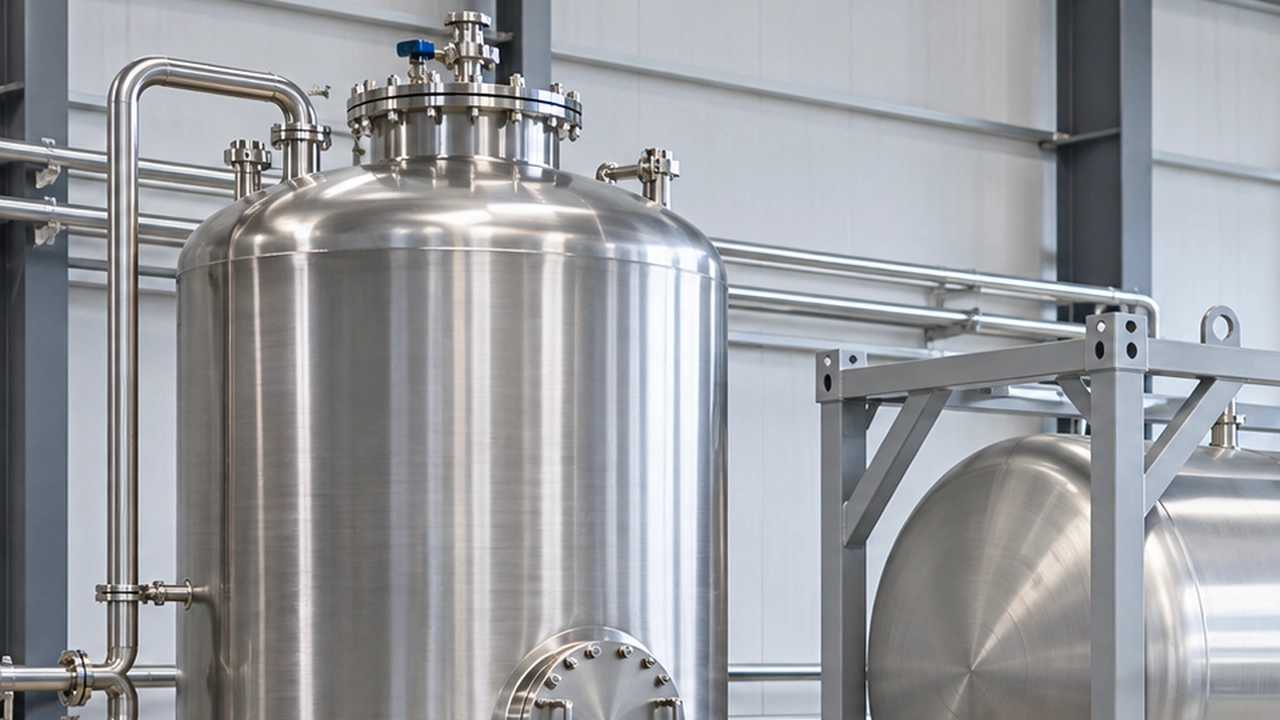
A chemical containment system is only as suitable as its complete product-contact boundary. Specifying a compatible shell while leaving valves, gaskets, fittings, and internal components undefined creates an incomplete procurement specification.
Each component may encounter different mechanical loads, surface conditions, and chemical exposures. Small components can become disproportionately important when the application involves toxic, corrosive, or purity-sensitive media.
Valve and Seal Compatibility
Seal materials differ in chemical resistance, temperature capability, elasticity, and permeation behavior. PTFE, FKM, EPDM, and other sealing materials may be appropriate for particular environments, but the selection must be based on actual chemical exposure and component design.
For high-purity service, additional considerations may include particle generation, extractables, trapped product, and the suitability of lubricants or assembly materials.
Connections must also remain mechanically compatible with the filling and receiving equipment. Similar thread dimensions or visual appearance do not establish interchangeability.
Nozzle Arrangement and Maintainability
The nozzle layout affects filling, discharge, instrumentation, inspection, and integration with the surrounding process equipment. Its design should be coordinated with the receiving facility before fabrication.
Maintenance personnel need sufficient access to remove authorized service components without imposing unintended loads on the vessel or adjacent piping.
Through our precision machining and mechanical manufacturing capabilities, we can evaluate custom connectors, fittings, flanges, valve-related components, and protective accessories against agreed drawings and application requirements.
Any component forming part of an approved pressure or transport system must satisfy the requirements of that system. A replacement component should not be selected solely on dimensional similarity.
10. Evaluate Safety Systems and Secondary Containment
Safe chemical storage depends on both the vessel and the facility in which it operates. A properly manufactured vessel does not eliminate the need for appropriate process controls, protective equipment, operating procedures, and emergency planning.
The hazards associated with the chemical determine which protective measures are appropriate. A flammable liquid, toxic gas, corrosive solution, and moisture-sensitive specialty chemical should not be managed using an identical safety configuration.
Pressure Protection and Monitoring
Depending on the equipment design and chemical hazards, the engineering review may need to address pressure-relief systems, vacuum protection, level monitoring, overfill prevention, temperature monitoring, and controlled handling of displaced vapors.
These systems require evaluation as an integrated arrangement. Relief capacity, instrument compatibility, discharge routing, and protective-device settings must be established by qualified professionals under the applicable design requirements.
For chemicals that present serious hazards when released, the management of vapors and emergency discharges requires particular attention. An uncontrolled release may create risks beyond the immediate storage area.
Secondary Containment Capacity
Secondary containment provides an additional barrier against liquid releases from storage equipment and associated connections. Depending on the project, it may take the form of a chemically compatible containment enclosure or an engineered double-wall arrangement.
The IFC General Environmental, Health, and Safety Guidelines, issued in 2007, recommend a containment capacity based on whichever is greater: 110% of the largest tank or 25% of combined tank capacity for qualifying aboveground hazardous-liquid storage installations with at least 1,000 liters of total storage volume. Reference [4].
This is an established good-practice reference, not a universal legal requirement or a complete secondary containment design calculation.
| Design Issue | Required Review |
|---|---|
| Containment volume | Applicable rules, credible release scenarios, and available effective volume |
| Containment materials | Resistance to the released chemical for the anticipated exposure period |
| Incompatible chemicals | Prevention of contact between released substances that may react |
| Leak detection | Suitability of monitoring methods for the stored product |
| Equipment foundations | Filled vessel weight, structural loading, and environmental conditions |
| Emergency access | Safe access arrangements consistent with the facility risk assessment |
We recommend defining the vessel manufacturer’s responsibilities separately from those of the facility designer. Secondary containment, ventilation, interconnected piping, and facility-wide protective systems may require engineering outside the vessel supply scope.
11. Match the Vessel to the Applicable Design and Transport Standards
Industrial chemical vessels may be subject to different technical and regulatory frameworks depending on their construction, service conditions, and intended transportation activities.
Some standards address pressure-retaining construction. Others establish requirements for stationary storage tanks, transportable pressure equipment, dangerous goods packaging, or periodic inspection.
The applicable framework should be established before the manufacturer prepares a final quotation.
| Standard or Framework | Principal Application | Procurement Verification |
|---|---|---|
| ASME BPVC Section VIII | Pressure vessel construction | Applicable division, edition, design scope, and current manufacturer authorization where required |
| API 650 | Selected welded aboveground storage tank applications | Applicability to the intended medium and design conditions |
| API 620 | Selected large, welded, low-pressure storage tanks | Pressure, temperature, material, and construction scope |
| UN Model Regulations | Dangerous goods transport framework | Applicable cargo classification, tank instruction, and special provisions |
| DOT / PHMSA requirements | Specified transport equipment and dangerous goods activities | Equipment specification and applicable authorization |
| TPED requirements | Transportable pressure equipment within its defined regulatory scope | Conformity assessment and applicable marking requirements |
| ASTM B912 | Stainless steel passivation by electropolishing | Specified treatment and acceptance requirements |
API 650 and API 620 are distinct tank construction standards and should be applied only when their respective scopes and the intended service justify their use. Reference [5].
Special Requirements for UN Portable Tanks
The UN Recommendations on the Transport of Dangerous Goods, 24th revised edition (2025), establish cargo-dependent portable tank requirements in Chapter 4.2 and associated construction, inspection, and testing requirements in Chapter 6.7. Reference [6].
A tank instruction is not simply a commercial model designation. It forms part of the technical and regulatory requirements for transporting specified dangerous goods.
Where portable tank approval is required, the chemical classification, applicable provisions, design approval, and service equipment must be evaluated together. Adoption of the UN Model Regulations into enforceable requirements must also be confirmed for the intended transport activity.
Our UN portable tank manufacturing range includes application-specific equipment for chemical storage and transportation projects.
Verify Current Manufacturer Authorizations
A manufacturer qualification certificate, an equipment design approval, and an individual vessel test report serve different purposes. Possession of one document does not establish the existence or validity of the others.
For regulated equipment, we recommend reviewing the manufacturing entity, authorization dates, approved activities, equipment scope, and project-specific inspection arrangements.
Our quality and certification documentation distinguishes historical qualification records from authorizations that must be confirmed for new projects. The current status of any required certificate, including ASME manufacturing authorization or National Board repair authorization, should be verified before contracting.
12. Select a Vessel Configuration That Matches the Application
Once the chemical requirements and governing design conditions are established, the next decision is the equipment family.
At KUNVESS, our manufacturing portfolio covers compact specialty cylinders, bulk chemical containers, portable tanks, and custom pressure vessels. This allows different containment approaches to be evaluated without forcing every project into the same equipment configuration.
| Equipment Family | Available Capacity Range | Typical Evaluation Areas |
|---|---|---|
| Small specialty cylinders | 0.5–150 L | Electronic chemicals, precursors, and compact high-purity packaging |
| Medium specialty cylinders | 1–145 L | Specialty gas and chemical distribution |
| Large specialty cylinders | 150–1,000 L | Bulk specialty chemical and industrial gas supply |
| UN portable tanks | 450–7,500 L | Application-specific chemical transportation and containment |
| Specialty ISO tank containers | Design dependent | Bulk chemical logistics and specialized transport applications |
| Custom pressure vessels | 1–150 m³ | Engineered industrial storage and process equipment |
The capacity ranges describe separate equipment families. They do not establish chemical compatibility, working pressure, temperature capability, or certification for every available size.
Illustrative Application A: High-Purity Electronic Chemicals
Consider a chemical producer supplying a contamination-sensitive liquid to a manufacturing process. The chemical specification includes limits for moisture, metallic impurities, and particles.
In this situation, the vessel shell’s corrosion resistance is only the starting point. Material composition, weld condition, internal surface finishing, valve cleanliness, and protective packaging also influence the delivered product quality.
We would evaluate suitable high-purity stainless steel options and establish measurable acceptance criteria before finalizing the manufacturing route.
Illustrative Application B: Corrosive Industrial Liquid
A chemical processing facility may require a larger storage vessel for an aggressive liquid. Here, chemical compatibility and long-term degradation may carry greater weight than achieving an exceptionally low internal roughness value.
The evaluation could include a suitable alloy, a qualified lined construction, or another material system supported by compatibility evidence.
The final decision would also consider inspection access, repair limitations, and the consequences of an undetected loss of containment.
Illustrative Application C: Recurring Chemical Distribution
For a chemical supplier operating a reusable distribution fleet, the preferred vessel size depends partly on delivery quantities and handling arrangements.
Equipment tare weight, transport approval, receiving infrastructure, discharge compatibility, cleaning requirements, and maintenance availability may all affect operating costs.
Our portable tank and specialty cylinder families provide different starting points for this assessment. Final equipment selection requires the actual chemical classification and approved service conditions.
These examples explain the engineering decisions involved in different applications. They are hypothetical scenarios rather than documented customer installations or performance claims.
13. Assess Manufacturing Quality Before Placing an Order
Many critical characteristics of a finished chemical storage vessel are difficult to verify after manufacturing is complete. Material traceability, welding records, internal surface preparation, and intermediate examination results must be controlled during production.
We recommend agreeing on the inspection and test plan before releasing the project for fabrication. The plan should identify the applicable acceptance requirements, documentation responsibilities, and any customer or third-party inspection involvement.
Material Identification and Traceability
Material records should establish that the pressure-retaining components and relevant chemical-contact parts correspond to the approved specifications.
Depending on the project, this may include material certificates, heat identification, mechanical test information, and additional material verification where required.
Traceability is particularly important when several stainless steel grades or specialty alloys are used within the same equipment assembly.
Fabrication and Weld Examination
Manufacturing controls should address forming, dimensional accuracy, welding, reinforcement details, and the condition of chemical-contact surfaces.
Suitable nondestructive examination methods depend on the governing code, material, joint design, and required examination coverage. Radiographic testing, ultrasonic testing, liquid penetrant testing, and visual examination provide different kinds of information.
No single examination method establishes that every aspect of a vessel is acceptable. The inspection scope must correspond to the construction requirements and identified failure risks.
Pressure Testing and Leak Integrity
Pressure testing and leak testing have related but distinct purposes. An authorized pressure test addresses specified mechanical acceptance requirements. A leak test assesses leakage performance under the defined test conditions.
High-purity vessels may require a more sensitive leak examination when atmospheric contamination or product escape would affect the application. Our inspection capabilities include helium leak testing for selected projects.
The test method, acceptance threshold, test medium, equipment configuration, and post-test cleaning requirements must be established for the individual vessel. A successful pressure test does not establish chemical cleanliness.
| Inspection Item | Purpose |
|---|---|
| Approved engineering drawings | Establish the agreed construction and interface requirements |
| Material certificates | Verify specified material characteristics and identification |
| Welding documentation | Demonstrate applicable fabrication procedure and qualification controls |
| Nondestructive examination reports | Record examination results against specified acceptance requirements |
| Pressure test report | Document the authorized mechanical acceptance test |
| Leak test report, where specified | Demonstrate compliance with agreed leakage requirements |
| Surface finish report, where specified | Record measured internal surface characteristics |
| Cleanliness documentation, where specified | Demonstrate compliance with relevant contamination limits |
| Final equipment documentation | Identify the manufactured unit and its accepted configuration |
Not every document applies to every vessel. The required package should be determined by the equipment category, governing construction requirements, and agreed purchase specification.
14. How Much Does a Chemical Storage Vessel Cost?
There is no reliable universal price per liter for industrial chemical storage vessels. Two units with identical nominal capacities may differ considerably in material requirements, pressure design, surface preparation, service equipment, inspection scope, and approval requirements.
Purchase-price comparisons become meaningful only when the quoted equipment satisfies an equivalent technical specification.
| Cost Factor | Reason for Cost Variation |
|---|---|
| Construction material | Raw material availability, alloy composition, and fabrication requirements |
| Vessel capacity and geometry | Material quantity, forming operations, and support structure |
| Pressure and temperature requirements | Mechanical design, component selection, and examination scope |
| Internal surface treatment | Polishing, electropolishing, lining, and associated process controls |
| Valves and accessories | Chemical compatibility, configuration, and qualification requirements |
| Inspection and certification | Required examinations, documentation, and inspection involvement |
| Order quantity | Engineering, tooling, setup, and production scheduling |
| Delivery configuration | Protective packaging, handling, and transportation requirements |
Evaluate Total Cost of Ownership
The vessel purchase price is only the initial financial commitment. Over its operating life, the equipment may require inspection, cleaning, replacement parts, refurbishment, and temporary withdrawal from service.
We recommend comparing equipment over the same ownership period using consistent assumptions for maintenance, utilization, downtime, and residual value.
Undiscounted ownership cost = equipment acquisition cost + installation cost + operating cost + maintenance cost + attributable downtime cost − residual value.
The following hypothetical comparison demonstrates why the lower initial quotation does not necessarily represent the lower overall cost. The figures are planning assumptions, not KUNVESS quotations or observed industry averages.
| Cost Category | Option A | Option B |
|---|---|---|
| Equipment acquisition | $20,000 | $25,000 |
| Installation | $3,000 | $3,000 |
| Five-year operating and maintenance costs | $12,000 | $7,000 |
| Attributable downtime cost | $5,000 | $2,000 |
| Assumed residual value | $2,000 | $2,000 |
| Total ownership cost | $38,000 | $35,000 |
Under these assumptions, Option B costs $5,000 more initially but produces an undiscounted five-year ownership cost that is $3,000 lower.
Actual investment decisions should account for financing, discount rates, taxes, production requirements, and project-specific cost evidence. Neither economic comparison nor expected payback can justify accepting equipment that fails mandatory safety or compatibility requirements.
15. Plan for Inspection, Maintenance, and Changes in Chemical Service
A vessel’s service life depends on the actual operating history rather than age alone. Chemical exposure, pressure cycles, temperature changes, cleaning practices, and maintenance quality can influence its condition.
Inspection intervals should be determined by applicable regulations, equipment documentation, identified degradation mechanisms, and an appropriate integrity management program.
Transportable equipment may also be subject to prescribed periodic inspection and testing requirements. The relevant schedule must be confirmed for the approved vessel category.
Maintain Useful Equipment Records
We recommend retaining the original design information, material documentation, examination results, operating records, maintenance history, and details of authorized modifications.
These records allow responsible personnel to evaluate changes in equipment condition and determine whether further inspection or engineering assessment is required.
Unexpected leakage, deformation, abnormal pressure exposure, damaged protective equipment, or evidence of deterioration should be addressed through established safety procedures and qualified assessment before continued service.
Review Every Proposed Change in Chemical Service
Changing the chemical inside an existing vessel is an engineering change, not simply an inventory decision. Previous service may have affected the internal surfaces, seals, linings, and accumulated residues.
Before approving a different product, the responsible team should reassess material compatibility, residual contamination, operating conditions, cleaning requirements, and regulatory authorization.
A vessel originally manufactured for one chemical cannot be assumed suitable for another, even when their operating pressures or physical appearances are similar.
Our inspection, maintenance, and refurbishment services can be evaluated according to the equipment condition, applicable authorization requirements, and agreed project scope.
16. How to Evaluate a Chemical Storage Vessel Manufacturer
A capable manufacturer should be evaluated on the suitability of its engineering proposal and the evidence supporting its manufacturing processes. Equipment appearance and a competitive quotation provide only a limited basis for supplier qualification.
For technically demanding chemical containment projects, we recommend treating chemical compatibility, mandatory approvals, and mechanical safety as non-negotiable requirements before comparing commercial proposals.
| Evaluation Area | Suggested Evidence | Illustrative Weight |
|---|---|---|
| Application engineering | Documented review of chemical and operating requirements | 25% |
| Material and manufacturing capability | Material specifications, fabrication processes, and traceability | 25% |
| Inspection and documentation | Project-specific inspection plan and acceptance records | 20% |
| Surface treatment and cleanliness | Relevant process controls and measurable acceptance criteria | 15% |
| Delivery and lifecycle support | Commercial scope, maintenance arrangements, and technical communication | 15% |
The weighting is our suggested starting framework for evaluating technically demanding projects, not an independently validated industry benchmark. Buyers may adjust the priorities to reflect their application after all mandatory requirements have been satisfied.
Where KUNVESS Fits This Evaluation Framework
We manufacture specialty chemical containment equipment across several product families, supported by custom engineering, material selection, metal fabrication, precision machining, surface treatment, and inspection capabilities.
Our manufacturing approach allows customers to evaluate the vessel shell, chemical-contact components, finishing requirements, and technical acceptance criteria within a coordinated project scope.
For high-purity chemical applications, we offer selected high-purity stainless steel materials and internal finishing options. For specialized transportation equipment, we evaluate the intended cargo and applicable tank approval requirements.
We welcome technically detailed supplier qualification discussions and recommend confirming project-specific manufacturing feasibility and current authorization requirements before placing an order.
17. What Information Should You Include in a Request for Quotation?
A detailed request for quotation reduces uncertainty during engineering review and helps manufacturers prepare comparable proposals. Incomplete chemical or operating information often results in provisional quotations that require substantial revision later.
The following information provides a practical starting point for discussing a custom chemical storage vessel with our team.
| Specification Item | Information to Provide |
|---|---|
| Chemical identification | Chemical name, SDS, composition, concentration, and relevant impurities |
| Equipment purpose | Stationary storage, process service, distribution, or transportation |
| Capacity | Required nominal volume and operating inventory requirements |
| Pressure | Normal operating pressure and applicable design requirements |
| Temperature | Operating range and other relevant exposure conditions |
| Construction material | Preferred grade or chemical compatibility requirements |
| Internal finish | Surface roughness, electropolishing, lining, or other treatment requirements |
| Chemical purity | Applicable contamination limits and measurement methods |
| Connections | Interface drawings, valve specifications, and nozzle requirements |
| Installation | Available dimensions, supporting arrangements, and access restrictions |
| Compliance | Applicable construction code and required equipment approvals |
| Inspection | Required test reports, documentation, and witness arrangements |
| Commercial requirements | Order quantity, delivery requirements, and expected supply scope |
If some information is not yet available, identify it as unresolved rather than substituting an assumed value. Early clarification is especially important when material compatibility, pressure conditions, or approval requirements remain uncertain.
At KUNVESS, we use these technical requirements to evaluate equipment configurations and establish the scope of a project-specific manufacturing proposal.
Frequently Asked Questions
1. What is the best material for chemical storage vessels?
There is no universally suitable material. Stainless steel, carbon steel, specialty alloys, lined metal vessels, and certain thermoplastics can all be appropriate for particular chemical environments. Material selection must consider chemical composition, concentration, temperature, pressure, impurities, cleaning requirements, and acceptable contamination levels. We recommend obtaining chemical-specific compatibility evidence before approving a vessel material.
2. Is 316L stainless steel suitable for storing all chemicals?
No. Although 316L provides useful corrosion resistance in many industrial applications, it remains vulnerable to certain aggressive acids, chloride-containing environments, localized corrosion, and stress corrosion cracking. Its suitability depends on the actual exposure conditions. More resistant alloys or qualified lining systems may be necessary for some chemicals.
3. What is the difference between a chemical storage tank and a pressure vessel?
A chemical storage tank commonly refers to equipment used to contain liquids at atmospheric or relatively low pressure. A pressure vessel is designed to withstand specified internal or external pressure conditions under applicable engineering requirements. The distinction depends on the actual design and regulatory scope, not simply the equipment’s shape, capacity, or commercial name.
4. When is electropolishing necessary for a chemical storage vessel?
Electropolishing may be appropriate when the application requires controlled internal surface characteristics, improved cleanability, or enhanced stainless steel passivation. It is particularly relevant to selected high-purity chemical and specialty gas applications. The need for electropolishing should be established through the chemical purity specification, material compatibility assessment, and agreed surface acceptance criteria.
5. Can a UN portable tank also be used for stationary chemical storage?
Potentially, but transport approval alone does not establish suitability for permanent stationary service. The intended installation, support conditions, operating environment, process connections, protective systems, and applicable stationary equipment requirements must be evaluated. Any proposed change in use should be reviewed by qualified engineering personnel and the responsible authorities where required.
6. How often should chemical storage vessels be inspected?
Inspection intervals depend on the vessel category, governing requirements, operating history, chemical exposure, material degradation mechanisms, and equipment condition. Transportable equipment may have prescribed periodic inspection schedules. Stationary equipment should follow its applicable integrity management requirements. A universal inspection interval is not appropriate for every chemical storage application.
7. What determines the price of a custom chemical storage vessel?
The principal cost factors are construction material, capacity, pressure and temperature requirements, geometry, internal finishing, valves, protective structures, inspection requirements, approval scope, and order quantity. An accurate quotation requires sufficient chemical and operating information to establish the technical configuration. Buyers should compare equivalent specifications and consider long-term ownership costs alongside the initial purchase price.
8. Can KUNVESS manufacture custom chemical storage vessels?
Yes. We manufacture specialty cylinders, UN portable tanks, specialized ISO tank containers, and custom pressure vessels. Available engineering options include application-specific material selection, vessel configurations, precision-machined components, internal surface treatment, and agreed inspection requirements. Final manufacturing feasibility, technical ratings, and required approvals must be confirmed for each individual project.
Choose a Vessel That Protects Both Your Chemical and Your Process
The consequences of an unsuitable chemical storage vessel extend beyond equipment replacement. Product contamination, unplanned maintenance, production interruptions, incompatible components, and regulatory difficulties can affect the wider manufacturing operation.
We recommend establishing chemical compatibility and mechanical requirements first, followed by usable capacity, internal surface characteristics, service equipment, inspection provisions, and long-term ownership considerations.
At KUNVESS, we bring material selection, custom vessel engineering, precision manufacturing, electropolishing, and inspection capabilities together to support technically demanding containment projects.
Whether your application requires compact high-purity chemical cylinders, bulk storage equipment, specialized portable tanks, or a custom stainless steel pressure vessel, our team can evaluate the requirements and discuss an appropriate manufacturing solution.
Contact KUNVESS to discuss your chemical storage vessel requirements. Providing your chemical safety data sheet, operating conditions, capacity requirements, and applicable technical standards will help establish a more meaningful engineering and commercial proposal.
Related Reading
- 316L vs. 316LV Stainless Steel: What’s the Difference? — Understand material selection for contamination-sensitive containment equipment.
- How to Choose High-Purity Gas Cylinders — Explore cylinder materials, cleanliness, pressure requirements, and technical acceptance considerations.
- What Is a UN Portable Tank? Types, Uses & Requirements — Learn about portable tank construction, applications, and dangerous goods transport requirements.
- T50 vs. T22 Tank Containers: Key Differences and Uses — Compare two distinct portable tank instructions and their engineering implications.
Technical References
- OSHA — Hazard Communication, Appendix D: Safety Data Sheets. Reference for chemical hazard, composition, physical property, handling, and storage information.
- ASME Boiler and Pressure Vessel Code, Section VIII, Division 1, 2025 Edition. Reference for the general scope of pressure vessel construction requirements.
- ASTM B912-26 — Standard Specification for Passivation of Stainless Steels Using Electropolishing. Reference for stainless steel electropolishing and passivation.
- IFC — General Environmental, Health, and Safety Guidelines, Hazardous Materials Management, April 30, 2007, page 40. Reference for secondary containment and hazardous materials management practices.
- API Standards Digital Catalog — Standards 650 and 620. Reference for applicable welded storage tank construction standards.
- UN Recommendations on the Transport of Dangerous Goods, Model Regulations, 24th Revised Edition, Volume II, 2025. Reference for portable tank use, construction, inspection, and testing requirements.
Technical and Regulatory Disclaimer
This article provides general technical and procurement information. It does not constitute a certified engineering design, chemical compatibility approval, operating procedure, hazard assessment, or legal determination of regulatory compliance.
Material suitability, permissible filling limits, pressure ratings, temperature limits, inspection intervals, protective-system requirements, and equipment approvals must be established for the specific chemical, vessel configuration, and intended service conditions.
Numerical planning examples and supplier evaluation weights are illustrative assumptions. They do not represent actual customer results, guaranteed cost savings, product performance claims, or approved operating limits.
KUNVESS manufacturing ranges and available options are subject to project-specific engineering review. Current manufacturing authorizations, regulatory approvals, and certification scope must be verified before contracting or placing equipment into service.
All chemical storage, filling, discharge, transportation, inspection, maintenance, and modification activities must be performed by appropriately qualified personnel in accordance with approved equipment documentation and applicable safety requirements. The equipment illustrations in this article are conceptual visual references and do not represent certified engineering drawings or actual project installations.