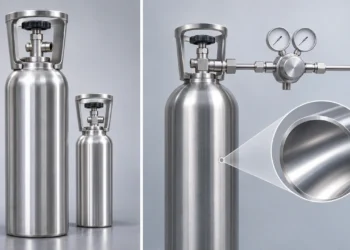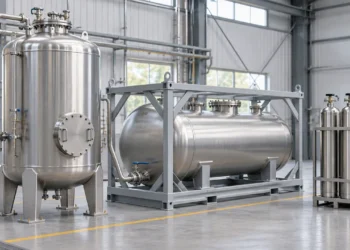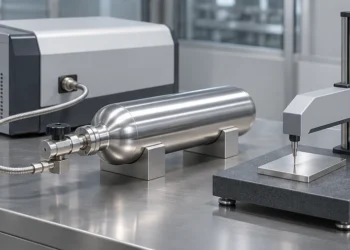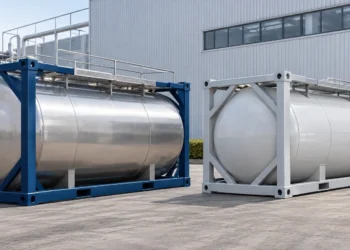
Effective gas cylinder inspection and maintenance begins with understanding how a cylinder responds to pressure, chemical exposure, repeated filling, environmental conditions, and mechanical handling throughout its service life. A cylinder that appears undamaged externally may still contain internal corrosion, contaminated surfaces, deteriorated seals, or other defects that compromise its suitability for continued use.
At KUNVESS, we approach cylinder maintenance from both a pressure containment and chemical purity perspective. This distinction is particularly important for specialty gas suppliers, semiconductor manufacturers, and chemical processing facilities, where internal contamination can be as consequential as mechanical deterioration. Proper inspection combines routine visual examinations, documented periodic requalification, appropriate leak testing, controlled cleaning, and component maintenance. In this guide, we explain how to establish a practical inspection program, recognize developing problems, protect high-purity internal surfaces, and make informed decisions about cylinder refurbishment, replacement, and long-term procurement.
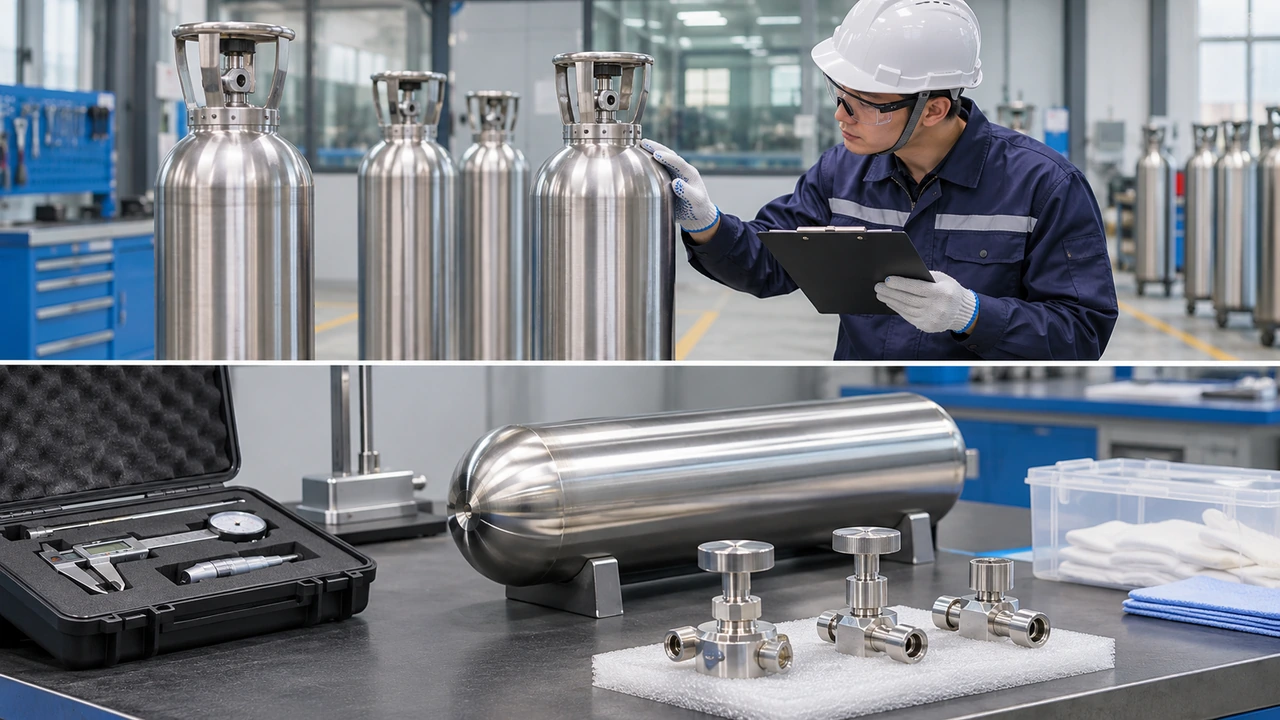
Why Gas Cylinder Inspection and Maintenance Matter
A gas cylinder performs a relatively simple function: it contains a specified medium under defined operating conditions. Maintaining that function over years of repeated service, however, requires considerably more attention than checking whether the cylinder holds pressure.
Every filling cycle, transportation movement, valve connection, and environmental exposure contributes to the cylinder’s service history. Some forms of deterioration develop gradually, while others result from a single handling incident or an unexpected chemical exposure.
Carbon steel cylinders may experience localized corrosion where moisture collects. Stainless steel cylinders can suffer chemical attack despite their generally favorable corrosion resistance. Valve components may deteriorate through repeated operation, and precision-cleaned internal surfaces can become contaminated during maintenance or storage.
We distinguish three fundamental aspects of cylinder reliability:
- Mechanical integrity: The ability of the cylinder body and pressure-retaining components to remain suitable for their approved operating conditions.
- Containment integrity: The ability of valves, seals, connections, and other interfaces to prevent unacceptable leakage.
- Chemical integrity: The ability of wetted materials and internal surfaces to maintain compatibility with the stored medium and its required purity.
These characteristics must be evaluated separately. A satisfactory pressure test does not establish chemical cleanliness. A cylinder that meets a stringent helium leak specification may still require periodic mechanical requalification. Likewise, an electropolished internal surface does not eliminate the possibility of corrosion or contamination during subsequent service.
For conventional industrial gas applications, mechanical condition and leak prevention often receive the greatest attention. High-purity specialty gas applications require a broader evaluation because moisture, particles, hydrocarbons, and metallic impurities may affect the downstream manufacturing process even when the cylinder remains mechanically sound.
Understanding the Different Levels of Gas Cylinder Inspection
One common weakness in cylinder management is treating every inspection as though it serves the same purpose. Routine operational checks, formal periodic examinations, and manufacturing acceptance tests address different questions and should not be considered interchangeable.
Routine Operational Inspection
Routine inspection helps identify visible damage, incorrect identification, missing protective components, and other conditions that warrant further evaluation before a cylinder is accepted, connected, handled, or filled.
Personnel should work within their assigned responsibilities and training. A routine external examination does not authorize an operator to dismantle a cylinder valve, remove protective coatings, or undertake pressure testing.
Periodic Cylinder Requalification
Periodic requalification determines whether a regulated cylinder remains eligible for continued service under the requirements associated with its design, markings, and intended application.
Depending on the applicable requirements, requalification may involve external examination, internal examination, hydraulic testing, approved nondestructive examination, valve assessment, and formal documentation.
Authorized inspection personnel must determine which methods apply. A maintenance department should never substitute a convenient examination method for a legally required test without confirming that the substitution is permitted.
Specialty Gas Cleanliness Assessment
Cleanliness assessment addresses the condition of chemical-contact surfaces. The scope may include residual moisture, oxygen, particles, hydrocarbons, metallic contamination, and previous-product residues.
For semiconductor precursor cylinders and other contamination-sensitive equipment, the cleanliness acceptance criteria should be established independently of conventional pressure testing requirements.
| Inspection Activity | Primary Purpose | Typical Responsibility | When Required |
|---|---|---|---|
| Routine external inspection | Identify visible damage and operational concerns | Trained operating personnel | According to receiving and operating procedures |
| Pre-fill inspection | Confirm eligibility and suitability for filling | Qualified filling personnel | Before filling |
| Periodic requalification | Establish eligibility for continued regulated service | Authorized inspection facility | Applicable statutory interval |
| Event-triggered assessment | Investigate damage, abnormal exposure, or suspected deterioration | Qualified technical personnel | Following a relevant incident |
| Leak testing | Evaluate containment performance | Qualified testing personnel | As required by the design and inspection plan |
| Cleanliness verification | Evaluate contamination against agreed limits | Qualified laboratory or cleaning facility | According to chemical purity requirements |
We recommend documenting these activities separately, even when several examinations are performed during the same maintenance visit. Separate records make it easier to understand what has actually been verified and what remains outstanding.
Gas Cylinder Inspection Checklist: What Should Be Examined?
A useful gas cylinder inspection checklist should connect observable conditions with appropriate decisions. Simply recording that a cylinder has been inspected provides little value unless the examination identifies the cylinder, defines the inspection scope, and documents any abnormal findings.
Cylinder Identification and Permanent Markings
Before examining the physical condition, confirm that the cylinder can be positively identified. Permanent markings and supporting documentation establish the technical basis for evaluating the equipment.
Depending on the applicable design and marking requirements, relevant information may include:
- Manufacturer identification and unique serial number.
- Cylinder specification or approved design designation.
- Original manufacturing date and applicable inspection markings.
- Service pressure or other approved pressure designation.
- Water capacity and tare weight, where required.
- Previous requalification date and authorized inspection identification.
- Applicable service-life limitations.
- Current gas identification and hazard labeling.
Missing or illegible identification can prevent reliable confirmation of a cylinder’s approval status. Cylinder color alone should never be used as definitive evidence of its contents or approved gas service.
External Cylinder Surface
The cylinder body should be examined for conditions that may indicate mechanical deterioration, chemical attack, abnormal thermal exposure, or improper handling.
Particular attention should be given to the shoulder, neck, base, support areas, and locations where retaining equipment contacts the cylinder. Protective rings, sleeves, and brackets can make certain surfaces difficult to assess during a routine examination.
A defect that appears minor on an exposed surface may be more significant when located near a transition in geometry, a threaded opening, or a pressure-retaining weld.
| Observed Condition | Potential Concern | Recommended Response |
|---|---|---|
| Localized pitting | Loss of pressure-retaining material | Refer for qualified evaluation against applicable criteria |
| Dent or impact damage | Localized deformation or associated material damage | Place on hold pending technical assessment |
| Visible bulging | Potential permanent deformation | Remove from service and arrange authorized assessment |
| Deep gouge or sharp surface damage | Material loss and possible stress concentration | Do not refill until formally evaluated |
| Fire or excessive heat exposure | Possible deterioration of material properties | Initiate the applicable incident assessment procedure |
| Damaged protective cap or guard | Reduced valve protection or concealed impact damage | Hold for component and cylinder assessment |
| Unexplained residue or chemical deposits | Possible leakage or chemical contamination | Follow the chemical-specific safety procedure |
| Illegible identification | Uncertain specification or inspection status | Hold until identity and eligibility are established |
Acceptance and rejection limits vary with cylinder construction and the governing inspection standard. We do not recommend applying generic dent-depth, corrosion-depth, or wall-thickness limits across different cylinder families.
Cylinder Neck and Valve Assembly
The neck and valve assembly deserve particular attention because they combine pressure containment, mechanical connections, and repeated operational handling within a relatively small area.
External examination should consider visible damage to the valve body, protection guard, outlet connection, and accessible sealing interfaces. Unexpected resistance during operation, unexplained leakage, or evidence of unauthorized modification should prompt further investigation.
Never attempt to correct a suspected leak by indiscriminately tightening components on a pressurized cylinder. The appropriate response depends on the gas hazard, equipment configuration, and approved emergency or maintenance procedure.
How Often Should Gas Cylinders Be Inspected?
There is no single inspection interval that applies to every gas cylinder. The correct schedule depends on the cylinder specification, construction method, gas service, regulatory requirements, previous inspection history, and any applicable service-life restriction.
Routine inspections should be incorporated into normal receiving, handling, connection, and filling activities. Formal periodic requalification must follow the requirements applicable to the individual cylinder.
The requalification provisions in 49 CFR 180.209, for example, allow certain qualifying DOT-3A and DOT-3AA cylinders to be requalified at ten-year rather than five-year intervals, provided the specified conditions are satisfied. This exception should not be interpreted as a general ten-year inspection allowance for all steel cylinders. [1]
| Inspection Trigger | Scheduling Basis | Maintenance Objective |
|---|---|---|
| Cylinder receipt | Receiving inspection procedure | Identify transportation damage and documentation discrepancies |
| Before connection or use | Operating procedure and application risk | Identify visible condition and connection concerns |
| Before filling | Applicable filling requirements | Confirm cylinder eligibility and service compatibility |
| Periodic requalification | Cylinder specification and governing requirements | Establish continued regulatory eligibility |
| Suspected contamination | Chemical-specific purity requirements | Evaluate internal cleanliness |
| Impact, overheating, or abnormal exposure | Incident-based technical assessment | Evaluate possible damage before further service |
| Change of gas service | Approved service-change procedure | Confirm compatibility, cleanliness, and authorization |
A cylinder’s next requalification date should be stored in its asset record rather than calculated repeatedly from memory or assumed from the manufacturing date.
Maintenance planners should also distinguish mandatory requalification from additional inspections introduced by an internal risk assessment. Additional checks may be appropriate for demanding service conditions, but they do not extend or replace a legally required inspection interval.
Advance scheduling is particularly valuable for specialty cylinders that require controlled cleaning, replacement components, or analytical verification after periodic testing. The time needed to restore chemical cleanliness should be included in the maintenance plan.
Applicable Standards for Gas Cylinder Inspection and Testing
Gas cylinder standards address different construction types, materials, service conditions, and inspection activities. Selecting an inspection standard solely because its title contains the words gas cylinder can lead to an inappropriate maintenance program.
For example, ISO 18119:2018 covers specified seamless metallic gas cylinders with water capacities from 0.5 to 150 liters, as well as applicable seamless metallic tubes above 150 liters. Its scope excludes acetylene cylinders and composite cylinders. [2]
ISO 11623:2023, by comparison, addresses specified composite cylinders and tubes with water capacities from 0.5 to 3,000 liters. [3]
These numerical scope boundaries illustrate why construction type and design specification must be established before assigning an inspection procedure.
| Standard or Requirement | Technical Subject | Application Consideration |
|---|---|---|
| ISO 18119:2018 and applicable amendments | Periodic examination of seamless metallic cylinders and tubes | Confirm cylinder construction and adopted edition |
| ISO 11623:2023 | Periodic examination of composite cylinders and tubes | Confirm composite design and service-life restrictions |
| ISO 22434:2022 | Inspection and maintenance of cylinder valves | Confirm valve type and applicable maintenance scope |
| ISO 11114-1:2020 | Gas compatibility with metallic materials | Evaluate cylinder and valve material selection |
| ISO 11114-2:2021 | Gas compatibility with nonmetallic materials | Evaluate applicable seals and other nonmetallic components |
| ISO 11621:1997 | Change of gas service | Confirm suitability for an authorized service conversion |
| 49 CFR Part 180, Subpart C | Continued qualification of applicable specification cylinders | Confirm that the cylinder falls within the regulatory scope |
Publication of a new standard does not necessarily mean that its newest edition has been incorporated into every applicable regulatory framework. The inspection facility must establish which edition and amendments govern the particular cylinder.
ASME construction requirements, UN pressure receptacle approvals, DOT specifications, and TPED requirements also serve different regulatory and equipment categories. They should not be treated as interchangeable certifications.
Our quality and certification capabilities support project-specific evaluation of manufacturing documentation, inspection requirements, and applicable approval arrangements. The required approval scope should be established before equipment is ordered or submitted for regulated maintenance.
Hydrostatic Testing, Ultrasonic Examination, and Leak Testing
Different cylinder testing methods reveal different aspects of equipment condition. A test should be selected because it addresses the relevant technical requirement, not simply because the equipment is available at a particular inspection facility.
Hydrostatic Testing
Hydrostatic testing uses a suitable liquid medium to evaluate a pressure receptacle under controlled test conditions. Depending on the applicable procedure, the examination may involve assessment of pressure containment, volumetric expansion, or other prescribed acceptance characteristics.
Service pressure and test pressure are different designations. The test pressure must be established from the approved cylinder specification and applicable examination requirements rather than an assumed multiplier.
Hydrostatic testing must be performed by appropriately qualified personnel using suitable equipment and the prescribed safety controls. It is not an operating-site maintenance task for untrained personnel.
For high-purity specialty cylinders, post-test restoration may be an important part of the maintenance scope. The use of a liquid testing medium can create additional requirements for internal cleaning, drying, contamination verification, and protection before the cylinder is returned to sensitive chemical service.
Ultrasonic Examination
Ultrasonic examination uses acoustic measurements to investigate material condition. Depending on the approved technique and examination arrangement, it can support wall-thickness evaluation and the detection of certain material discontinuities.
Its usefulness depends on cylinder geometry, material characteristics, equipment capability, calibration, examination coverage, and operator competence.
Ultrasonic examination can serve as an alternative requalification method only when the applicable specification and regulatory requirements expressly permit it. A simple thickness reading does not constitute a complete cylinder requalification.
Helium Leak Testing
Helium leak testing is particularly relevant to high-purity specialty gas cylinders because small leakage paths may be consequential even when conventional pressure monitoring reveals no apparent problem.
The method evaluates leakage under defined test conditions. Its results depend on the test configuration, pressure differential, instrumentation, background conditions, and the agreed acceptance criterion.
At KUNVESS, selected high-purity electropolished specialty cylinders have a specified helium leak rate of no more than 1 × 10⁻⁹ Pa·m3/s. This value applies to designated configurations and agreed test conditions, rather than every cylinder in our product range.
| Method | What It Evaluates | What It Does Not Independently Establish |
|---|---|---|
| External visual examination | Accessible surface condition and visible defects | Internal cleanliness or concealed material damage |
| Internal visual examination | Accessible internal corrosion, deposits, and surface condition | Quantitative chemical purity |
| Hydrostatic testing | Pressure-related acceptance characteristics | Trace contamination or complete sealing performance in service |
| Ultrasonic examination | Material condition within the validated examination scope | Valve leakage or chemical cleanliness |
| Helium leak testing | Leakage performance under specified conditions | Overall structural integrity or remaining service life |
| Analytical cleanliness testing | Selected contaminants against defined acceptance limits | Mechanical pressure-bearing capability |
A satisfactory inspection program may require several complementary methods. Our recommendation is to define the required evidence before selecting the testing process, particularly when mechanical requalification and semiconductor-grade cleanliness must both be demonstrated.
Material-Specific Maintenance Requirements
Cylinder material selection influences both manufacturing requirements and long-term maintenance. A maintenance procedure developed for conventional carbon steel equipment may be unsuitable for a precision-cleaned stainless steel vessel.
Carbon Steel Cylinders
Carbon steel remains useful in many compatible industrial gas applications because it provides favorable mechanical properties and established manufacturing routes.
Maintenance attention commonly focuses on external coating condition, corrosion, mechanical damage, and possible internal deterioration associated with moisture or incompatible service.
External corrosion can develop beneath damaged paint, around supporting structures, or in areas exposed to persistent moisture. Surface appearance alone does not establish whether the remaining pressure-retaining material is acceptable.
Repainting should follow an appropriate condition assessment. Applying a fresh protective coating over unresolved corrosion may conceal deterioration without addressing its cause.
304 and 316L Stainless Steel Cylinders
Stainless steel is often selected for applications requiring improved corrosion resistance or controlled chemical-contact surfaces. Its corrosion performance nevertheless depends on the actual medium and operating environment.
The molybdenum content of 316L stainless steel generally provides improved resistance to certain forms of localized corrosion compared with 304 stainless steel. This advantage does not establish universal compatibility with aggressive chemicals.
Cleaning agents, chloride exposure, chemical concentration, temperature, and surface condition can influence corrosion behavior. Maintenance personnel should therefore work from the approved material specification and chemical compatibility assessment rather than the generic description stainless steel.
316LV and 316LVV High-Purity Materials
Our specialty cylinder manufacturing includes 316LV and 316LVV material options for demanding electronic chemical and high-purity gas applications.
These designations should be evaluated against the actual procurement specification, material processing requirements, chemistry, and acceptance documentation. The designation alone does not establish a universal contamination limit or guarantee suitability for every semiconductor chemical.
Maintenance of high-purity materials requires particular attention to cross-contamination, inappropriate abrasive contact, cleaning residues, and uncontrolled exposure of internal surfaces.
For a more detailed discussion of material selection, see our guide to the differences between 316L and 316LV stainless steel.
| Material or Construction | Key Maintenance Concern | Verification Priority |
|---|---|---|
| Carbon steel | Corrosion, coating deterioration, and mechanical damage | Pressure-retaining condition and protective finish |
| 304 stainless steel | Service-dependent corrosion and surface contamination | Chemical compatibility and surface condition |
| 316L stainless steel | Localized chemical attack and contamination | Wetted surface condition and service compatibility |
| 316LV / 316LVV | Loss of controlled internal cleanliness | Material traceability, surface finish, and purity |
| Aluminum alloy | Alloy-specific damage and degradation mechanisms | Applicable alloy and cylinder examination criteria |
| Composite construction | Fiber damage, impact exposure, and design-specific aging | Composite inspection requirements and approved service life |
Metallic and nonmetallic compatibility should be considered together. ISO 11114-1 and ISO 11114-2 provide relevant technical frameworks for evaluating cylinder and valve materials against their intended gas contents. [4] [5]
Internal Surface Maintenance for High-Purity Specialty Gas Cylinders
In high-purity applications, the internal surface is an active interface between the container and the stored chemical. Its condition can influence contamination, chemical stability, and the repeatability of downstream processes.
This is especially relevant to semiconductor precursor packaging, electronic specialty gases, and chemical delivery systems operating with tightly controlled impurity limits.
Why Surface Roughness Matters
Surface roughness describes microscopic variations in the surface profile. Ra, the arithmetic mean roughness, is a commonly specified parameter when evaluating polished metallic surfaces.
A lower Ra value can support improved cleanability by reducing certain surface irregularities. Nevertheless, roughness is only one aspect of surface quality. It does not independently quantify metallic contamination, particle levels, chemical residues, or the corrosion resistance of the finished surface.
Electropolishing removes a controlled amount of surface material through an electrochemical process. On suitable stainless steel components, the treatment can reduce microscopic irregularities and support cleanliness objectives.
Our selected electropolished cylinder configurations are developed around specified surface and contamination-control requirements.
| Technical Parameter | Representative Specification | Applicable Configuration |
|---|---|---|
| Internal surface roughness | Ra 0.07–0.25 µm | Selected small electropolished specialty cylinders |
| Internal electropolished finish | Ra ≤ 0.2 µm | Selected large high-purity cylinders |
| Helium leak rate | ≤ 1 × 10⁻⁹ Pa·m3/s | Selected precision specialty cylinders |
| Residual moisture and oxygen | ≤ 0.5 ppm | Selected large-cylinder configurations |
Technical data: KUNVESS manufacturing technology and small specialty gas cylinder specifications. Values are configuration-specific. Measurement methods, sampling conditions, and acceptance criteria must be confirmed during technical review.
These values are representative manufacturing specifications, not universal in-service maintenance limits. A cylinder should be evaluated against the requirements established for its individual design and chemical application.
Protecting Electropolished Surfaces During Maintenance
Internal surface damage is not always obvious from the outside of a cylinder. Uncontrolled tooling, inappropriate abrasives, residual cleaning chemicals, or exposure to contaminated work areas can compromise a surface that previously satisfied demanding manufacturing requirements.
We recommend that high-purity cylinder owners define acceptable cleaning processes, handling conditions, analytical verification requirements, and protective packaging before maintenance begins.
Re-electropolishing should not be treated as a routine cosmetic operation. Because electropolishing removes material, its suitability depends on the remaining cylinder condition, approved design, dimensional requirements, and applicable repair restrictions.
Surface restoration cannot compensate for unacceptable structural corrosion or other defects requiring cylinder rejection.
Gas Cylinder Cleaning, Drying, and Contamination Control
The appropriate cleaning method depends on the previous chemical service, cylinder material, contamination mechanism, and intended future application. A process suitable for one chemical may introduce dangerous reactions or unacceptable residues in another.
This is why we regard the chemical service history as an essential maintenance document rather than optional background information.
Empty cylinders may retain hazardous residual gases or chemicals. Cylinders with uncertain contents, reactive residues, or suspected contamination require assessment under an approved chemical-specific procedure before opening or cleaning.
Moisture and Oxygen
Residual moisture and oxygen are important contaminants in numerous electronic chemical applications. Even small quantities may affect certain moisture-sensitive or oxygen-sensitive materials.
Cleaning and drying specifications should therefore address the required final condition, not merely whether a cylinder has undergone a cleaning process. Appropriate analytical verification may be necessary before returning the equipment to service.
Particles and Metallic Impurities
Particles may originate from manufacturing residues, corrosion products, worn components, connection activities, or contaminated maintenance equipment.
Metallic impurities can also originate from incompatible wetted materials and damaged surfaces. Where the stored chemical is sensitive to trace contamination, material selection and surface treatment should be considered together with the required analytical verification.
Hydrocarbons and Cleaning Residues
Oil, grease, solvents, and cleaning residues can compromise specialty gas purity. In oxygen service, certain hydrocarbon contamination also introduces serious ignition hazards.
Unapproved lubricants and cleaning products must not be introduced into oxygen-service equipment. The appropriate cleaning method and acceptance criteria should be established by qualified personnel using the relevant service-specific requirements.
| Contaminant | Possible Source | Verification Objective |
|---|---|---|
| Moisture | Previous service, cleaning, or atmospheric exposure | Meet the agreed residual moisture criterion |
| Oxygen | Atmospheric ingress or insufficient internal protection | Meet the applicable oxygen concentration limit |
| Particles | Component wear, corrosion, or handling | Meet the specified particulate cleanliness requirement |
| Metallic impurities | Material interaction, corrosion, or tooling contamination | Meet chemical-specific metallic impurity limits |
| Hydrocarbons | Oil, grease, machining, or inappropriate maintenance materials | Meet the agreed hydrocarbon or oxygen-cleanliness requirement |
| Previous-product residues | Incomplete removal of the former chemical contents | Establish suitability for the approved subsequent service |
At KUNVESS, our manufacturing and lifecycle support capabilities include application-specific internal cleaning, electropolishing, impurity removal, surface evaluation, and analytical testing. The appropriate service scope depends on the cylinder condition, previous contents, and agreed acceptance requirements.
Gas Cylinder Valve and Fitting Maintenance
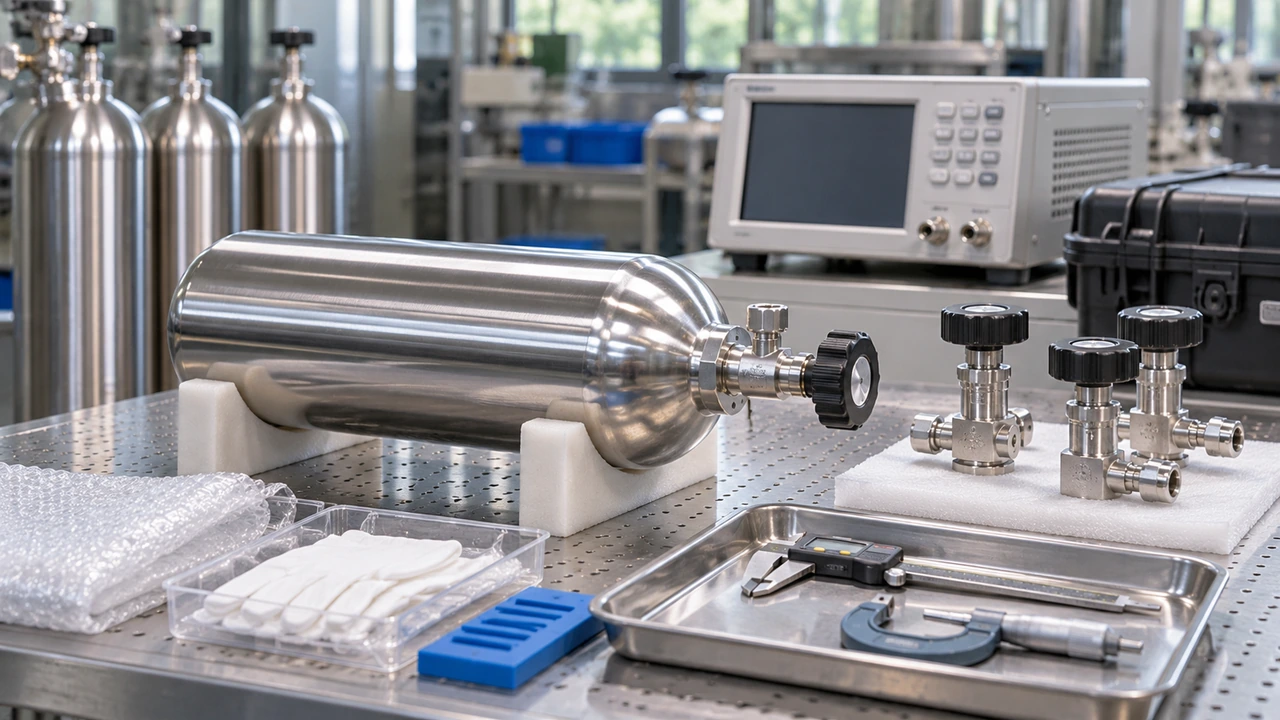
A cylinder body may remain suitable for continued service while its valve assembly requires maintenance or replacement. Valves experience repeated operating cycles and mechanical contact at connection interfaces, making component condition an important part of equipment reliability.
Valve maintenance should address more than external appearance. Gas compatibility, pressure rating, connection dimensions, sealing materials, cleanliness, and the approved cylinder assembly must all be considered.
Valve Selection and Replacement Compatibility
Two valves with similar external dimensions may have different inlet threads, internal sealing arrangements, pressure ratings, or chemical-service restrictions.
Replacement components should be verified against the approved technical documentation. A physically compatible connection does not automatically establish an approved or safe assembly.
ISO 22434:2022 provides a technical framework for the inspection and maintenance of applicable cylinder valves, including valves being considered for reuse during periodic inspection. [6]
Our precision machining and gas cylinder component manufacturing capabilities include application-specific valves, valve components, CGA fittings, connectors, and custom machined parts.
For replacement projects, we recommend supplying the original component drawing, applicable specification, gas service, and acceptance requirements rather than relying on photographs alone.
| Component | Information to Verify | Reason |
|---|---|---|
| Cylinder valve | Approved model, pressure rating, materials, and gas service | Maintain compatibility with the approved cylinder assembly |
| Valve inlet connection | Thread specification and approved interface | Prevent incompatible pressure-retaining connections |
| Outlet fitting | Connection specification and intended gas service | Maintain connection compatibility and gas-service identification |
| Seal or gasket | Specified material, dimensions, and cleanliness | Control leakage and chemical interaction |
| Pressure relief device | Applicable approved configuration | Preserve the intended protective function |
| Valve protection guard | Attachment design and component compatibility | Protect the valve during approved handling activities |
Valve disassembly, installation, pressure relief device servicing, and pressure-retaining connection repairs require qualified personnel and the applicable approved procedures. Unauthorized adapters, improvised repairs, or modifications can invalidate the cylinder’s approved configuration.
Proper Cylinder Storage and Handling Practices
Many maintenance problems originate outside the cylinder itself. Storage conditions and handling arrangements determine how often cylinders are exposed to moisture, impacts, contamination, and unnecessary mechanical loading.
A carefully manufactured cylinder can deteriorate prematurely if the storage environment is incompatible with its intended service.
- Secure cylinders using suitable restraints and storage arrangements for the approved equipment design.
- Maintain appropriate ventilation and chemical-specific storage segregation.
- Use designated handling equipment and approved lifting arrangements.
- Protect valves and connections from impact and contamination.
- Prevent unnecessary exposure to moisture, corrosive chemicals, and excessive heat.
- Clearly distinguish equipment awaiting inspection from equipment released for service.
- Maintain gas identification, inspection records, and asset traceability.
- Treat nominally empty cylinders as potentially containing hazardous residual material.
Storage arrangements must reflect the particular hazards of the contents. Toxic, flammable, oxidizing, corrosive, pyrophoric, and asphyxiant gases require different controls.
For high-purity applications, protective packaging and connection cleanliness should be included in storage procedures. A cylinder can meet its original cleanliness requirements at delivery and subsequently become unsuitable through uncontrolled storage or handling.
When Should a Gas Cylinder Be Removed From Service?
A cylinder should not remain available for filling or operation when its identification, mechanical condition, containment integrity, or approved service status cannot be established.
Conditions requiring immediate attention include suspected leakage, significant impact damage, visible deformation, unacceptable corrosion, exposure to fire, unknown contents, unauthorized modification, and unresolved inspection eligibility.
The appropriate response depends on whether the cylinder presents an immediate hazard or simply requires further technical evaluation. Suspected hazardous gas releases must be handled through the applicable emergency response procedure rather than ordinary maintenance handling.
We recommend separating the initial decision to place a cylinder on hold from the formal decision to reject or permanently condemn it. An operational hold prevents further use while qualified personnel determine the appropriate disposition.
Formal rejection and condemnation must follow the applicable examination criteria and authorization requirements. A cylinder that cannot be returned to approved service must be managed through an authorized retirement or disposal process.
Repair, Refurbishment, or Replacement: Making the Right Decision
Industrial buyers sometimes compare refurbishment and replacement using only the initial service quotation. That comparison overlooks the engineering condition of the cylinder, remaining regulatory eligibility, component availability, cleaning requirements, and the cost of equipment downtime.
The lowest refurbishment price is not necessarily the lowest lifecycle cost.
| Cylinder Condition | Option to Evaluate | Decision Requirement |
|---|---|---|
| Deteriorated external coating | Approved coating refurbishment | Confirm acceptable underlying material condition |
| Serviceable cylinder with worn valve | Authorized valve maintenance or replacement | Confirm component compatibility and assembly eligibility |
| Internal contamination | Specialized cleaning and verification | Confirm achievable chemical cleanliness |
| Deteriorated high-purity surface | Engineering assessment of surface restoration | Confirm dimensional and structural suitability |
| Unacceptable structural defect | Authorized disposition or replacement | Follow applicable rejection and repair restrictions |
| Expired mandatory service life | Replacement and authorized retirement | Comply with the applicable design-life limitation |
| Unverifiable approval or identity | Document recovery or replacement | Establish eligibility before returning to service |
Repair must never be used to conceal a condition that requires rejection. Welding, machining, grinding, surface material removal, and structural alterations are subject to the restrictions of the approved design and governing requirements.
Our manufacturing and lifecycle maintenance services include evaluation of inspection, cleaning, surface restoration, component replacement, and applicable refurbishment requirements. Regulated work remains subject to equipment eligibility and current authorization scope.
How to Calculate Gas Cylinder Lifecycle Maintenance Costs
A practical cost comparison should evaluate the complete maintenance event rather than the inspection charge alone.
We recommend including inspection fees, transportation, handling, chemical decontamination, replacement components, specialized cleaning, analytical testing, and the cost of unavailable equipment.
The following simplified calculation provides a useful procurement framework:
Total lifecycle cost = acquisition cost + inspection costs + maintenance costs + logistics costs + downtime costs + retirement costs − recoverable residual value.
Where cylinder utilization is measurable, the total lifecycle cost can also be divided by the number of completed, compliant service cycles to establish an indicative cost per cycle.
| Cost Category | Budget Input |
|---|---|
| Periodic inspection | Quoted examination and documentation charges |
| Valve and fitting maintenance | Approved replacement components and qualified labor |
| Internal cleaning | Chemical-specific cleaning, drying, and protection |
| Analytical verification | Required contamination and leakage examinations |
| Logistics | Compliant transportation and associated handling |
| Downtime | Unavailable equipment, replacement inventory, or rental costs |
| Retirement | Authorized decommissioning and disposal expenses |
For specialty chemical suppliers, restoring a cylinder to its required purity condition may involve more work than performing the mechanical examination itself. Procurement teams should therefore request a clearly defined return-to-service condition when obtaining maintenance quotations.
A cylinder that has passed requalification but still requires cleaning and analytical release is not necessarily available for immediate production use.
Building a Traceable Gas Cylinder Maintenance Program
Reliable cylinder management depends on the ability to connect each physical asset with its manufacturing documentation, chemical service history, inspection results, and current disposition.
A spreadsheet may be sufficient for a small inventory. Larger fleets may benefit from asset management software and compatible barcode or electronic identification systems. The important consideration is not the complexity of the software but the accuracy and completeness of the underlying records.
| Record Field | Information to Maintain |
|---|---|
| Asset identity | Unique identification linked to the cylinder serial number |
| Technical specification | Approved design, material, capacity, and pressure designation |
| Chemical service | Approved medium and relevant previous-service information |
| Inspection history | Examination dates, methods, results, and responsible facility |
| Next requalification | Verified due date and applicable scheduling basis |
| Component history | Approved valve, fitting, and seal replacements |
| Cleanliness status | Applicable analytical reports and release requirements |
| Current disposition | Available, on hold, under maintenance, or retired |
Repeated defects should be analyzed rather than treated as unrelated maintenance events. Recurring corrosion near supports may indicate a storage or handling problem. Repeated leakage at the same connection may warrant a review of component compatibility or operating practices.
Useful performance indicators include overdue inspections, unresolved equipment holds, repeated component failures, contamination-related rejections, and average maintenance turnaround time.
Targets should be established from actual fleet conditions and applicable requirements. Generic industry percentages are unlikely to provide meaningful guidance for a specialized cylinder inventory.
What to Consider When Purchasing New Specialty Gas Cylinders
Maintenance performance begins with the original equipment specification. Buyers who establish material compatibility, inspection documentation, component availability, and cleanliness requirements before manufacturing are better positioned to manage the equipment throughout its service life.
At KUNVESS, our cylinder families cover a range of specialty gas and chemical containment applications, including compact semiconductor precursor packaging and larger industrial chemical supply systems.
| Cylinder Family | Capacity Range | Product Family Pressure Range | Maintenance Planning Priority |
|---|---|---|---|
| Small specialty cylinders | 0.5–150 L | 0.1–10 MPa | Internal cleanliness and precision connections |
| Medium specialty cylinders | 1–145 L | 0.1–10 MPa | Service history, valve maintenance, and inspection eligibility |
| Large specialty cylinders | 150–1,000 L | 0.1–10 MPa for selected families | Handling arrangements, inspection access, and surface preservation |
Capacity and pressure figures describe equipment families, not simultaneous ratings for every model. See the KUNVESS product overview. Approved operating limits and certification requirements must be confirmed for the individual configuration.
When comparing manufacturers, we recommend evaluating the following areas:
- Ability to establish chemical and material compatibility.
- Availability of suitable pressure equipment designs and approval options.
- Precision machining and component traceability.
- Internal surface treatment and cleanliness verification capabilities.
- Defined manufacturing inspection and acceptance documentation.
- Availability of technical support for maintenance and replacement components.
- Ability to accommodate application-specific engineering requirements.
KUNVESS combines specialty cylinder manufacturing, precision component production, surface engineering, testing, and lifecycle technical support. Integrating these activities allows the cylinder body, valve interfaces, internal finish, and inspection requirements to be considered as parts of the same containment system.
For custom projects, provide the chemical name, Safety Data Sheet (SDS), operating pressure and temperature, required capacity, material specification, connection drawings, cleanliness limits, approval requirements, and anticipated order quantity.
Our engineering team can evaluate these requirements before preparing a configuration-specific manufacturing or maintenance proposal.
Conclusion
Gas cylinder inspection and maintenance should preserve mechanical integrity, containment performance, and chemical compatibility throughout the equipment’s approved service life.
Routine examinations identify developing problems, periodic requalification establishes continued eligibility under applicable requirements, and specialized testing addresses leakage and contamination concerns that conventional inspections cannot independently resolve.
For high-purity specialty cylinders, protecting the internal surface and maintaining traceable cleanliness records are particularly important. Maintenance should restore the equipment to its specified service condition rather than simply produce a satisfactory pressure test report.
At KUNVESS, we consider long-term inspection, material compatibility, component maintenance, and surface quality during the initial equipment engineering process.
If you are developing a new specialty gas cylinder inventory, evaluating replacement equipment, or reviewing maintenance requirements for high-purity chemical containment, contact KUNVESS for a project-specific technical review and manufacturing quotation.
Frequently Asked Questions
1. How often should gas cylinders be inspected?
Routine inspections should follow receiving, handling, operating, and filling procedures. Formal periodic requalification intervals depend on the cylinder specification, gas service, approved design, and applicable regulations. Five-year or ten-year intervals apply to certain cylinder categories, but neither interval is universal. Verify the individual cylinder’s requirements and inspection records.
2. What should a gas cylinder inspection checklist include?
A checklist should address cylinder identification, inspection eligibility, external surface condition, corrosion, mechanical damage, valve protection, accessible connections, gas identification, and evidence of abnormal exposure. Internal inspection and formal testing must be assigned to qualified personnel where required.
3. Can a gas cylinder be used after its requalification date expires?
An overdue cylinder must not be refilled unless permitted by the applicable requirements. Continued use of previously filled equipment and transportation eligibility depend on the governing rules and cylinder condition. Refer the cylinder to qualified personnel to establish its permitted disposition.
4. What is the difference between hydrostatic testing and helium leak testing?
Hydrostatic testing evaluates prescribed pressure-related acceptance characteristics using a suitable liquid medium. Helium leak testing evaluates leakage under defined test conditions. Neither method independently establishes every aspect of cylinder safety, chemical compatibility, or cleanliness.
5. How should high-purity specialty gas cylinders be cleaned?
High-purity cylinders require an approved cleaning process based on their material, previous chemical service, contamination risks, and intended application. Cleaning may require controlled drying, analytical verification, and internal protection. The process must be performed by appropriately qualified personnel.
6. Can a gas cylinder valve be replaced?
Valve replacement may be permitted when the replacement component is compatible with the approved cylinder design, gas service, pressure rating, connection specification, and cleanliness requirements. Qualified personnel must perform the work according to the applicable approved procedure.
7. When should a gas cylinder be replaced instead of repaired?
Replacement should be evaluated when a cylinder has unacceptable structural damage, has reached a mandatory service-life limit, cannot regain its required cleanliness, or cannot establish regulatory eligibility. Formal rejection and repair decisions must follow applicable examination criteria and authorization requirements.
8. Does KUNVESS provide specialty gas cylinder inspection and maintenance support?
Yes. We provide project-specific technical support for specialty cylinder inspection, internal cleaning, electropolishing, component replacement, and refurbishment evaluation. Regulated inspection, repair, and recertification services depend on equipment condition, applicable requirements, and current authorization scope.
Related Reading
- How to Choose High-Purity Gas Cylinders — Equipment selection considerations for chemical compatibility, operating pressure, cleanliness, and semiconductor applications.
- 316L vs. 316LV Stainless Steel: What’s the Difference? — Material selection considerations for high-purity chemical containment.
- Pressure Vessel Manufacturing Technology — Explore our precision manufacturing, electropolishing, and contamination-control capabilities.
- Quality, Inspection, and Certification — Learn about project-specific testing, inspection documentation, and quality control.
Technical References and Standards
- Electronic Code of Federal Regulations — 49 CFR 180.209: Requirements for Requalification of Specification Cylinders. Regulatory reference for applicable cylinder requalification intervals and conditional exceptions.
- ISO 18119:2018 — Gas Cylinders: Seamless Steel and Seamless Aluminum-Alloy Cylinders and Tubes — Periodic Inspection and Testing. See also Amendment 1:2021 and Amendment 2:2024.
- ISO 11623:2023 — Gas Cylinders: Composite Cylinders and Tubes — Periodic Inspection and Testing. Technical reference for applicable composite cylinder inspection requirements.
- ISO 11114-1:2020 — Compatibility of Cylinder and Valve Materials with Gas Contents: Metallic Materials. See also Amendment 1:2023.
- ISO 11114-2:2021 — Compatibility of Cylinder and Valve Materials with Gas Contents: Non-Metallic Materials.
- ISO 22434:2022 — Gas Cylinders: Inspection and Maintenance of Valves.
- ISO 11621:1997 — Gas Cylinders: Procedures for Change of Gas Service.
- Occupational Safety and Health Administration — 29 CFR 1910.101: Compressed Gases, General Requirements.
- Pipeline and Hazardous Materials Safety Administration — Interpretation 24-0093. Regulatory guidance concerning assessment and requalification following suspected cylinder damage.
Reference editions and online resources checked November 28, 2026. The applicable adopted edition, amendments, and regulatory requirements must be confirmed before inspection or maintenance.
Technical Disclaimer
This article is provided by KUNVESS for general industrial information, engineering discussion, and equipment procurement guidance. It is not an authorized inspection procedure, pressure testing instruction, chemical compatibility approval, maintenance manual, or substitute for applicable regulations and manufacturer-specific requirements. Gas cylinders and pressure equipment may contain hazardous residual substances even when considered empty. Inspection, decontamination, valve servicing, pressure testing, repair, requalification, and disposal must be performed by appropriately qualified or authorized personnel using approved procedures. Product specifications and service capabilities are configuration-specific and subject to technical review. No universal inspection interval, service life, chemical compatibility, certification status, or maintenance outcome is implied. Illustrations are generated for educational purposes and do not depict verified KUNVESS facilities or approved operating procedures.